Dave Maass has been writing about comics for more than 20 years, and now he also writes comics. By day, he teaches tech investigative techniques at the University of Nevada, Reno Reynolds School of Journalism and researches surveillance at the Electronic Frontier Foundation.
If I was the manager of a comic book store, I’d create a section for “journalism nerdcore.” It’s where I would stock Transmetropolitan, DMZ, and Abbott–comics that place fictional journalists in the center of genre stories, be it science fiction, action or horror. Despite their daylight jobs, Spider-Man and Superman wouldn’t be allowed there, but DC’s Lois Lane would find a home of her own.
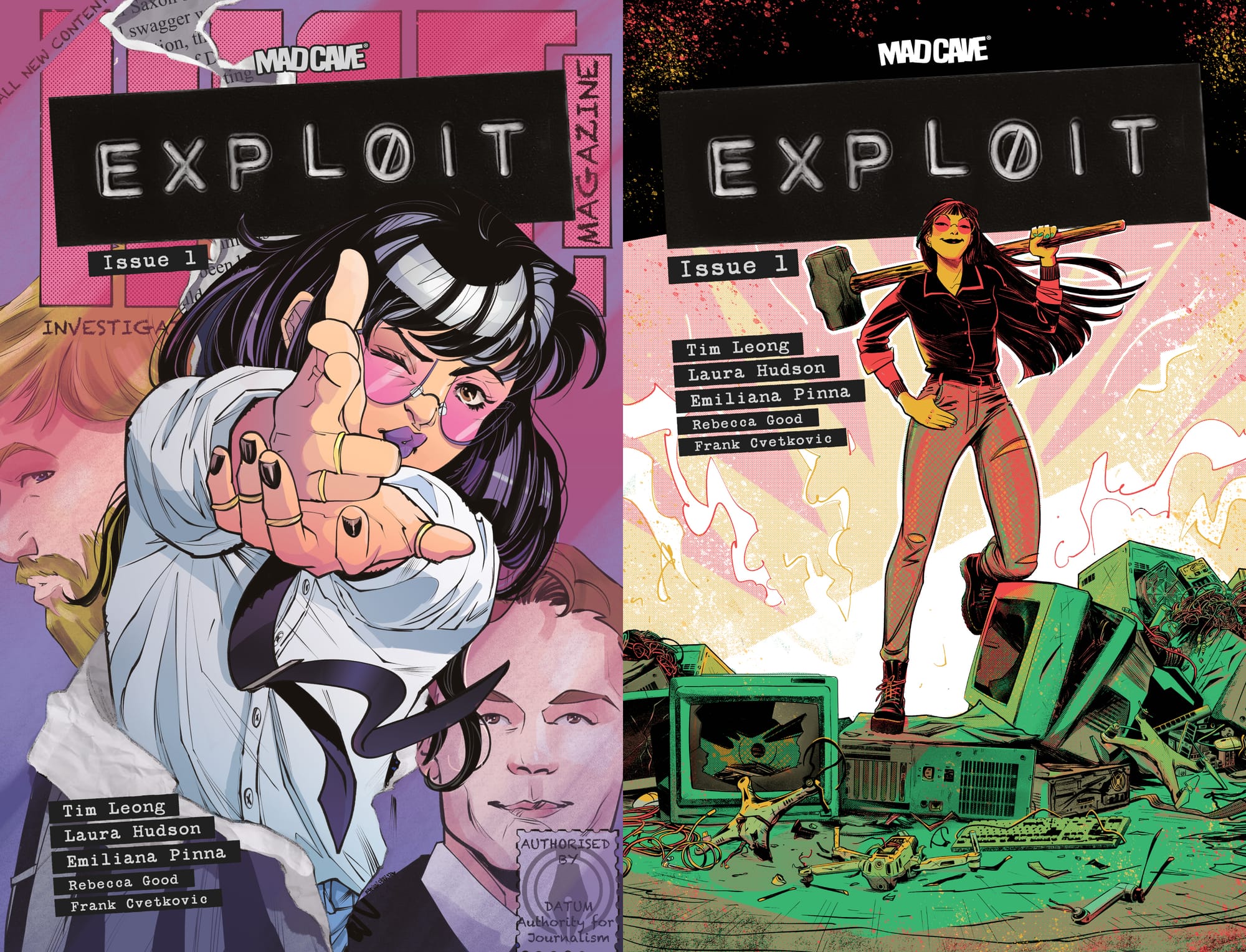
On the end-of-shelf display, with a big fat, Sharpie-written “Employee Pick of 2026” sign: Exploit, the new comic series from Laura Hudson and Tim Leong and illustrator Emiliana Pinna, which was just published last month by Mad Cave Studios in its collected trade paperback volume. It doesn’t get more journalism nerdcore than its tag line: “Don’t Bury The Lede. Bury Your Enemies!”
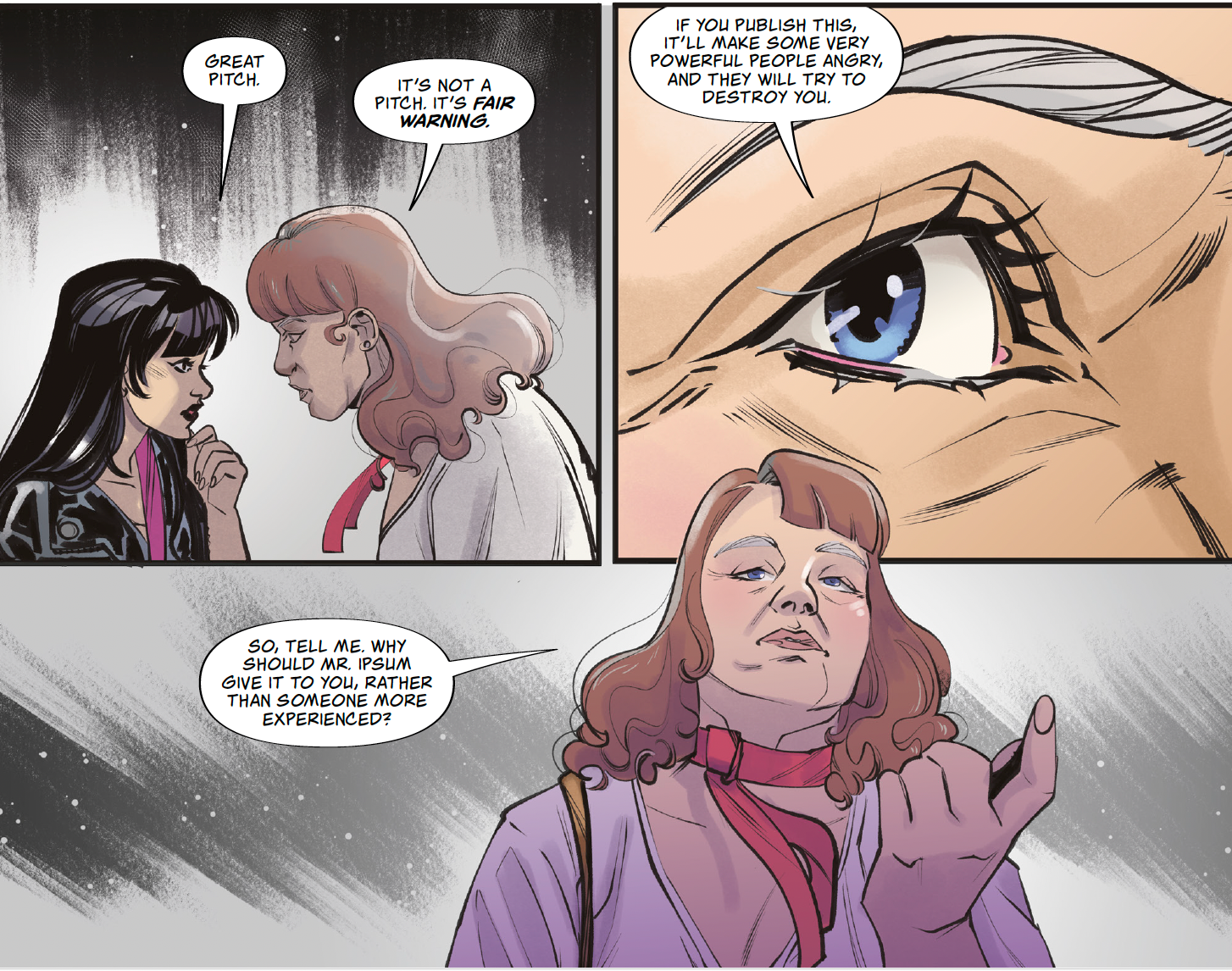
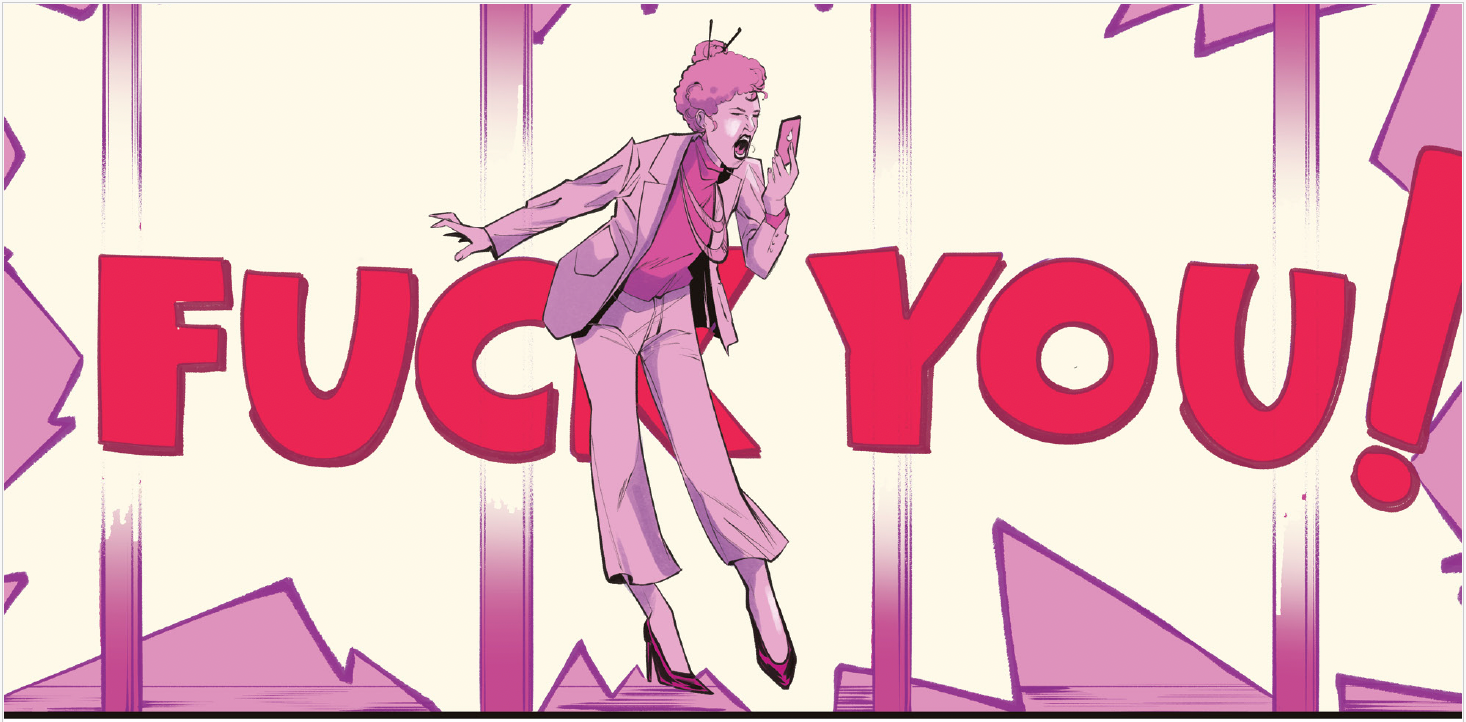
Exploit is an action thriller inspired by the battle raging right now between the tech oligarchy and the independent press. Editorial intern Kirby Kuo is trying to score her first byline in RIOT!, a WIRED-style print magazine, before the newsroom is wiped out by its soon-to-be new owner, a thin-skinned Alex Karp-flavored cyberlibertarian-turned-technofascist. But when the subject of her reporting is assassinated on a live stream, Kirby finds herself facing the blame, on the run and forced to place her trust in agoraphobic hacker Lenox and Cold War-alum cybermercenary Ipsum.
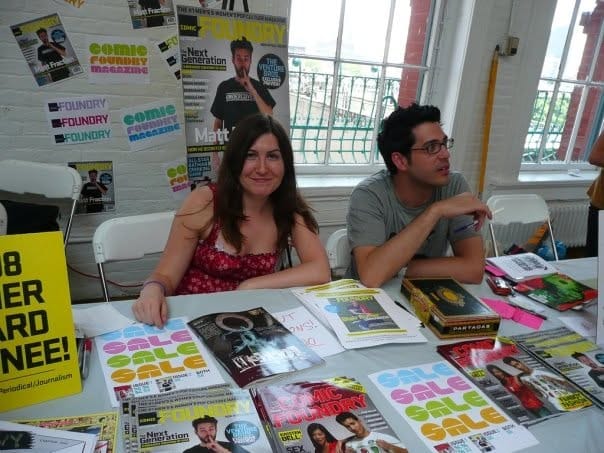
Creators Hudson and Leong shared the masthead at WIRED (senior editor and director of digital design, respectively), but long before that they ran Comic Foundry, where they were “the team that changed comics journalism forever,” as ComicsBeat put it. Their careers have dovetailed between comics and journalism for years, with Hudson putting time at The Verge and ComicsAlliance and logging bylines in The Guardian, The New York Times, and Slate, and Leong holding creative roles at Fortune and Entertainment Weekly, while also writing and designing the Super Graphic series.
All that experience shows. Between the chase sequences and heist-planning, there are plot points based on real episodes in tech and cybersecurity uncovered in publications like 404 Media, WIRED, and The Markup. But the panels radiate with the earnest love for scrappy, independent journalism–especially print journalism–and a molten fury for those who threaten it.
I asked Hudson some questions to learn more about the heart and rage she poured into this series. The following has been edited for length and to avoid spoilers.
Dave Maass: Comics love an origin story. Take me through the back story of Exploit.
Laura Hudson: We’ve been working on Exploit since we met up in a diner in LA in 2019, pre-pandemic. I don’t live in LA but I was there working on a TV show, and it was the first time we’d lived in the same city since mid-aughts New York. Tim fucking LOVES print, and we’d both spent the last decade watching print journalism collapse from the inside. There are definitely scenes in the comic, and a few darlings we had to cut, that were ripped directly from real life whether anyone believes us or not. We arrived just after the good times had ended, in time to hear all the stories about how amazing it had been, and watch it get worse and worse. And of course, the generation just after us only experiences the wreckage.
Tim had an idea for a comic set at a print magazine in New York, and I started imagining how I would feel, starting out as a journalist now. It always makes me think of donut blocks, from Super Mario Bros 3 on. They’re the round, cakey-looking blocks in the game that start shaking when you step on them, and then fall down. So if you’re going to walk across them, you better run, or you’re gonna die. If you stop, you’re gonna die. So, you can’t stop. Ever. I understand that feeling intimately, and I knew I could write from there. And hell, I’ve wanted to make comics for over 30 years and now I’m finally doing it at 45? Fuck me.
Exploit’s main protagonist is a journalist (technically an intern) working for a magazine that specializes in tech investigations. It’s a WIRED meets Mother Jones kind of affair, but also if VICE’s Motherboard had been a standalone, hard-copy publication. Why choose a tech journalist as your hero?
It probably says something about me that this question baffles me. Maybe I’ve just known too many good tech journalists, because to me it feels so obvious. Technology and the internet have played, are playing, and will play transformative roles in our lives, often in ways that few people fully understand. We’re still governed by a gerontocracy where many of our leaders conceptualize the internet as a bewildering series of tubes, possibly now filled with AI. Our technology has surpassed our ability to legislate it or address it ethically to such an extreme degree that some tech leaders are actually asking to be stopped. The internet (or at least its infrastructure) is a hyperobject in the Mortonian sense of the word, something so massive, complex and distributed that people struggle to comprehend it fully. We can see pieces of it, and effects of it, but it’s impossible to perceive or experience it as a whole, even and especially when we are inside it.
But as Morton has written in reference to climate change, apocalyptic framing around hyperobjects can lead to hopelessness and inaction in situations when things genuinely can be addressed: “You are closing down the future. You are making your reader submit to tyrannical despair.” Recognizing the enormity of something, in both the classic and popular sense, doesn’t have to mean giving up. People who refuse to accept that something is too vast, too complicated, or too powerful to challenge are pretty compelling to me. That’s what the best tech journalists do.
Now let’s talk about the dual villains–both techbro executives at a start-up that is not only a government contractor, but aims to take over key government functions. Now the last comparable comic I read like this was 2014’s Hacktivist (written by of all people actor Alyssa Milano with Jackson Lanzing and Collin Kelly), and it also featured two very similar tech bros–but they were the heroes, moonlighting as digital freedom fighters. That was a time where people were inspired by larger-than-life figures like Jack Dorsey and Elon Musk. That’s not so much the case anymore. How would you say that Exploit’s antagonists reflect the shift in the public perception, and activities, of the “founder” class in our society?
We want to believe that there is someone coming to save us, and since billionaires were the ones powerful enough to fuck up human civilization, it makes sense that we’d look for someone of equal power to save us. It makes sense to want that. But this is a fairytale we tell ourselves, which I say as someone who once wanted to believe it was at least possible. But no one is coming to save us. Let me say it one more time, because this is important: NO ONE IS COMING TO SAVE US. Billionaires least of all. Tech billionaires, by and large, are much better at destroying than fixing, and have advertised this fact for decades. They like to move fast and break things, and leave them broken. Many of them struggle to understand human beings socially even as they run social networks. They are prone to massive ego, can have anything they want at any time, and exist in bubble worlds where they are never told no.
These are the people we’re putting in charge of the future? I wouldn’t put them in charge of a Dairy Queen. And I personally believe that some of them would be willing to accept the deaths of millions or even billions of people as the cost of advancing humanity in whatever sci-fi way they have imagined. Their obscene wealth requires them to exist at a scope that most humans are not built for, like images stretched out over miles. It distorts them as individuals, and it can distort their morality, insofar as it ever existed beyond the desire to advance and profit. This has become more evident as more tech leaders have chosen to behave as open buffoons in an age of buffoonery. But this is who they always were.
From the first pages of the book, we’re introduced to the very real, extreme asymmetrical conflict between tech billionaires. Even a poorly paid journalist can threaten a billionaire (or at least his ego), but a billionaire has so much money, it’s easy to crush a publication. It immediately made me think of Jeff Bezos buying the Washington Post, Peter Thiel bankrolling the attacks on Gawker, and cases where surveillance companies have threatened news outlets. Am I wrong to think that’s the overarching theme of the whole series?
Nope. I feel an anger about it so deep that I almost intuitively dissociate when it comes up. Not because I don’t think I should be angry, but because I have learned I cannot be angry all the time without deleterious effects. Sometimes you just have to play the Yakety-Sax song in your head until the feeling passes, because you have to get things done today. It’s worth noting that Kirby and Lenox (and Ipsum) [Note: Lenox is a young hacker and Ipsum is an old-school cybermercenary] undertake their mission with full knowledge that it will probably ruin their lives. That’s part of the benefit package of being a billionaire. People can’t challenge you without possibly ruining their lives.
Now Exploit isn’t meant to be a realistic treatment of tech journalism, but I do think there’s a lot of truth in how you portray the perils faced by journalists who deal with hackers and leakers. This is running in a publication that specializes in that, but a lot of other journalists have been burned pretty bad, some even ending up in jail. How did reality affect the way you handled the relationship between your protagonist and the various hackers who enter her orbit?
We’ve all seen things go very wrong for journalists, even those who meant well. Kirby has lived more life than the average intern, and done some journalistic work, but never at this level and never with these kinds of sources. She’s green, and we wanted to show that. Before the big lead comes in, we have her pitching stories from sources that clearly have their own agenda, and her pitches get slapped down. That kind of pushback is essential, and what helps you learn before you’re in a position to make serious mistakes. Kirby is pushed into a very big story before she is probably ready, but she’s the only one in a position to do it. We wanted it to be clear that she’s able to do what she does not just because she’s smart and brave, but because she has an experienced group around her.
Dealing with hackers, leakers, and sensitive sources requires dealing with two competing impulses as a journalist. Good journalism requires rigorous skepticism as a discipline. There’s that journo saying that if your mother says she loves you, check it out. But developing a relationship with a source requires trust on both sides, and risk on both sides. One of the things Kirby learns is that a source is not necessarily an ally, even when they have valuable information. Their goals may overlap in places, but they can be different in invisible and dangerous ways. It’s not something anyone should approach lightly or without care.
A quarter of the way into the book, you introduce an assassination drone–and I initially expected it to be a sort of “Chekhov’s gun” that would play a huge role later on. But, it actually wasn’t. It turned out the most frightening thing still is people–specifically the mobs of doxxers who worship tech demagogues. Does this mirror your own experiences with online harassment?
One of the things people used to say a lot, to dismiss or ignore the nightmarish world of online harassment, is that it was “only” online. You could just close your computer and go outside, so really, wasn’t it all in your head? This line of convenient fiction collapsed pretty quickly, as doxxing, swatting, stalking, assaulting, raping, and molesting people through the internet became, shall we say, super popular? You can’t dismiss the internet as a fake, unreal place where nothing of consequence matters. We know it matters now, that it’s dangerous. But now it almost feels too late to care. These systems and the people who run them have certainly shown they don’t care, and there’s no Band-Aid you can put on it now to fix it. We could have built the internet and its social architecture very differently, in a way that prioritized dialogue over the right to abuse. But the trolls thought it was funny, and the companies wanted more money, so here we are living in the cursed labyrinth of their lols.
One thing about an assassination drone, though: everyone understands it as a weapon. A tool of sorts, but one designed explicitly to cause damage. Its goals and impacts are not opaque. Social media platforms were pitched as a way to connect people, to give them the power to reach out and touch anyone from anywhere. Giving this power away to anyone who wanted it with little to no accountability was described by tech companies at the time as inherently good. It took longer—some would say too long—for everyone to realize the scope of the damage it could cause. Or that this incredible communications technology could double as a custom-made playground for grifters, bullies and predators of every stripe. So yeah, people are the scary part. But people get a lot scarier when they are given great power with zero accountability.
Zines play a major plot point in the book. But you also made a promotional zine for San Diego Comic-Con, which included a lot of digital security advice. How do you see physical media reemerging in political life?
Tim designed that, by the way, and I can’t believe how much it looks like an actual riot grrrl zine. Zines have long been linked to comics culture, and you can see the overlap in a lot of indie comics spaces and events. But zines—or as they once called them, pamphlets—have been powerful political tools for over 500 years. They have defeated churches and kings. And they’re a very compelling tool right now, as a form of dissent that exists outside of the internet and its platforms. You can’t hack a printed page. And we don’t think about it this way anymore, but writing on paper is a communications technology—perhaps the greatest in the history of the world—and we should regard it as such. A lot of obsolete or antiquated tech can have value today because accessibility is also vulnerability, and obsolescence is its own kind of security feature. There are some impressive Gen Z zine enthusiasts, and a great WIRED article about the scene. But I’d love to see more people pick up that torch, for both creative and political reasons. No one can stop you.
What do you hope people will take away from Exploit? How do you hope it will make them feel?
In the year of our Lord 2026, I would be happy just to give people a bit of distraction from the horrors. But if you feel like your life has been suffused by the feeling that you showed up after the party was over, and that it’s only downhill from here, then we made this, in part, for you. It’s a grim feeling we know well, a sort of miasmic dread that flattens the future and makes you feel helpless and paralyzed. And that’s exactly how a lot of terrible people want you to feel. They want you to lie down and allow the terrible machine to function smoothly around you. Both Kirby and Lenox come up with their own imperfect coping mechanisms for that reality and feeling, but they do cope. They do move forward and fight, and they don’t do it alone. They can’t, and neither can we.