An AI company now lets cops take a photo and nearly instantly figure out what specific home it was taken in, using only clues in the photo itself, and is clearly pulling data from sites like Zillow and Airbnb.
The tool, called Raven, shows the increasing power of AI capabilities available to local law enforcement agencies. 404 Media previously reported that both the Los Angeles Police Department and Miami-Dade Sheriff’s Office (MDSO) have bought access to Raven, which was previously called GeoSpy. Now, Raven, made by a company called Graylark Technologies, has added features that let cops analyze the interior of homes.
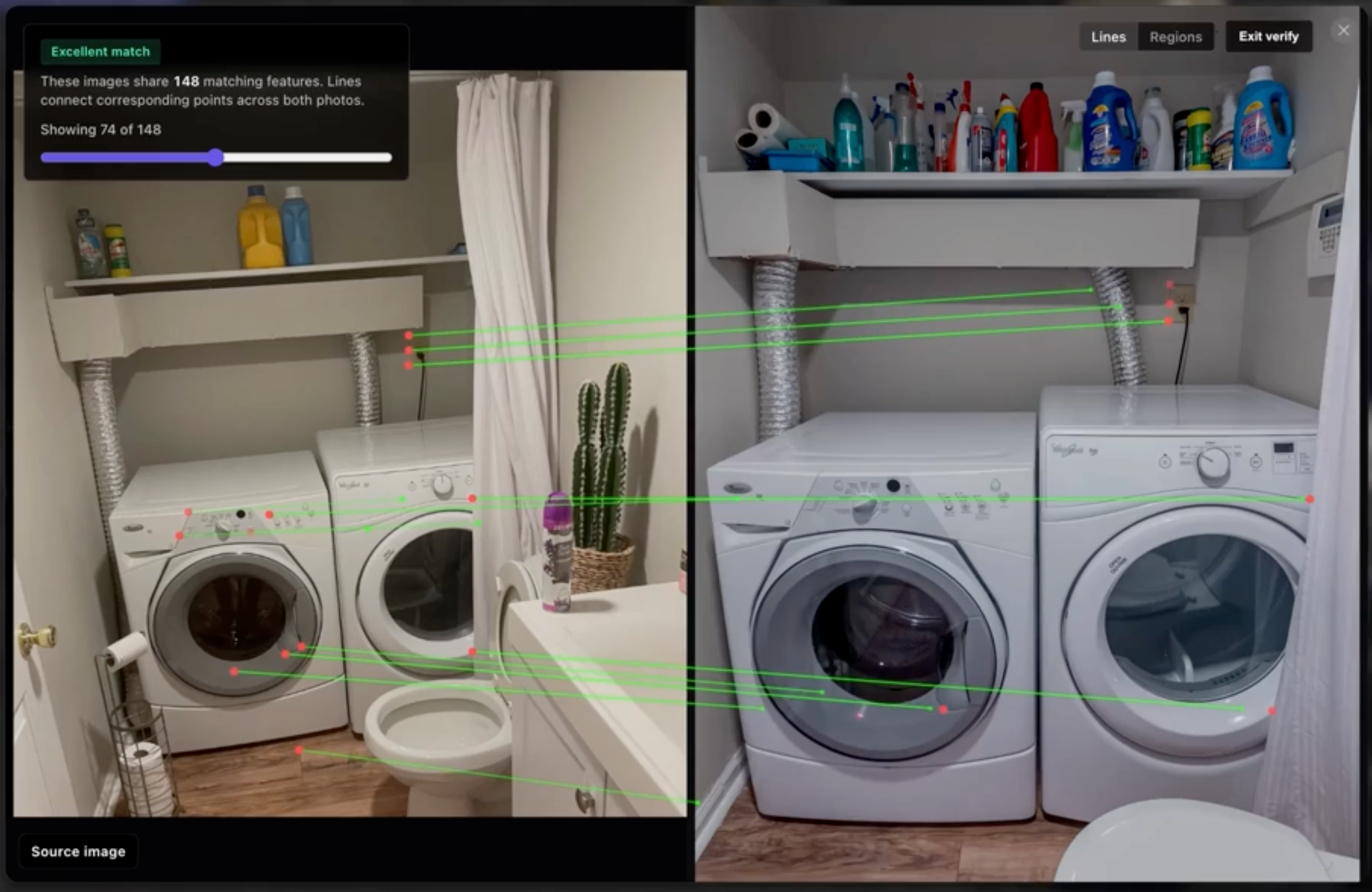
In a post on LinkedIn earlier this month, Graylark CEO Daniel Heinen wrote the company was introducing “the ability to geolocate interior images across millions of short-term rental units worldwide.” An accompanying demo video shows someone taking a photo from X of a washer/dryer unit inside a building. They upload it to Raven, select “Find Property: Interior and exterior property geolocation,” and then choose a region to search.
After a couple of seconds, the map interface zooms in on an area in Charlotte, North Carolina. On the right hand side, the screen displays a list of results. The top one reads, “Renovated! Walk Uptown/located in 2 Hot Spots!”
That result directly quotes the language on a specific Airbnb listing in Charlotte, and the photos in the Airbnb listing show the same property.
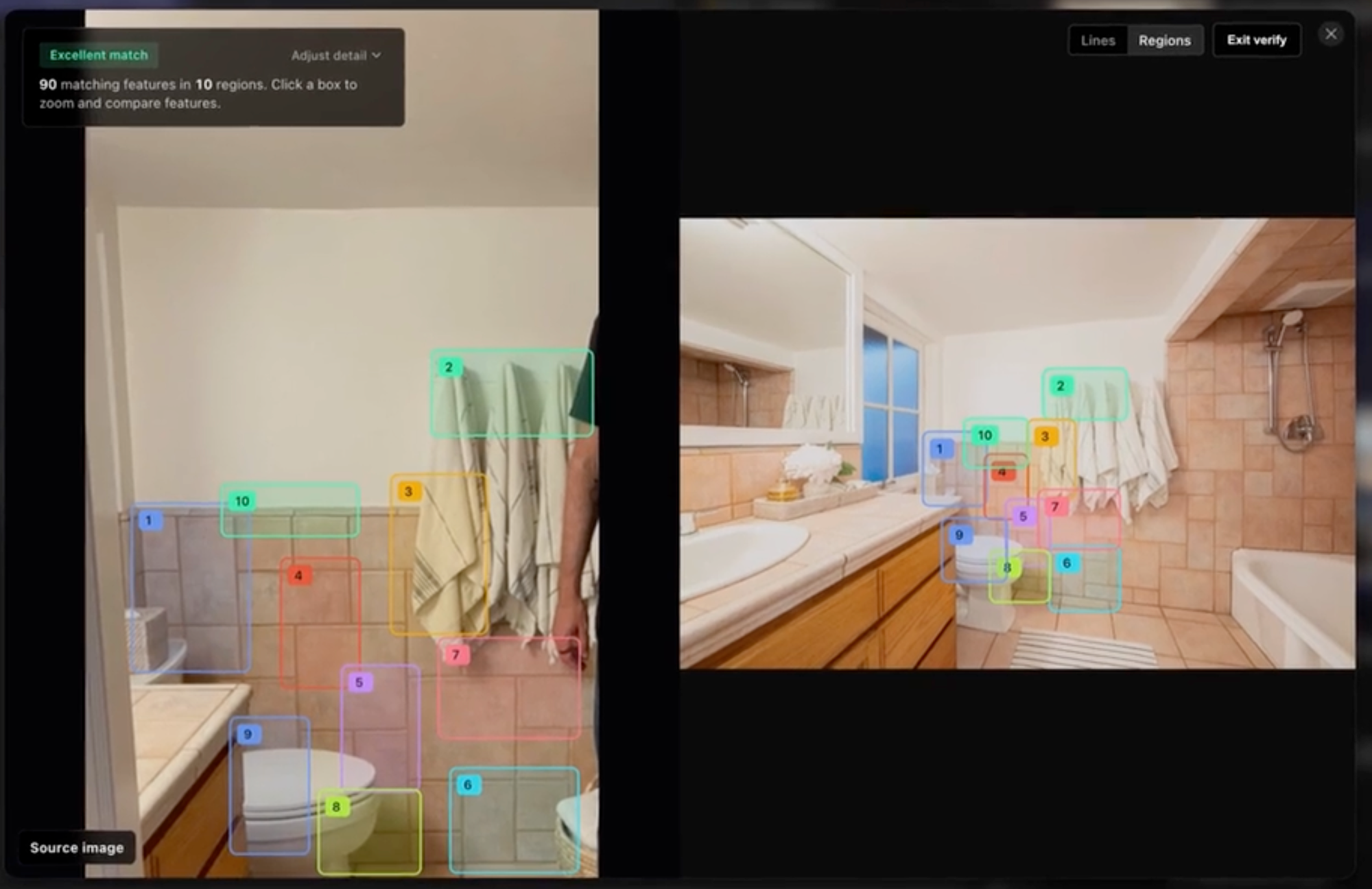
Later in the video, the Raven user takes a photo of a bathroom from social media. They upload it to Raven, and the tool points to an area of Montecito, California. The top result says, “Montecito Miramar Beach House on the Sand.” 404 Media found that result directly quotes a listing on the short term rental site Vrbo.
In other words, from a single photo, Raven appears to be able to quickly find the specific home it was taken in, without using location data or other metadata attached to the image. In the demonstrations the videos were from social media, but in practice they could be from anywhere a law enforcement officer has obtained them.
This is also not a reverse image search: a reverse image search would take an image then find an identical one posted somewhere else on the internet. What Raven is doing, instead, is identifying unique characteristics in the photo, then finding what are likely other photos from the same property on sites like Airbnb, even if those photos are not exactly the same, or even if time has passed between them being taken.
In another post, Heinen wrote, “For investigators working trafficking and exploitation cases, that connection can turn an unidentified room into a location lead they can verify and pursue.”
Raven is not limited to short term rentals, according to other demo videos. In a third example posted last year, Raven traces a photo of an interior room to a specific address in San Francisco. The interface returns other interior photos of the property; 404 Media found these are exactly the same photos as those posted on Zillow, indicating that Raven is at least pulling data from Zillow in some form.
Another video posted last week shows Raven identifying a particular hotel, too.
In another video, a part of the interface says, “City-specific property AI to determine an address.” That phrase implies the property search isn’t necessarily worldwide, but dependent on an AI model built specifically for that city. When 404 Media reported earlier this year that at least two law enforcement agencies have bought access to Raven, emails showed the MDSO had access to a custom model specifically trained for Miami-Dade County.
“In 2026, we’re investing heavily in interior geolocation across U.S. hotels, short-term rentals, houses, and apartments,” Heinen adds in the post.
Graylark trained Raven on millions of images from around the world. When the tool first launched, it was focused on identifying distinct geographical markers like architecture and soil. Now Raven extends that same idea into buildings.
In an interview with the tech publication Indicator last year, Heinen discussed some of how the building interior searching capability came to be. “I’ll be honest, we didn’t train it to do that,” he said. “That was kind of an ‘Oh shit’ moment for us. GeoSpy 1.0 couldn’t do that. As we trained GeoSpy 2.0, we were just kind of red teaming and testing it out and I think I had a picture of my girlfriend just taking a selfie in the bathroom. I was curious what it would say and I dropped it in there and it put a pin on San Francisco. I was like, ‘Well hold on, wait a minute. That doesn’t make any sense. It’s just a picture in a bathroom.’ And then I went over to Zillow and I just started screenshotting images and nine out of 10 of them it would get the right city.”
“We have huge datasets that we train the models on and these are geotagged images from all over. Usually, we would assume that the images are all outdoor images. I’m assuming some of those images would probably have some indoors, whether it’s people at a party or just taking pictures of food on their counter. The models must have learned some details that relate to different locations,” he continued.
Airbnb told 404 Media in email “Protecting our community’s privacy is important to us — that’s why location metadata is excluded from listing photos, hosts are given the option to show only an approximate location of their listing, and a home’s address is shared with a guest only after a reservation is confirmed. We also have technical safeguards in place to try to limit automated data collection from our site.” Airbnb stressed it has no relationship with Graylark, that its terms of service prohibit scraping, and that the company is reviewing this case.
Zillow told 404 Media that scraping data is against its terms of use, and when necessary it pursues legal avenues.
Vrbo did not respond to multiple requests for comment.
It is unclear if the examples shown in the marketing videos are truly representative of Raven’s speed or capabilities. While law enforcement agencies have paid for access to Raven, it hasn’t always impressed. Joseph R. Peguero Rivera, from MDSO’s Public Affairs Office, previously told 404 Media “To date, use of GeoSpy has been limited and largely exploratory. While it has been reviewed in a small number of cases, it has not resulted in any significant investigative breakthroughs or arrests. No case outcomes were driven solely or primarily by information generated by the tool.”
404 Media first covered Raven in January 2025. At the time, the tool was available to essentially anyone, and some people in the company’s Discord server asked for help stalking women. A day after 404 Media contacted Graylark for comment, the company restricted access to the tool to only government agencies and enterprise users.
In a September X post, Heinen said Alexandr Wang, now head of AI at Meta, was an angel investor in Graylark. Wang did not respond to a request for comment.
In a LinkedIn post earlier this year, Heinen showed Raven being used against a video of people vandalizing a Flock camera.