Defense drone money, a tactile-AI seed round, drone delivery headed for LA, and Europe’s stalled drone strategy lead today’s physical AI news.
1. Pentagon offers up to $500M for strike drones under $250,000 each
The Defense Innovation Unit’s Extended Range Strike Gauntlet II sets aside up to $500 million for medium- and long-range strike drones priced under $250,000 per unit. Every entrant that tests will receive $500,000.
Why it matters: Paying all tested entrants lowers the cost of competing, which could widen the field of suppliers for low-cost long-range drones beyond established defense contractors.
2. Lute raises $20 million to give robots a sense of touch
Physical AI startup Lute has raised $20 million across seed and pre-seed rounds for foundation models that let robots combine tactile and visual data. The seed round was co-led by OTB Ventures and Forward.one, and the company plans to expand into retail, warehousing and logistics.
Why it matters: Most robot foundation models rely mainly on vision; touch is a gap for handling varied items in warehouses and stores. Follow more rounds like this on our funding tracker.
3. Wing brings Walmart drones to LA next year, and DoorDash wants in
Wing flew a Walmart delivery demo in Los Angeles’ Little Tokyo ahead of a planned 2027 launch in the city. DoorDash, which runs its own drone operation, hopes to partner with Wing there.
Why it matters: Los Angeles would be one of the densest US markets for retail drone delivery so far, and a test of how the service scales in a large city.
4. Ten EU states say drone strategy is 20% done and no U-space exists
Ten EU countries told transport ministers that Europe’s drone market needs urgent action. They are calling for a dedicated strategy team, a simpler specific category for operations, and a restart of U-space, the EU’s drone traffic management framework.
Why it matters: Without working U-space airspace, routine beyond-visual-line-of-sight operations such as delivery remain hard to scale in Europe.
5. Japan pays 10 teams to fight urban bears with drones and robots
Japan’s Environment Ministry is funding 10 trials using docked drones, AI cameras and four-legged robots to keep bears out of towns. The trials run through February 2027.
Why it matters: It is a government-backed field test of autonomous drones and legged robots in a public-safety role outside factories and warehouses.
6. DOJ lets police read Remote ID, but DJI links get more protection
The Justice Department says police may read drone Remote ID broadcasts, including pilot location, without a wiretap order. DJI’s OcuSync control link receives more protection under the Wiretap Act.
Why it matters: The guidance clarifies what drone data law enforcement can collect without a court order, a recurring question for pilots and privacy advocates.
7. Quantum Systems takes drone speed record at 727 km/h
Quantum Systems’ Apex Recordhunter averaged 727.8 km/h over two 100-meter runs, beating the previous record held by hobbyists Ben Biggs and Luke Bell. The drone was built to chase Russian jet drones.
Why it matters: The record ties a speed milestone to a military use case: interceptors fast enough to catch jet-powered attack drones.
Quick hits
- Neura Robotics partners with Costa Group on physical AI in Aragón, framed around turning industrial know-how into robot skills.
- NJIT’s PHD-Hand is a five-fingered, 3D-printable humanoid hand built for under $650 in parts. See our humanoid robot tracker.
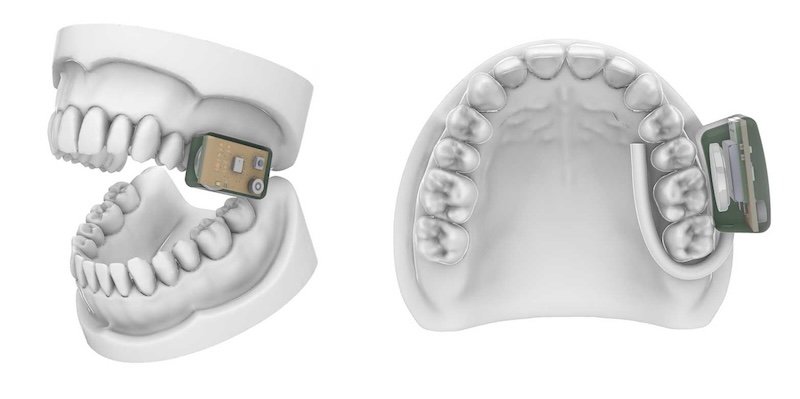
- ETH Zurich’s InvisiSpeech sits between a molar and the cheek and detects silently formed words.
- Everdrone’s defibrillator drone appeared on an air ambulance display in Stockholm via FLARM.
- An autonomous crane system moves port containers with centimeter-level precision.
Get the Daily and Weekly Brief by email — subscribe free. Every item links to our summary and the original reporting. Brief compiled by Physical AI News.
Newsletter
Get the Physical AI brief
The day’s most important robotics and embodied-AI stories, in your inbox.