A carmaker starts training humanoids for its line, Washington moves on Chinese drone tariffs, and a robot model beats a human operator on speed.
1. Volvo Cars begins training Hexagon humanoids for factory work
Volvo Cars is training and testing Hexagon Robotics’ AEON humanoids at its plant in Ghent, Belgium, the first Volvo site to trial the machines. The goal is to put them into production work on repetitive, physically demanding tasks by mid-2027.
Why it matters: It adds another major automaker to the list of manufacturers testing humanoids on real lines, with a stated target date for production use. Follow the field on our humanoid robot tracker.
2. US tariff plan would add up to 10% on Chinese drones
A Section 301 plan from the US Trade Representative would add up to 10% on Chinese-made drones such as DJI’s, on top of existing duties. Drones from allied countries would be exempt, and Chinese motors and batteries would stay at 20%.
Why it matters: Higher costs on Chinese aircraft, combined with duties on key components, shape what US operators pay and how much room domestic and allied makers have to compete.
3. mimic’s physical AI model outpaces a human operator in manipulation tests
Robotics company mimic’s FLUX-mimic-x model completed successful everyday manipulation tasks in a median of 11 seconds, against 27 for a human operator. The results were published by Positronic Robotics, which runs the independent PhAIL leaderboard.
Why it matters: Independent, comparable benchmarks are still scarce in physical AI, so third-party leaderboard results carry more weight than vendor demos.
4. Angelini Technologies takes a stake in humanoid maker Oversonic Robotics
Italian humanoid developer Oversonic Robotics said Angelini Technologies has acquired a stake in the company. The investment is meant to expand Oversonic’s manufacturing capacity and take its robots to international markets.
Why it matters: Most humanoid capital has flowed to US and Chinese firms; this backs a European player at the point of scaling production. See more deals on our funding tracker.
5. EU drone wall due in December as leak points to delays
The EU’s drone wall is scheduled to reach initial capacity in December. A leaked European Defence Agency report says only about a third of counter-drone programs will deliver by 2030.
Why it matters: The gap between the headline milestone and the slower delivery of most programs frames how quickly Europe can actually field counter-drone defenses.
6. Universal Robots runs Inbolt’s 3D AI vision natively on its latest cobots
Announced at SPS 2026 in Nuremberg, Inbolt’s AI-based 3D vision guidance software now runs directly on Universal Robots’ newest generation of collaborative robots. Manufacturers no longer need separate computing hardware to use it.
Why it matters: Removing extra hardware lowers the cost and setup effort of vision-guided tasks, a common barrier for smaller factories.
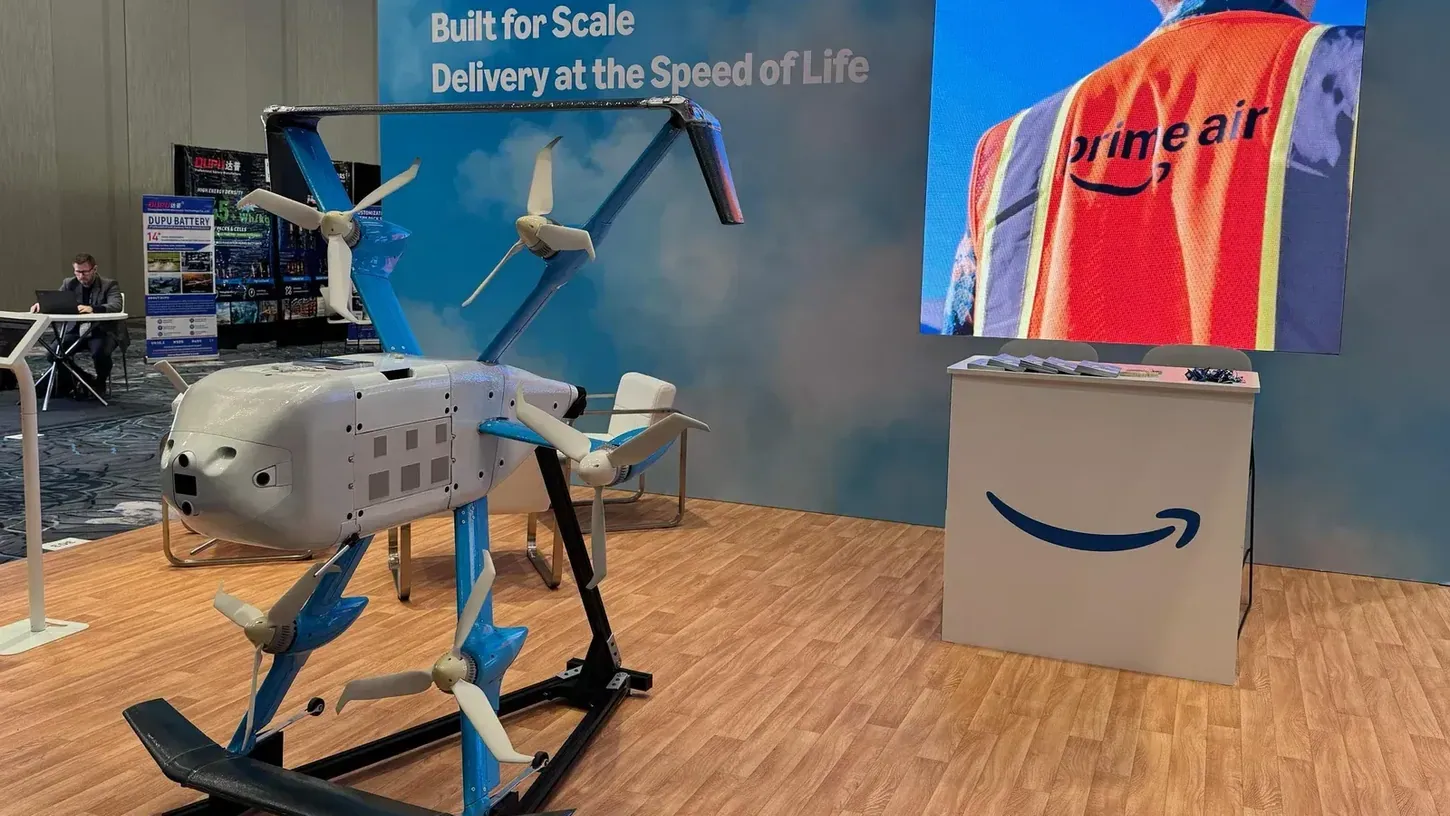
7. Amazon starts drone deliveries near Nashville
Amazon began MK30 drone deliveries from Mt. Juliet, Tennessee, on Nov. 22. Local police knew the service was coming but not the start date, and residents said they wanted advance notice.
Why it matters: As Amazon adds sites quickly, coordination with local authorities and communities is becoming as visible as the technology itself.
Quick hits
- Exotec automates Fnac Darty’s Massy warehouse with refurbished robots plus rented units for peak periods.
- Simulation-trained AI lets a five-ton skid-steer loader balance on two wheels, per a study in Science Robotics.
- AutomationML will become part of the OPC Foundation on Jan. 1, 2027.
- Inside the DARPA Triage Challenge final, where 10 teams competed for $2.5 million at Texas’ Disaster City.
- Zipline’s CEO criticizes aid groups as a US award of up to $150 million funds new hubs.
Get the Daily and Weekly Brief by email — subscribe free. Every item links to our summary and the original reporting. Brief compiled by Physical AI News.
Newsletter
Get the Physical AI brief
The day’s most important robotics and embodied-AI stories, in your inbox.