Welcome back to the Abstract! Here are the studies this week that lived and died by the spear, drew unequal lots, paged Fox Mulder, and peered at an alien moon.
First, scientists discover a mortal spear wound in a Neanderthal who lived 75,000 years ago, possibly opening a window into the origins of hominid violence. Then: disparities from beyond the grave, an unexplained population of near-Earth objects, and the word from Jupiter’s moon Ganymede.
As always, for more of my work, check out my book First Contact: The Story of Our Obsession with Aliens, or subscribe to my personal newsletter The BeX Files.
Lethal Weapon meets Ice Age
Some 75,000 years ago, an adult Neanderthal died from a brutal strike to the chest by a sharpened wooden spear, and was subsequently laid to rest by their kin.
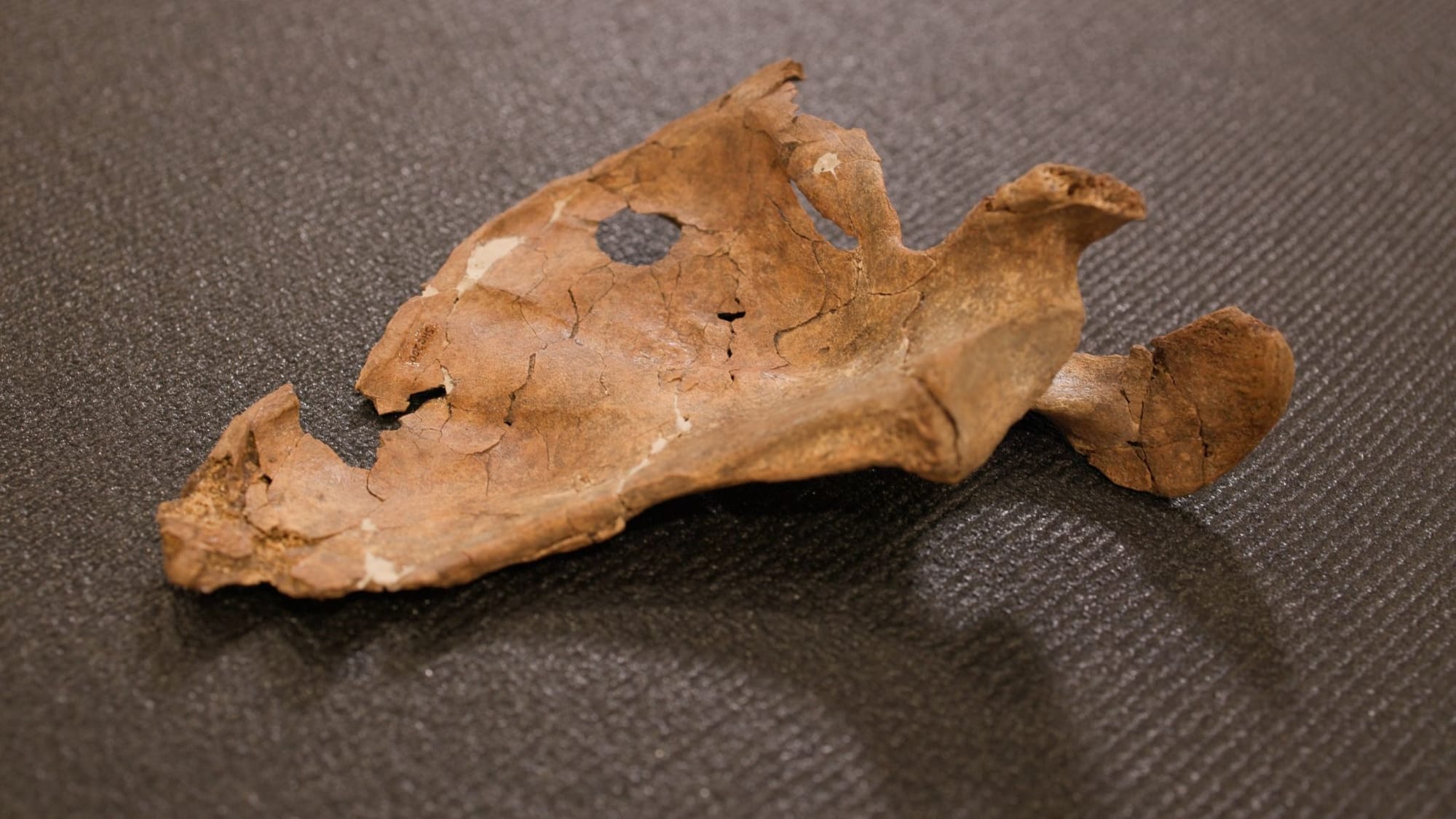
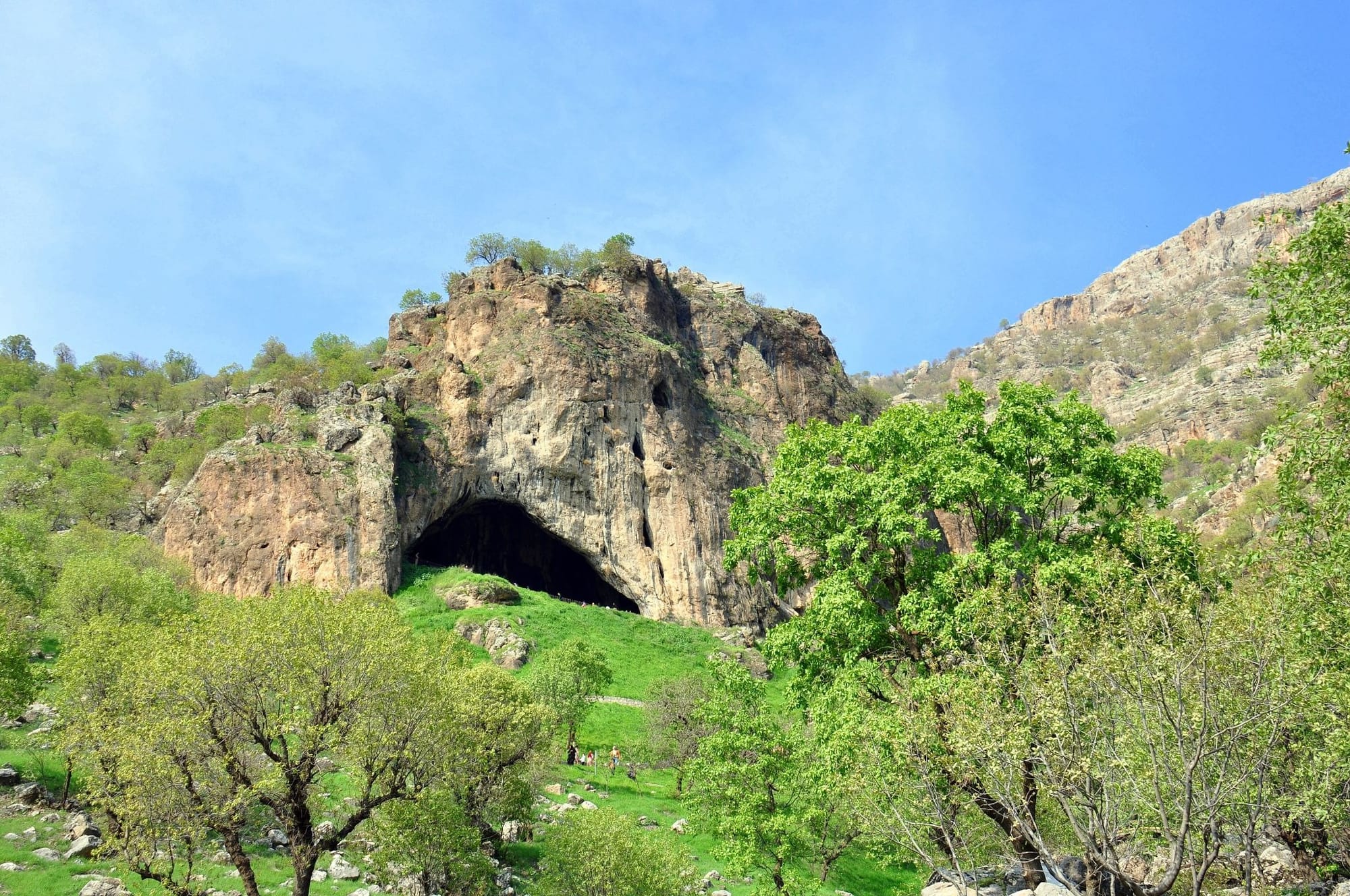
Eons later, in 2020, the remains of this individual were unearthed from deep in the floor of Shanidar Cave, an ancient Neanderthal hangout in what is now Iraqi Kurdistan. The bones of the deceased, named Shanidar A, preserve the spear puncture in the shoulder blade, suggesting that they were impaled with the weapon through the heart to their back.
Shanidar A—whose sex is unknown—also sustained a brutal face injury that had partially healed at their time of death, suggesting that this individual had been cared for while they recovered from this non-fatal wound. The body appears to have been carefully interred in a small area of the cave that contained other Neanderthal remains, implying it was an intentional burial ground.
“Shanidar A’s shoulder injury appears to have been fatal, but the apparent placement of the body in a location that subsequently became part of a tight cluster of Neanderthal individuals, who were likely intentionally deposited within living memory of each other, strongly suggests a level of care during and immediately after death,” said researchers led by Emma Pomeroy of the University of Cambridge.
Taken together, the discovery of Shanidar A adds to the evidence that Neanderthals nurtured each other in life and performed symbolic funerary rituals after death. These bones may also represent one of the earliest direct examples of interpersonal violence in any hominin, the term for humans and their close relatives, assuming that the Shanidar A was intentionally slain.
However, it’s hard to distinguish whether the death blow was an attack from another Neanderthal—or perhaps a member of our own species Homo sapiens—or if it was an accidental injury sustained while hunting.
Shanidar Cave was occupied by Neanderthals for at least 50,000 years leading up to their mysterious extinction. While we will never know the complexity of their stories, our human cousins were clearly capable of compassion, care, and respect for the dead.
In other news…
The truth is out there
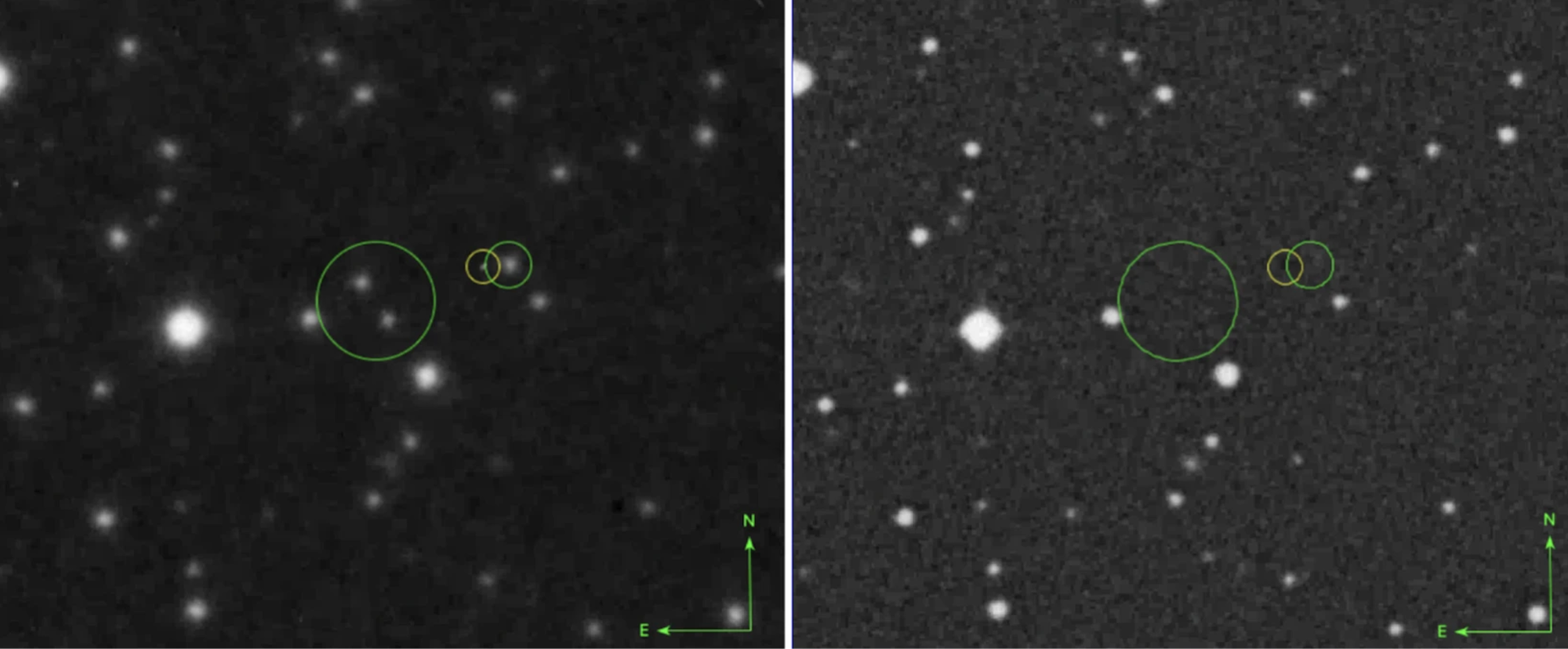
For the past several years, researchers led by astronomer Beatriz Villarroel have discovered strange “transients”—unexplained objects or phenomena in space—in historical photographic plates from before the launch of the first spacecraft, Sputnik, in 1957. The nature of these transients has become hotly debated among astronomers, with theories ranging from instrumentation defects to lurking alien spaceships.
In a recent study, the team re-analyzed the transients with machine learning, an effort reinforced previous findings that “transient numbers diminish significantly in Earth’s shadow”—hinting they are real objects that reflect less sunlight in our planet’s shade—and that they are more likely within one day of atmospheric nuclear tests during the mid-20th century.
“If one accepts that both key findings in this study represent real phenomena…we are left with a very small set of provocative hypotheses that would be considered highly implausible by most,” said researchers led by Stephen Bruehl of Vanderbilt University and co-authored by Villarroel.
“For example, is it possible that unknown to the public there were multiple launches of artificial satellites long before Sputnik with some launches timed to coincide with U.S. nuclear tests? Or rather, do the current findings represent detection of a non-human technosignature? Finally, might our results represent detection of an entirely new yet unknown physical phenomenon?”
“Additional research on this topic is clearly warranted,” the team concluded.
Hard agree. When a mystery’s leading explanations include 1) secret satellites that upend spaceflight history, 2) ALIENS (!!!), and 3) exotic novel phenomena, it’s fair to keep digging for answers. My own preference is that it turns out to be some unholy combination of all three, but for now, we will have to just keep literally watching this space.
Inequality is in our bones
Let’s keep playing in haunted graveyards—it’s spooky season, after all. This time, we’ll take a long walk through about 2,300 ancient burials in the Central Plain of China. In a new study, scientists probed the emergence of wealth inequalities in these ancient communities by studying this huge sample dating from 9,000 to 3,500 years ago.
The team assessed the relative wealth of the deceased individuals with a number of proxies, including the value of grave goods buried with them, their physical health, and chemical clues about the quality of their diets, which can be preserved in bones.
The results suggest that inequality was present in many of these communities long before the rise of an official state hierarchy, and that “no single pathway led to persistent inequality across early centers of social complexity,” according to the study. However, one clear correlation that emerged in the analysis was the association between violence and inequality, with the former exacerbating the latter.
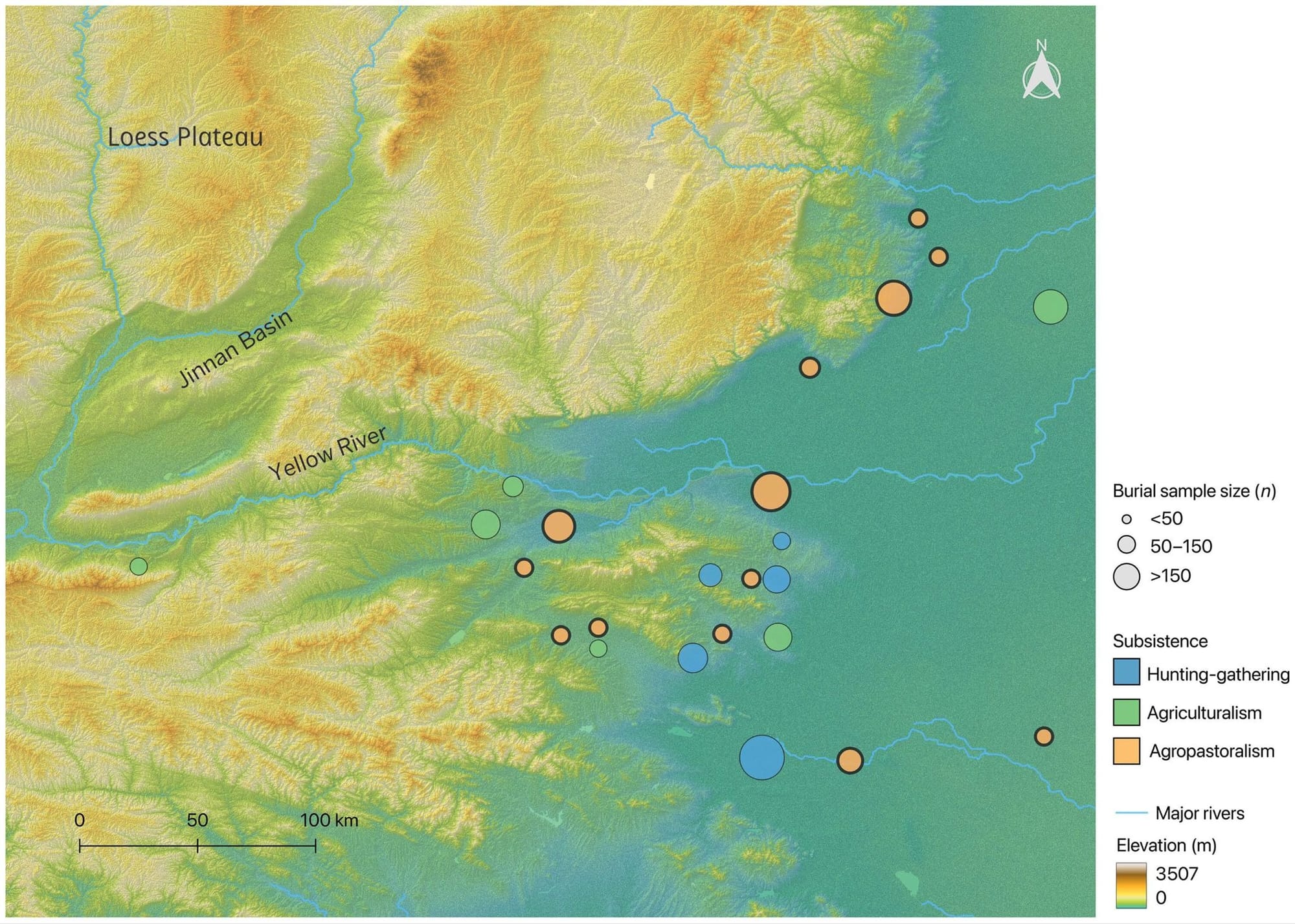
“In the Central Plain…the emergence of violence signals a structural transformation” that suggests that “violence contributes to the amplification and structuring of inequality, although reverse or reciprocal dynamics cannot be excluded,” said researchers led by Dongdong Li of the Chinese Academy of Social Sciences.
While the rise of organized states and kingdoms can accelerate wealth stratification, this study proves that humans are capable of pioneering local homegrown inequalities in myriad ways.
The view from Ganymede
We’ll close with an update from Ganymede, the largest moon in the solar system, which orbits Jupiter. As the only moon with its own magnetic field and a candidate in the search for alien life due to its subsurface ocean, Ganymede has long fascinated scientists.
Now, a team has compiled comprehensive observations of Ganymede’s surface terrain using observations from a range of advanced telescopes, including the Very Large Telescope in Chile and the James Webb Space Telescope. The aim of the study, in part, is to prepare for two spacecraft currently en route to Jupiter—the European JUICE mission, and NASA’s Europa Clipper—which will arrive in the early 2030s.
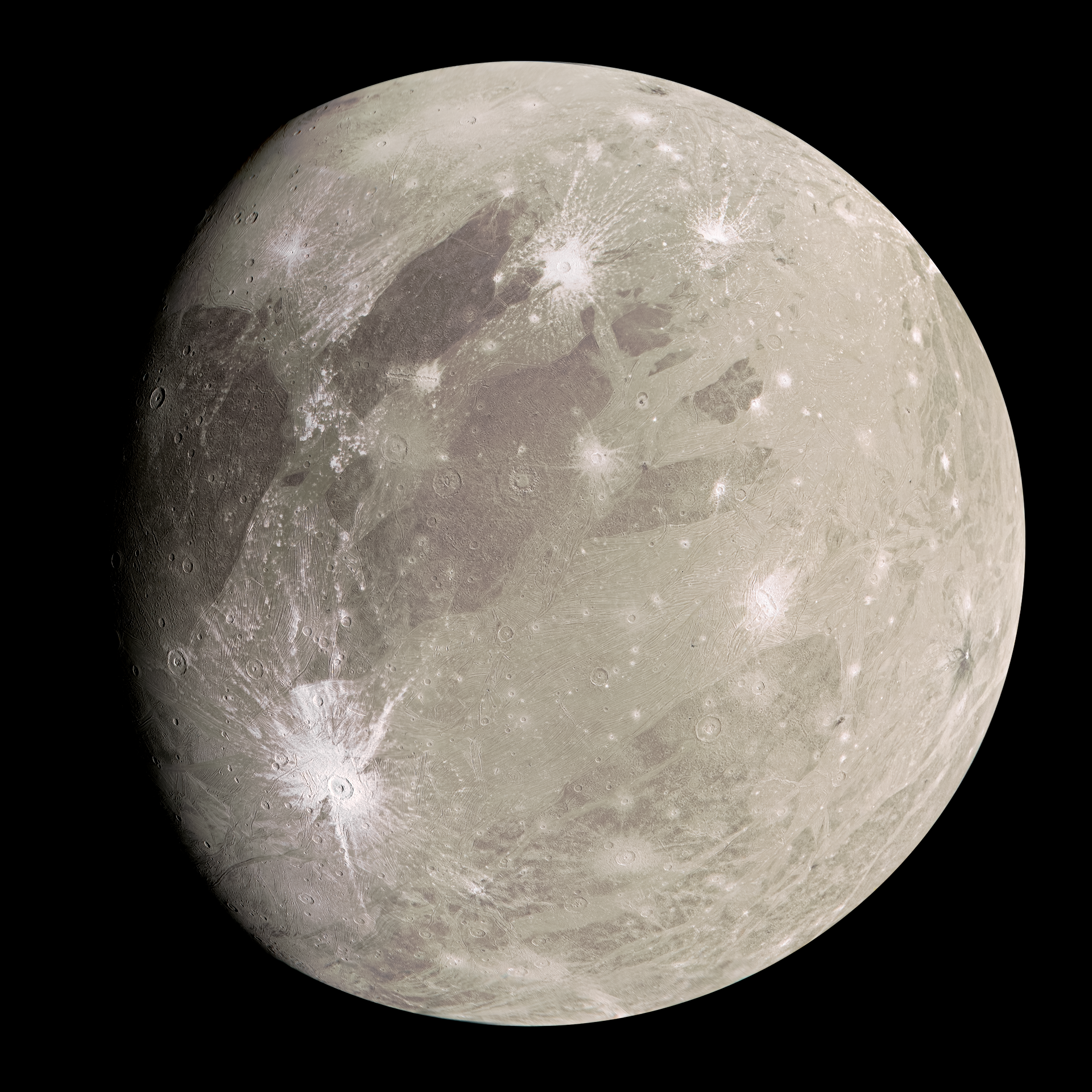
Ganymede “remains a cornerstone object of planetary science due to its geological complexity, internal magnetic field, and potential astrobiological interest based on the presence of a subsurface conducting ocean,” said researchers led by Clement Royer of Paris-Saclay University. “Its surface morphology…argues for a history of significant endogenic activity, possibly including plate-like tectonics and cryovolcanism.”
Indeed, one of Ganymede’s most interesting surface features is a mysterious “darkening agent” that extends over much of the moon’s equatorial regions. The composition of the darkening agent “remains unresolved,” according to the study, though likely guesses include carbon-rich graphite or iron-rich magnetite.
The team anticipates that the Jupiter-bound spacecraft “will provide an unprecedented view of the surfaces of the Jovian moons” that will reveal many of their secrets. At least that’s one thing we can look forward to from the 2030s.
Thanks for reading! See you next week.