
Welcome back to the Abstract! Here are the studies this week that yucked it up, went interstellar, controlled the weather, and sang our praises.
First, the sounds of ape laughter have been gracing our planet for 15 million years. Then: a visit from a cosmic elder, a meteorological martial art, and bops by blowhards.
As always, for more of my work, check out my book First Contact: The Story of Our Obsession with Aliens, or subscribe to my personal newsletter the BeX Files.
A history of hominids in hysterics
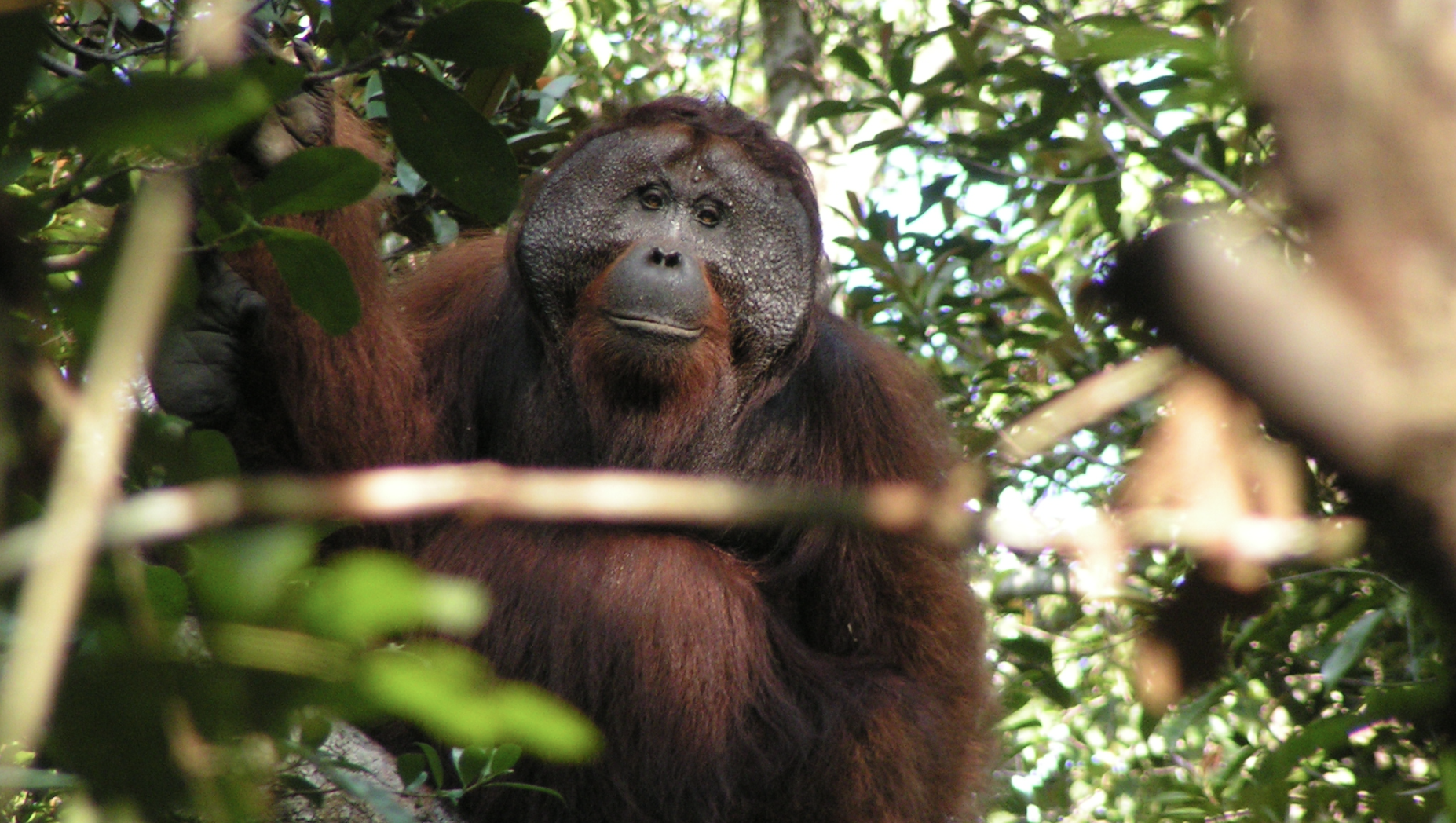
You’ve heard about getting the last laugh, but who got the first one? Scientists have now determined that laughter, a behavior common to all great apes, may have initially appeared in chortling primate ancestors that lived 15 million years ago, according to a new study that analyzes the evolutionary roots of getting the giggles.
In addition to being the best medicine, laughter plays an outsized role in human cultures and interpersonal relationships. The fact that all other great apes, from bonobos to gorillas, also enjoy a good chuckle suggests that this form of vocal expression has broad benefits and potentially deep evolutionary origins.
To probe the history of hilarity, scientists analyzed recordings of laughter from four orangutans, two gorillas, three bonobos, four chimpanzees, and four human children during bouts of playtime, roughhousing, and tickling.
The results revealed that the isochronous nature of laughter—meaning clear sound intervals like “ha ha ha”—was likely present in the last common ancestor of the Hominid family, which contains all great apes including extinct relatives such as Neanderthals.
“While all major branches of the Hominid family have evolved distinct call repertoires shaped by their species-specific socio-ecologies, one vocalization has been conserved across species and age-sex classes: laughter,” said researchers led by Chiara De Gregorio of the University of Warwick.
The team’s analysis reveals that “great apes have been laughing in a recognizable way to modern humans for at least 15 million years” and that apes that are more closely related to humans have more complex and variable laughs similar to our own diversity of guffaws, cackles, and snorts.
To sum up: lol…lmao.
In other news…
A long time ago in a star system far, far away…
Cordiner, Martin et al. “Isotopic Evidence for a Cold and Distant Origin of 3I/ATLAS.” Nature.
The interstellar comet 3I/ATLAS caused a sensation last summer when it was first discovered streaking through the solar system, partly because it revived the debate over whether these objects from other star systems could be alien handiwork.
While the evidence overwhelmingly suggests that 3I/ATLAS is not an extraterrestrial spaceship, it is nonetheless unlike any comet seen in human history. Scientists have revealed that the comet is by far the oldest object ever detected in the solar system, having “accreted as long ago as 12 billion years, following a period of intense, early star formation,” according to researchers led by researchers led by Martin Cordiner of the Catholic University of America.
In other words, 3I/ATLAS is nearly three times older than the solar system, formed when the observable universe was only a third of its current size. The age is based on the comet’s ratio of deuterium to hydrogen (D/H), which was measured by the James Webb Space Telescope, the most powerful observatory ever launched.
JWST revealed a “surprisingly high” ratio of deuterium enrichment, about 30 times the level of solar system bodies, with the exception of Venus. “3I/ATLAS thus represents a preserved fragment of an ancient planetary system,” concluded the team.
So long to this primordial pilgrim, and may it live to be 13 billion.
I have a black belt in hurricane deflection
Finally, we have an answer to the age-old question: Can we use martial arts to control the weather? In a new study, scientists propose the concept of “weather jiu-jitsu,” which uses gentle atmospheric “nudges” to redirect potentially catastrophic weather events, such as hurricanes, heat waves, or droughts.
“Imagine harnessing the power of nature to help steer hurricanes away from land, redirect atmospheric rivers to spread their rain safely and evenly, or defuse extreme weather patterns like heatwaves, freezes, or prolonged droughts before they take hold,” said researchers led by Qin Huang of Arizona State University. “It’s a vision where we partner with Earth’s own forces to create resilience, rather than reacting to disasters.”
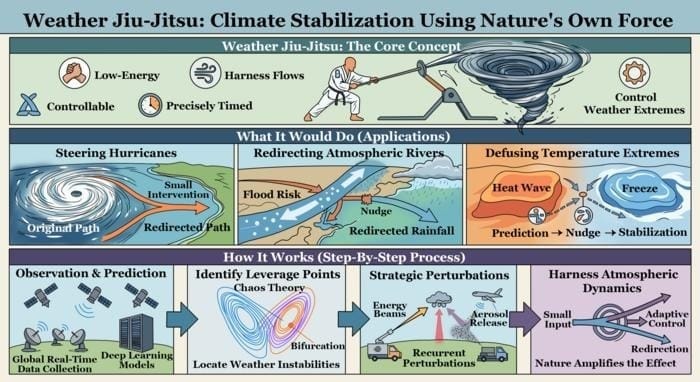
Weather jiu-jitsu involves seeding clouds with particles to influence weather outcomes, but it differs from existing methods by opting for light touches in advance of a developing weather event, as opposed to the heavier lift of weakening an event that is already ongoing.
The team’s models suggest this method could have nudged Hurricane Sandy well away from New York City in 2021, warmed Texas by about 18 degrees Fahrenheit during its deadly 2021 freeze, and reduced the rainfall that caused widespread flooding in California from 2022 to 2023 by about 5 percent.
That said, the study emphasized that the technique is only a proof-of-concept and it will take far more research to determine if it would be useful in the real world. In the meantime, let’s try some other martial arts-inspired approaches and figure out how to crane-kick a tornado or karate-chop a heat dome.
I bet you think this song is about ME
While the Song of Summer 2026 has yet to be determined, odds are that it will be singularly self-absorbed. That’s the hook of a study that discovered popular music has shown “a significant increase in self-focused language over time in individualistic societies” such as the United States or Germany, while no comparable trend was observed in more collectivistic societies such as Japan or Hong Kong.
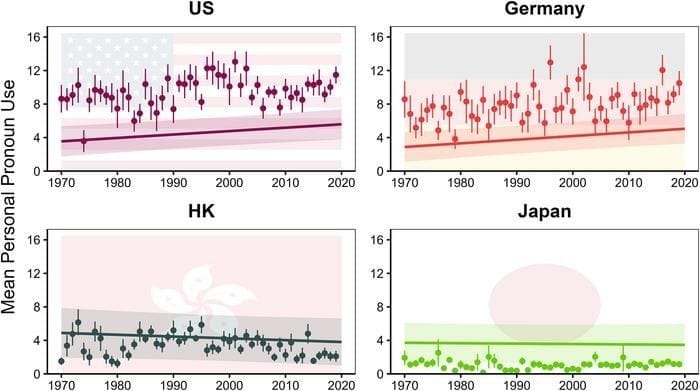
Scientists led by Marius Golubickis of United Arab Emirates University analyzed the lyrics of top 10 hits from 1970 to 2019 by quantifying the use of the plural pronouns like “we” and “us” compared with the first-person singular pronouns like “I” and “me” (check out the full list here). The results revealed that while “Western societies exhibited a clear increase in self-focused language over time, East Asian societies showed relative stability.”
This all checks out with my go-to playlist for narcissists, featuring “I Me Mine” by the Beatles, “Me Myself and I” by De La Soul, and, of course, “ME!” by Taylor Swift.
Thanks for reading! See you next week.

