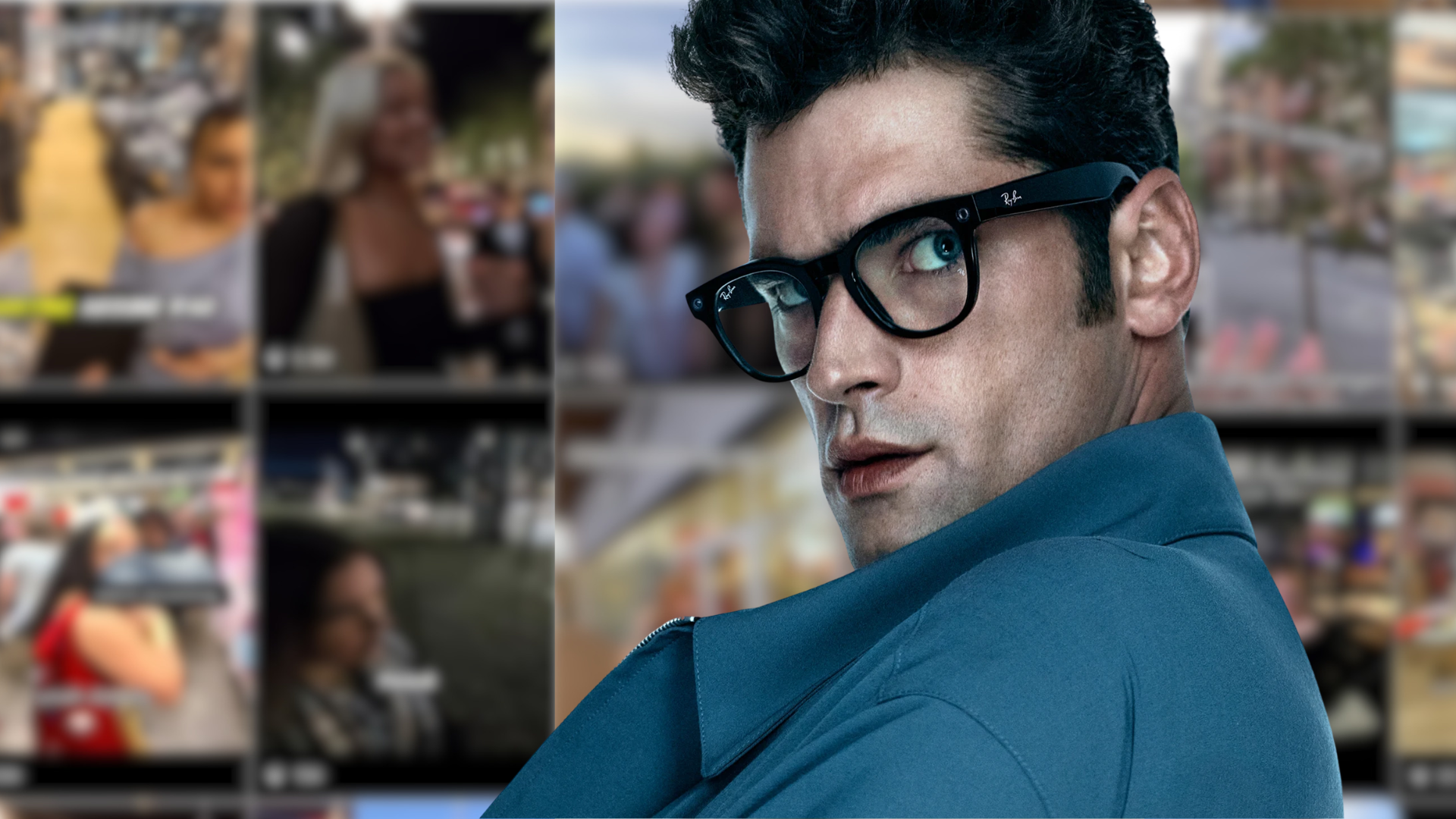
Instagram is full of first-person videos of men harassing women in public. They follow a similar script: A man walks up to a woman or group of women in a store, sitting outside a cafe, or walking home from a bar, and delivers a pickup line. The women almost always nervously laugh, react with barely-veiled disgust, or say “fuck off” while he stalks her or refuses to walk away. The men recording these videos capture them with Meta’s smart glasses, which are designed to discreetly capture interactions like these and upload the videos to Meta’s platforms where the women in the videos are turned into content for “pickup artist” accounts.
New research reveals this ecosystem works, and how pickup artists (PUA) influencers are using Meta’s products, including its smart glasses and social media platforms, to perpetuate a culture of harassment against women.
University of Sydney researchers Joanne Gray, Marcus Carter, and Ben Egliston watched hundreds of these videos to learn how pickup artist content creators use smart glasses, and what specific forms of gendered harms these recordings cause. They published their research paper, “Harm Through the ‘#RizzCam’: Smart Glasses, Ambient Capture and Invisible Harassment,” online this week as a preprint article.
The researchers compiled a dataset of 350 Instagram videos posted between September 2023 and March 2026. The videos fit specific criteria: they depicted real-world interactions involving unsolicited approaches to women in public or semi-public settings. “Unsolicited interactions were defined as approaches that appeared to be initiated without prior indication of mutual engagement,” the researchers wrote in the paper. “We included videos that appeared to be staged, scripted, or comedic performance as it is often difficult to confidently determine intent in platform content, and such material may still contribute to the circulation and normalisation of these interactions.” They found the videos by searching hashtags and keywords commonly used by pickup artist grifters.
The more surreptitious the filming seemed, the researchers found, the more serious the harassment. “The data reveals a clear correlation between the ‘covertness’ of the filming modality and the severity of the harassment,” they wrote. “This combination of first-person perspective and device concealment confirms that the means of production remain largely clandestine, facilitating a condition of low awareness among subjects and reinforcing the deceptive nature of wearable-mediated capture.”
When Meta announced its Ray-Ban Meta glasses in 2021, Egliston said, he and several of his colleagues, including those on the research team for this paper, wrote that the company’s safeguards were insufficient. “The company’s answer to covert recording was a light on the device and an expectation that users would somehow just behave responsibly. That has plainly not worked, and it leaves the burden on the people being filmed rather than on the company that built the device and owns the platforms the footage ends up on.” Last year, 404 Media reported on the ways people are modding Meta’s smart glasses to disable the recording light. Ray-Ban Metas have also been repeatedly spotted on immigration agents during raids.
Instagram head Adam Mosseri said last month that the platform would start removing harassing content. “If you’re posting content that is taking advantage of people and harassing them, like a lot of these pickup line kind of videos that we’ve heard of and seen, then we’re going to take the content down,” Mosseri said. “We don’t want people to be surreptitiously taking videos of other people and harassing them and then posting them on our platform. So we’re trying to fight that every way we can.” As of writing— almost a month after that announcement — I easily found pages and pages of Reels by men approaching women while wearing smart glasses where the women being filmed either don’t seem to know they’re being recorded, or obviously don’t want to be filmed and repeatedly tell the man recording them to stop. This isn’t even counting the endless videos recommended to me by Instagram’s algorithm showing people antagonizing and filming retail workers and shoppers in stores using smart glasses.
In the pickup artist world, this content is both entertaining and instructive, the researchers wrote. It’s superpowered by the proliferation of smart glasses like Meta’s. “As these devices move from niche curiosities to mainstream products, smart glasses intensify this asymmetry through ambient capture,” they wrote. “By leveraging their unobtrusive design, PUAs create point-of-view (POV) recordings that place the digital audience in the literal position of the practitioner. This technical capability covertly embeds the act of filming within the social encounter, effectively weaponising the subject’s lack of awareness. The result is a novel mode of ‘borderline’ harassment that often evades the scrutiny of existing platform governance mechanisms, as it lacks the overt markers typically required for a policy violation.”
The harm doesn’t end when the interaction ends, the researchers found. The long digital tail of these videos—which Instagram fails to properly moderate based on its own promises to crack down on this content—means the women in them are subjected to harassment long after they manage to get away from the man in real life. “Combined with the fact that 93.3% of these posts left comments open, subjects were frequently exposed to a digital afterlife of crude, abusive, and misogynistic commentary from the platform audience,” the researchers wrote. “Comments frequently framed women’s rejection or discomfort as unnecessarily dismissive, including remarks such as ‘she was acting rude’ or suggestions that women should ‘at least acknowledge’ the men approaching them, while others minimised harassment by arguing that people who label such behaviour as harassment are contributing to declining birth rates.”
The researchers wrote that they were inspired by the BBC’s investigations into how women are targeted by Meta smart glasses wearers when they’re trying to go about their daily lives. In one BBC report, a woman who was recorded and posted online by a man using Meta’s smart glasses was harassed for weeks after the video went online, and said she was “bombarded” with phone calls because her phone number was posted with the video. “On one occasion, she says she picked up the phone and a man said to her: ‘Do you know how stupid you are? Do you regret it? Do you know how easy that made you look?,'” the BBC reported. Men came to her workplace and repeated lines from the video and demanded her social media details, she told the BBC.
“I’ve been surprised by how firmly the ‘pervert glasses’ label has stuck. There’s a widespread aversion here that doesn’t seem quite as present for other surveillance or data-intensive products,” Egliston told 404 Media. “But public sentiment — while perhaps meaning people will be less likely to wear the glasses — is not a governance mechanism.”
Egliston said that Meta’s content moderation record “doesn’t encourage confidence,” but hopes to be proven wrong. “Our hope is that the current backlash, combined with emerging legislation imposing a duty of care on platforms, will force more substantive changes.”