Live wire Humanoids · Autonomous vehicles · Drones · Industrial robotics · Embodied AI research

Blog

  • Americans Have Turned Against AI in Incredible Numbers

    Americans Have Turned Against AI in Incredible Numbers

    Not that anyone in power is going to care, but there’s even more evidence that Americans are coming to overwhelmingly loathe AI — despite, or perhaps because, they’re using chatbots more than ever.

    In a sweeping new poll conducted by Pew Research, only 16 percent of respondents said they believed AI will have a positive impact on society — a number as dismal as the perception of the tech. 

    Meanwhile, 49 percent of adults say they use AI chatbots like ChatGPT, which remains the most popular by a considerable margin, with a quarter saying they use the tools daily. That proportion is considerably higher than the 33 percent of American adults who said they used AI chatbots in 2024.

    In other words, the tech’s widespread adoption isn’t helping its perception. A full 40 percent of respondents said they anticipate AI will have a negative impact on society, and 31 percent said it will impact them personally in a negative way, too.

    This varies quite a bit by age. Gen Z adults, ages 18 to 29, were the most wary of AI, with 48 percent believing it’ll be negative for society. Yet they’re also the group that reported using AI the most, at 66 percent.

    Interestingly, the 30-49 year olds and the 50-and-up brackets are more closely aligned, at 39 percent and 37 percent respectively viewing it as negative. They‘re using AI less, though the dropoff between their usage is significant: 61 percent of 30-49 year olds said they used AI chatbots, while only 42 percent of 50-64 year olds did. It was less than a quarter for 65 years and older. 

    What’s driving this gap between perception and usage is unclear. You could argue that some feel compelled to use it, even when recognizing the tech’s shortcomings and the ethical dubiousness of the industry that’s building it. In fact, many are literally forced to use it at work, with bosses often more enthusiastic about the tech than workers are.

    In any case, it’s a real problem for AI’s long-term staying power. Right now the industry is being propelled by hype and the mountains of cash that’re being pumped into it, while profits remain elusive. If no one likes AI years or decades from now, will there be enough customers to keep the industry running?

    More on AI: Cop Accused of Using AI to Fake Evidence

    The post Americans Have Turned Against AI in Incredible Numbers appeared first on Futurism.

  • Meta Exec Admits Zuckerberg Has Crushed Workers’ Spirits

    Meta Exec Admits Zuckerberg Has Crushed Workers’ Spirits

    Workplace morale at Meta is in a tailspin after Mark Zuckerberg and his executive crew slashed thousands of jobs to free up more funds for AI.

    Usually when rank-and-file morale takes a nosedive, corporate bosses are reticent to acknowledge it head-on, preferring instead to offer a buffet of HR-solutionism like resilience training, pulse surveys, and the dreaded team-building exercise.

    Evidently, the vibes at Meta are so bad that even the company’s C-suite is taking notice, and they’re not even trying to sugarcoat it. During an internal team meeting earlier in June, Meta’s chief technology officer Andrew “Boz” Bosworth admitted that workplace morale is downright rancid, Business Insider reports.

    Bosworth said that the situation is “maybe not the worst it’s ever been in 20 years here, but it’s probably up there. It’s definitely up there.”

    “I can think Cambridge Analytica was probably the worst,” the CTO continued, referring to the 2016 election scandal in which a political consulting firm secretly harvested data from some 87 million Facebook users. Still, he caveated that camaraderie is “probably one of the worst it’s ever been.”

    It’s a telling comment from Bosworth, who as CTO would have a better view than most of the vibes on the ground. While the layoffs alone would be enough to sour any workforce’s mood, many of those who stayed at Meta have also been moved to menial roles training the company’s AI models, Wired reported.

    In an effort to lift everybody’s spirits, Zuckerberg offered to host a company-wide hackathon — an attempt at a lighthearted diversion that landed with a thud among employees.

    As one worker snapped at the time: “I’m literally preoccupied with keeping the lights on for my team. I have no incentive to participate, let alone have the time to do so.”

    More on Meta: Meta Furious Over Bombshell Smart Glasses Revelation

    The post Meta Exec Admits Zuckerberg Has Crushed Workers’ Spirits appeared first on Futurism.

  • Review: Widow’s Bay is a boldly original take on comedic horror

    Review: Widow’s Bay is a boldly original take on comedic horror

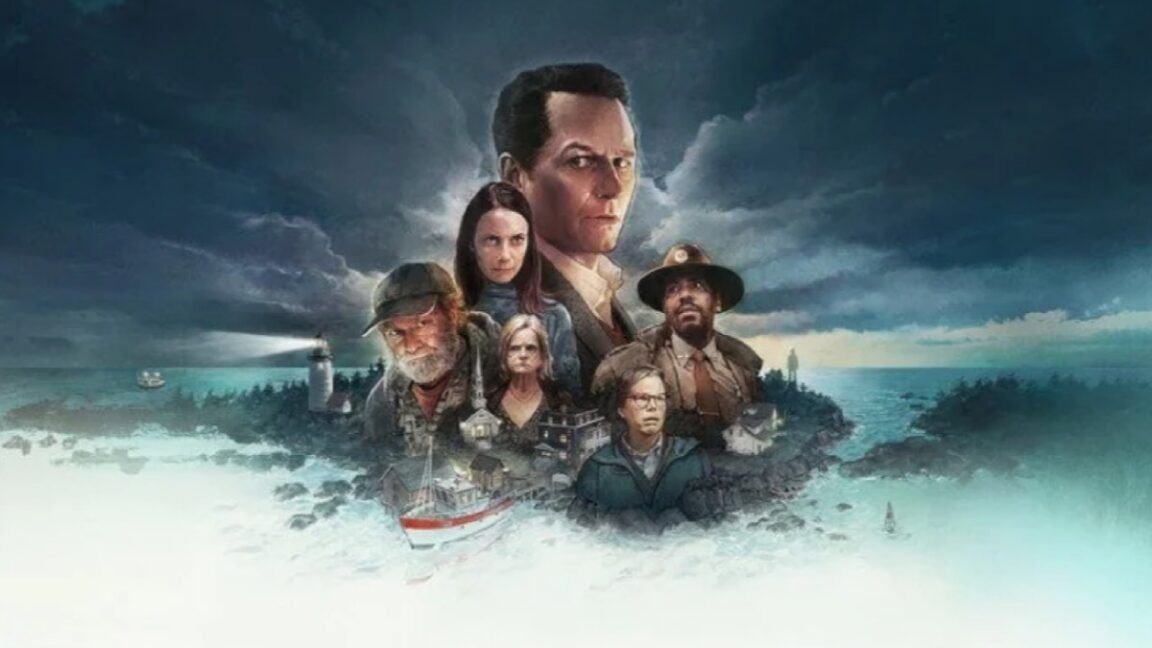
    Widow’s Bay, the delightfully eccentric new comedic horror series from Apple TV, is easily one of the best new series of the year. There’s a reason everyone from Guillero del Toro and Ben Stiller to Damon Lindelolf (Lost) is raving about the show. It’s an eminently binge-able, addictive series that pays tribute to all the classic horror tropes while reinventing them in surprising ways. Think Stephen King meets Parks and Recreation, with a dash of Twin Peaks—except Widow’s Bay is very much its own refreshingly original beast.

    (Some spoilers below but no major reveals.)

    Tom Loftis (Matthew Rhys) is a widower and mayor of Widow’s Bay, a quirky little seaside town that has a colorfully bizarre history marked by periodic tragedies. Tom is eager to elevate the town into a trendy summer tourist destination. But the arrival of New York Times travel writer Arthur Lloyd (Bashir Salahuddin), who has the clout to make Tom’s aspirations for Widow’s Bay come true, coincides with the onset of a mysterious fog. Local resident Wyck (Stephen Root) warns Tom that the fog is an omen that the island is “waking up,” meaning more supernatural occurrences are bound to happen.

    Read full article

    Comments

  • 28 Tips to Take Your ChatGPT Prompts to the Next Level

    28 Tips to Take Your ChatGPT Prompts to the Next Level

    Sure, anyone can use OpenAI’s chatbot. But with smart engineering, you can get way more interesting results.

  • New Law Would Give Artists Sweeping Protections Against AI Stealing Their Work

    New Law Would Give Artists Sweeping Protections Against AI Stealing Their Work

    For artists, it’s bad enough that AI companies scraped their artwork without permission or compensation. In a saner age, we’d recognize that for what it is: theft. And it’s even worse that so-called AI “artists” glibly go out of their way to ape the specific style of an actual artist — all while sincerely believing they’re an “artist” themselves for merely typing a prompt.

    A new proposed law aims to put a stop to that. Earlier this month, a group of bipartisan lawmakers in Congress introduced the CREATOR Act, which would give visual artists the legal power to crack down on AI being used to replicate their style.

    Per Politico‘s reporting, the legislation would apply to “distinctive visual characteristics” and “identifiable visual elements, taken together, that are consistently present in a visual artist’s publicly distributed workers and that are publicly associated with that artist.”

    Under the CREATOR Act, artists could sue people who use AI to deliberately imitate their style and profit off it without permission. Going a step further, it would also allow artists to sue the AI platforms that allow this to happen.

    As encouraging as artists might find the legal framework to be, experts find it dangerously vague and say it’ll face significant challenges. “Style” is a somewhat nebulous concept, and how it would accommodate copyright law’s fair use exceptions is also unclear.

    “There’s a lot of ambiguity about what we mean when we say ‘style,” James Grimmelmann, a Cornell tech law professor, told Politico’s Digital Future Daily newsletter. “Some elements of artistic style are things that are common in a genre… on the other hand, sometimes when we talk about artistic style, we really are referring to characteristics of somebody’s creations that are recognizably by them.”

    Mark Lee, an IP attorney at the Rimon law firm, was even more critical.

    “It’s really hard to see what you would define as a distinctive artistic style,” he told Politico. “It would make it so ambiguous that it would make it unenforceable.”

    As Grimmelmann noted, some elements of style come from the genre an artist is working in. Should an artist be able to claim this is part of their individual style? Could the vagueness of the law allow powerful copyright holders like Disney to exercise even tighter control over their intellectual property by claiming everything under the sun is part of their “style” and blowback on the individual artists it’s supposed to be protecting?

    It’s also worth noting that the bill is being supported by the multibillion dollar software giant Adobe, which has been extremely bullish on AI and whose reputation has soured among artists over the years as it’s ruthlessly monetized its products while sounding more and more out of touch with actual creators.

    Proponents of the law, nonetheless, argue that it’s designed to only go after bad actors that deliberately used AI to copy an artist’s style, requiring litigants to prove that’s the case.

    “It’s very intent focused,” Grimmelman told Politico. But he warned that withour a fair use exception, the law could punish someone who uses an artist’s style as a starting point to create something more transformative and original.

    More on AI: Anthropic Sued for Allegedly Ripping Off Its Highest-Paying Customers

    The post New Law Would Give Artists Sweeping Protections Against AI Stealing Their Work appeared first on Futurism.

  • Scientists discover neurons must break their DNA to build the brain

    Scientists discover neurons must break their DNA to build the brain

    As newborn neurons make their way through the developing brain, they must squeeze through incredibly tight spaces to reach their final destinations. Researchers discovered that this physical journey routinely causes some of the most severe forms of DNA damage—double-strand breaks—yet the young brain has evolved an impressive ability to repair the damage almost immediately.

  • Think human anatomy is finished? Scientists say think again

    Think human anatomy is finished? Scientists say think again

    Despite centuries of study, scientists are still finding new details and even overlooked structures within the human body. As researchers explore anatomical differences between individuals, it’s becoming clear that the body is far more complex—and less fully understood—than textbooks suggest.

  • Brands using AI-generated influencers to promote products on social media

    Brands using AI-generated influencers to promote products on social media

    Investigation finds AI content that purports to show genuine customers, prompting calls for greater transparency

    Brands promoting their products online are quietly deploying AI-generated influencers on social media, an investigation has found, prompting calls for greater transparency.

    The findings suggest companies are increasingly turning to AI-generated content that purports to show genuine customer experiences while giving no obvious indication that the people featured are not real.

    Continue reading…

  • The secret language behind animal cooperation

    The secret language behind animal cooperation

    Animals from different species often rely on surprisingly sophisticated communication to work together, whether finding food, cleaning parasites, or gaining protection. New research suggests these interspecies “conversations” are flexible, evolved, and far more important to life in nature than scientists once realized.