It’s now a common experience to receive an AI-generated email that’s robotic and hollow, or get a stream of useless chatbot responses when you just need some help from customer service.
Worse yet, some people will dose up entire slide decks and project documentation with AI slop. Then there are the infamous cases of hallucinated references in a report by consulting firm Deloitte and in dozens of papers at a top AI research conference earlier this year.
The jagged frontier of AI continues on its paradoxical route. On the one hand, there’s increased adoption. On the other, increased concern about the limitations and risks posed by the technology.
While “slop” – in the context of poor quality AI content – was Merriam-Webster dictionary’s word of the year for 2025, tech executives are still keen for us to think differently, to view AI tools as cognitive enhancers.
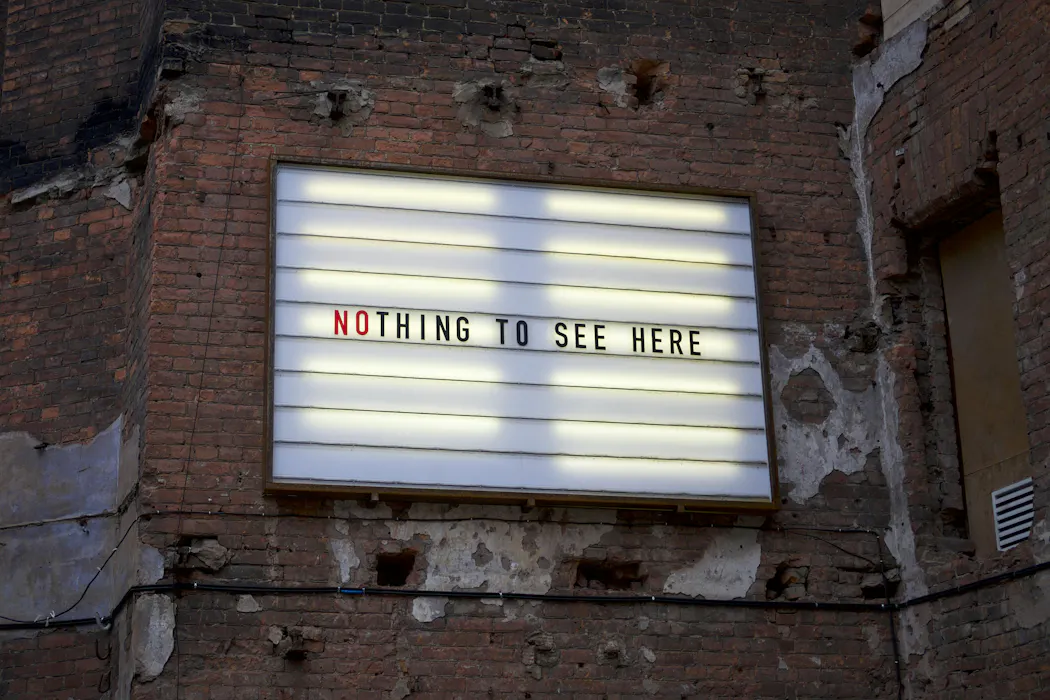
But the industry doesn’t just facilitate slop. It’s also rife with “nothingburgers”. These are AI non-events that were wildly promoted and highly anticipated, but failed to deliver as expected in the real world.
An ‘education revolution’ that’s still pending
Education, despite being one of the first victims of AI-driven plagiarism, was touted to be on track for a technological revival through AI tutors and personalised learning.
In 2023, OpenAI, Microsoft and the Gates Foundation supported and funded the widely respected online learning non-profit Khan Academy to build Khanmigo, an AI tutor. Founder and CEO Sal Khan claimed Khanmigo would “revolutionise education” in a TED talk viewed by millions.
Three years later in 2026 the revolution is still pending, while Khanmigo has been declared dead. In Khan’s own words, “for a lot of students, it was a non-event”. Khanmigo was designed not to provide direct answers in order to encourage learning and exploring. In practice, students didn’t engage at all.
Many universities were quick to build AI tutors, but hard data on actual contributions to student success remains to be seen.
Cognitive offloading (using AI to reduce mental effort) and increased access to AI tools is a further contradiction in education. It’s in the interest of AI providers to get users hooked, so they will write more prompts and use more tokens.
Prompt chaining is a creative technique used by all most advanced AI models to predict potential next tasks as part of the response to the original prompt. A chatbot might answer a question about a classic novel, and then follow it with something like “would you like me to draft an essay addressing your question in the context of postmodern literature?”.
While this increases AI model usage, it also increases cognitive offloading and begins to shape how students think and acquire knowledge – which doesn’t necessarily lead to better educational outcomes.
AI agents can’t replace people
On paper, the arrival of AI agents was a welcome addition to workplaces burdened with repetitive tasks involving multiple systems and data sources. More capable than chatbots, agents can operate on their own and make decisions to complete well-defined tasks.
It didn’t take long for the rhetoric around AI agents to step up a notch when Twitter’s billionaire co-founder Jack Dorsey (who had already laid off 40% of workforce at his fintech company Block), claimed AI agents can replace line managers and their function of routing information up and down the organisation hierarchy.
We don’t have to look far for a non-event. When AI startup Every put this theory into practice, it quickly found out AI agent line managers in a team meeting resulted in endless chatter with no decisions or actions that cost millions of tokens.
Leading AI CEOs Sam Altman (OpenAI) and Dario Amodei (Anthropic) were bold and loud in 2025 with their claims of “wipeout of entry-level jobs” and “job apocalypse”.
But as their companies plan to go public in the next few weeks, both CEOs have walked back these claims. And reports from the CEOs of Uber and Microsoft show AI budgets are costing more than the salaries of human experts doing the same work.
AI isn’t revolutionising science, either
Generative AI has also made its way into science, much to the chagrin of those worried about the quality of what’s being published in scientific journals. And there are non-events here, too.
The GNoME project was claimed an early win for Google DeepMind where AI was used to discover 2.2 million new material structures. Google claimed this result was equivalent to “nearly 800 years’ worth of knowledge”. A few months later, the study was thoroughly examined by human experts and dismissed as hallucinations that were poorly presented but also very similar to known materials.
These AI non-events will keep happening, and it’s important for the public to keep paying attention when they do. While the capabilities of AI models are still improving at breakneck speed and some are leading to genuine breakthroughs, the loudest voices in the AI industry also have a vested interest to keep up the hype.
For the rest of us, we must continuously brush up on AI literacy, to build awareness of what separates hype from reality. Only then can we adopt AI responsibly, with a clear view of both the risks and the benefits.

Daswin De Silva does not work for, consult, own shares in or receive funding from any company or organisation that would benefit from this article, and has disclosed no relevant affiliations beyond their academic appointment.