
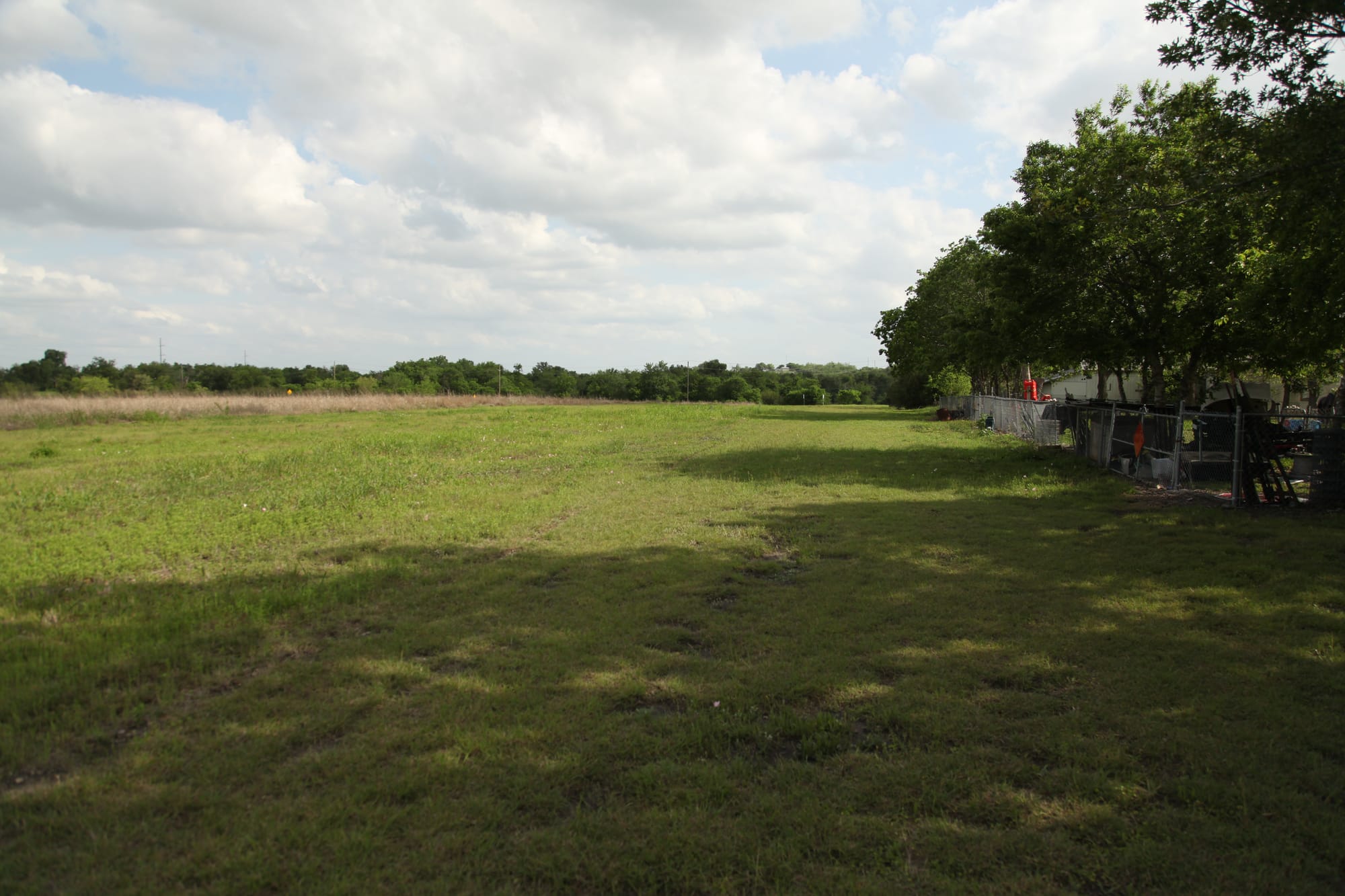
Almost 30 years ago a farming family deeded land to the City of Taylor, Texas, on the condition the city use it for a public park. For the nominal fee of $10, the farmers granted the 87 acres to a public trust in 1999. Taylor sold it to Blueprint, a data center developer, for $10 million in 2025. Now the land that was supposed to belong to the community will become a 135,000 square foot data center.
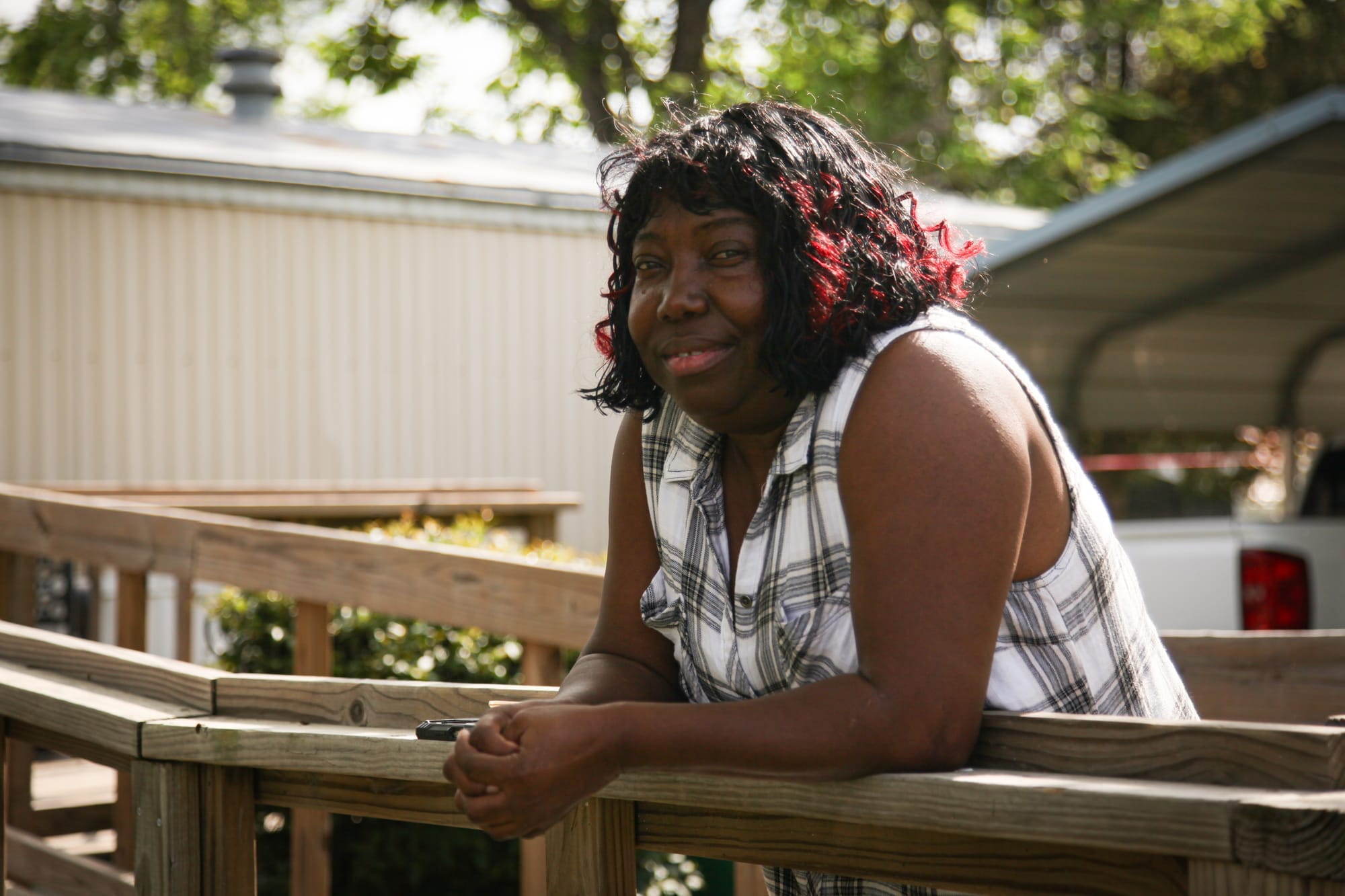
Pamela Griffin and her family have owned homes near that land for generations. Griffin and her brothers and sisters played baseball on it, camped out on it, and then watched as their children and their children’s children did the same. Now a data center will be there, just 500 feet from Griffin’s home, nestled between a power substation and the nearby railroad tracks.
Griffin told 404 Media that she and her family had lived in the area since her grandmother bought land there. “Back then, Black and brown people weren’t allowed to buy in the city limits of Taylor. So we had to buy on the outskirts,” Griffin, who is Black, said. Griffin’s father bought more land, including a vacant lot in the neighborhood for Griffin’s ten brothers and sisters to play in. Behind the lot was the property of a farmer called Mr. Bland.
According to Griffin, Mr. Bland was friendly and would sometimes talk with her father. “We used to play baseball back there and our balls used to go on his property and he’d see us play and he’d throw the balls back to us and wave at us when he was on his tractor. One day he was talking to my dad […] and he said, ‘I see the kids don’t really have nowhere to play.’ He said, ‘I’m thinking about giving this land for parkland because these kids need somewhere to play.’”
According to court records and real estate documents obtained by Griffin and reviewed by 404 Media, Bland and his family made good on that promise in 1999, granting the land to a public trust for $10 on the condition it be used as a park. That condition was included in the deed itself. Over the years, the land changed hands several times until 2025 when the City of Taylor sold it to data center developers for $10 million.
When local organizers knocked on Griffin’s door last year she had never heard of data centers and didn’t know the city planned to build one in the field her family played in. “I was like, ‘what is a data center?’ So me and my sisters and my brothers, we all got together and we started looking it up and we said, ‘oh, this is not good for the neighborhood,’” she said.
“Pam, if you’d been fighting an apartment complex or anything else […] you would have won that case.”
Griffin went to a city council meeting to tell them she didn’t want a data center near her home. Like essentially everyone else in America, Griffin is worried about what the building will do to the air, water, electricity, and noise near where she lives. “We can’t afford it,” she said. “I got a lot of old people in our community that can’t afford to move.” She said the city council brushed off her concerns and said the data center builders would try to “minimize health risks.”
According to information about the data center on Taylor’s website, the city is planning to address the community’s concerns. “Any noise from equipment will be contained within the building envelope and a solid barrier wall in the front and an earthen berm with landscaping, will also provide additional noise reduction,” it says. The site also claims the data center wouldn’t use a lot of water because of a closed-loop system and that developers would pay for a new power substation so as not to tax the local grid.
The city’s website also says there’s nothing it can do to stop the data center, even if it wanted to. “Can the City just say no to data centers?” one part of the FAQ reads. “In short, no.”
Daniel Seguin, Taylor’s executive director of community services, told 404 Media that Blueprint did not need the City’s explicit approval to build a data center. “Blueprint Projects did not require City approval to use the property as a data center because the property’s existing Employment Center zoning already allowed such a use,” he said.
“The City of Taylor’s Land Development Code primarily regulates form, not function. The only approvals that our code requires are for the general layout of the buildings, landscaping, impervious cover, etc,” he added. “The developer has not advanced the project with the City beyond the Employment Center Plan. To break ground, the developer would still have to secure the City’s approval for platting and building permits. This process has not yet been initiated.”
At a meeting with anti-data center activists after the city council meeting, Griffin told them the story from her childhood about Mr. Bland promising her father to give the land to the City for a park. Land deeds are strong legal documents in Texas, almost sacrosanct, and if Griffin’s memory was correct then the deed from 1999 could be grounds to stop the data center’s construction.
One of the activists started digging through public records and found the original deed. It was just as Griffin had remembered. On July 7, 1999, Bland’s descendants granted 87.97 acres of land to the “Texas Parks and Recreation Foundation, a Texas non-profit corporation, to be held in trust for future use as parkland by Williamson County, Texas,” according to a copy of the deed reviewed by 404 Media.
Griffin went to her family and said they needed to hire a lawyer. “We gotta get this park back for this community that should have been built a long time ago,” she said. Griffin used money from her family to hire a Taylor based lawyer named Chris Osborne.
Osborne wasn’t optimistic at first. “He said, ‘Oh Pam, I don’t think you have a case,’” Griffin recalled. But Osborne went through almost 30 years of deeds, transfers, and paperwork anyway. In 2003, the Texas Parks and Recreation Foundation granted the land to another non-profit called the Williamson County Park Foundation. A month later, that non-profit gave the land to the City of Taylor. Five years later, in 2008, the city of Taylor sold the land to the Taylor Economic Development Corporation (TEDC) for $15,000. In 2025, TEDC sold the land to Blueprint, the data center developers, for $10 million.
It was quite the journey of ownership for a strip of land meant to be a park and quite the appreciation in value. “I guess they tried to bury it, because they put another deed on top of another deed,” Griffin said. She and four family members filed a lawsuit, but Blueprint filed a motion to dismiss and the judge granted it. Griffin’s lawyers also asked for an injunction against the construction of the data center while the case worked its way through the appeals process. The judge denied it.
Griffin’s lawyer told her a data center is hard to fight. “He said, ‘Pam, if you’d been fighting an apartment complex or anything else […] you would have won that case,” she said.
“At its core, this is a property rights dispute: a generous family set aside land for a future park, and this change of use directly impacts a largely working-class community,” reads a statement on Facebook from local activists after the request for an injunction failed. “Although the injunction was denied and the case dismissed at the trial court level, the plaintiffs are already filing an appeal with the Third Court of Appeals in Austin, Texas.”
“Data centers create a significant net financial benefit for cities because they generate a lot of new tax revenue without also increasing demand on city services and infrastructure. Because they don’t employ many people or attract many visitors, the facilities don’t increase traffic or emergency service calls. They also don’t increase the need for housing and classrooms.”
“I keep trying to tell everybody, if they start messing with deeds in Texas? Allowing deeds to be not upheld? What’s going to happen to all of us? When we got deeds? What people leave behind? They’re going to start saying, ‘oh that person left you that but you can’t have it,’” Griffin said. “That’s the scary part. I’m not fighting just because of a data center. I’m fighting because this land was deeded for park land.”
Right now the Blueprint data center is moving forward. “What do you do in a situation like that? Citizens go to your city council, who have to approve zoning […] and they’re supposed to be the one who protects or helps or be the stopgap and they shrug their shoulders,” Carrie D’Anna, a community organizer in Taylor, told 404 Media. “Sorry we didn’t give you gas lines. Sorry we gave you a park in the wrong spot. Sorry we didn’t follow through on what we said we’d do. But could you just deal with this huge data center?”
Griffin and her family don’t want to move and even if they did, selling their homes would be difficult because no one wants to live next to a data center. On the FAQ page for Taylor, the city attempts to address this concern. “Do data centers affect property values nearby?” it asks. The answer: “Available evidence from peer cities such as Round Rock does not show that data centers decrease nearby residential property values.”
It’s a ridiculous comparison. Round Rock is a suburb of Austin with a population of more than 100,000 people and close access to the capitol city of the state. Taylor’s population is 16,267. The median value of the homes near the proposed data center in Taylor is around $90,000. In Round Rock the median house is worth half a million dollars.
Seguin from the City said Taylor expected to generate $30 million in tax revenue from the data center over the next decade, $20 million of which he said would go to the school district. “Data centers create a significant net financial benefit for cities because they generate a lot of new tax revenue without also increasing demand on city services and infrastructure,” he said. “Because they don’t employ many people or attract many visitors, the facilities don’t increase traffic or emergency service calls. They also don’t increase the need for housing and classrooms.”
“It’s very obvious to me that the choices that are being made are going to throw many people into poverty, and they’re going to be trapped there because they won’t be able to sell their land, they won’t be able to get out and go somewhere else, and people who are benefiting from this are going to move on,” D’Anna said.
For Griffin, it’s not about the money. It’s about her family continuing to enjoy the area she grew up in. “My family didn’t hire the lawyer to sue the company to get money,” she said. “We’re suing for the deed to build a park for this community.”
Asked about the lawsuit, Seguin said the City wasn’t a party to it. Which is true, the defendant is Blueprint’s parent company. Blueprint did not return 404 Media’s request for comment.

