An industrial automation deal, autonomous freight growth and a key drone spectrum vote lead today’s physical AI news.
1. Rockwell Automation agrees to acquire mobile robot maker AGILOX
Rockwell Automation has agreed to buy AGILOX, a developer of autonomous mobile robots. The deal adds to the mobile robotics lineup Rockwell began building with its 2023 purchase of OTTO Motors.
Why it matters: A second AMR acquisition signals that a major industrial automation supplier sees mobile robots as a core part of factory and warehouse offerings, not a side line. Track more deals on our funding tracker.
2. Einride’s contracted revenue rises 76% as autonomous freight expands
Swedish autonomous and electric freight company Einride said contracted annual recurring revenue reached $167 million in November, up from $95 million at the end of June. In its third-quarter update, the Nasdaq-listed company also reported 27% sequential revenue growth on a constant-currency basis.
Why it matters: Contracted revenue is one of the clearer public indicators of whether autonomous trucking is turning into paying, recurring business rather than pilots.
3. FCC votes today on a nationwide drone spectrum license for AURA
The FCC is scheduled to vote Nov. 19 on a draft order granting AURA a nationwide 450 MHz license. The draft lets AURA build coverage at 5,000 and 25,000 feet without requiring service at the 400-foot altitude where most small drones fly.
Why it matters: Dedicated spectrum shapes how drones and other aircraft communicate beyond visual line of sight, and the low-altitude gap may matter to delivery and inspection operators.
4. MIT’s featherweight flying robot now carries its own sensors and computers
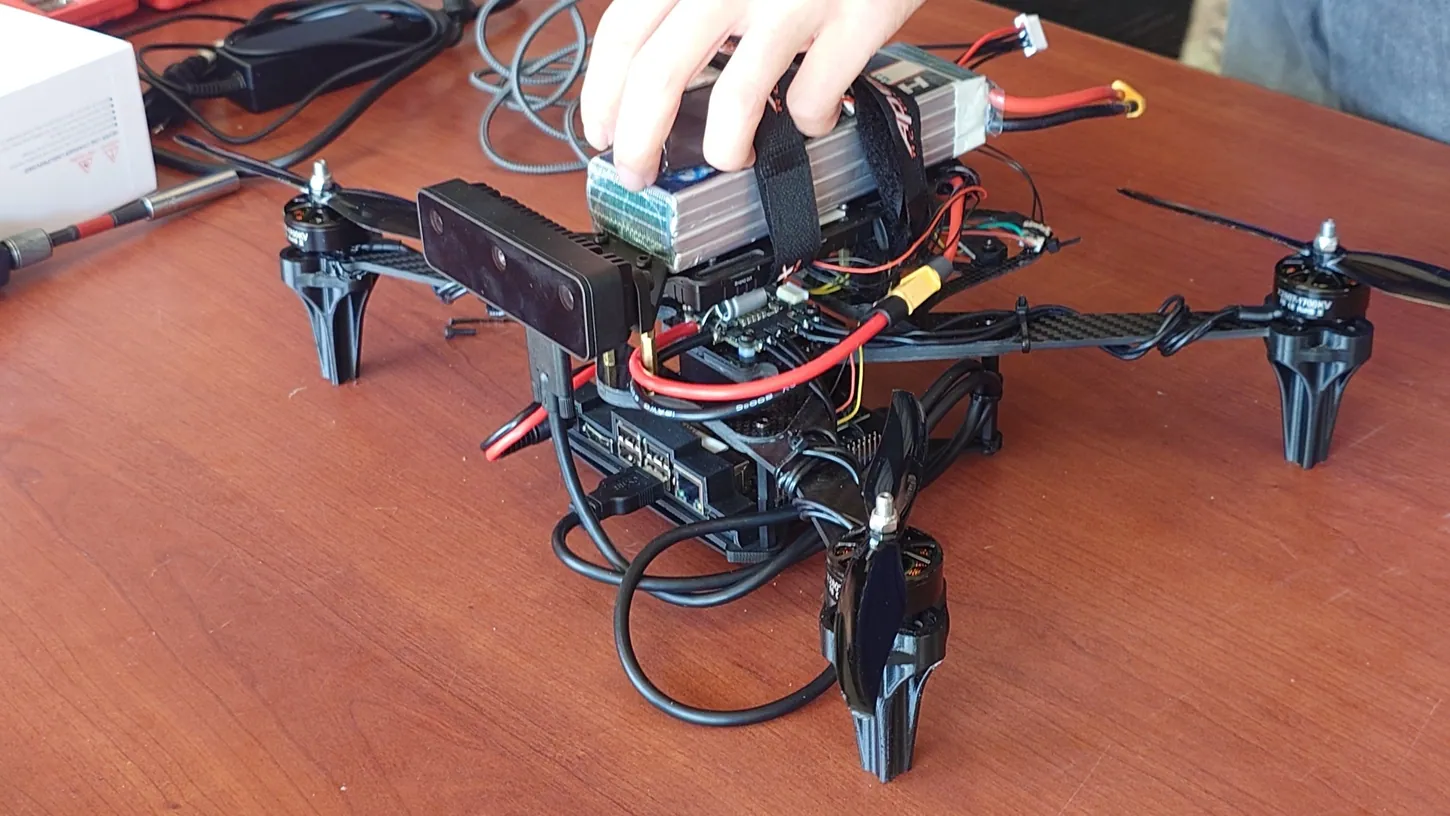
MIT researchers have built insect-scale aerial microrobots with fast, agile flight, but until now they could not carry navigation electronics and depended on a lab motion-capture system. The new work puts sensing and computing on board the robot itself.
Why it matters: Cutting the tether to external tracking is a necessary step before microrobots can be tested in settings like precision agriculture or search and rescue.
5. Amazon drone delivery reaches the Atlanta area
Amazon Prime Air began MK30 drone deliveries from Gwinnett County the weekend of Nov. 14, though the FAA’s public index showed no Amazon Georgia file as of Nov. 18. Separately, Uber Eats and Zipline started drone delivery in Spring, Texas, a suburb Wing already serves.
Why it matters: Drone delivery is spreading into major U.S. metros, and several operators now compete in the same suburbs while public environmental and regulatory paperwork lags behind.
6. Ukraine tests nine possible DJI Mavic replacements
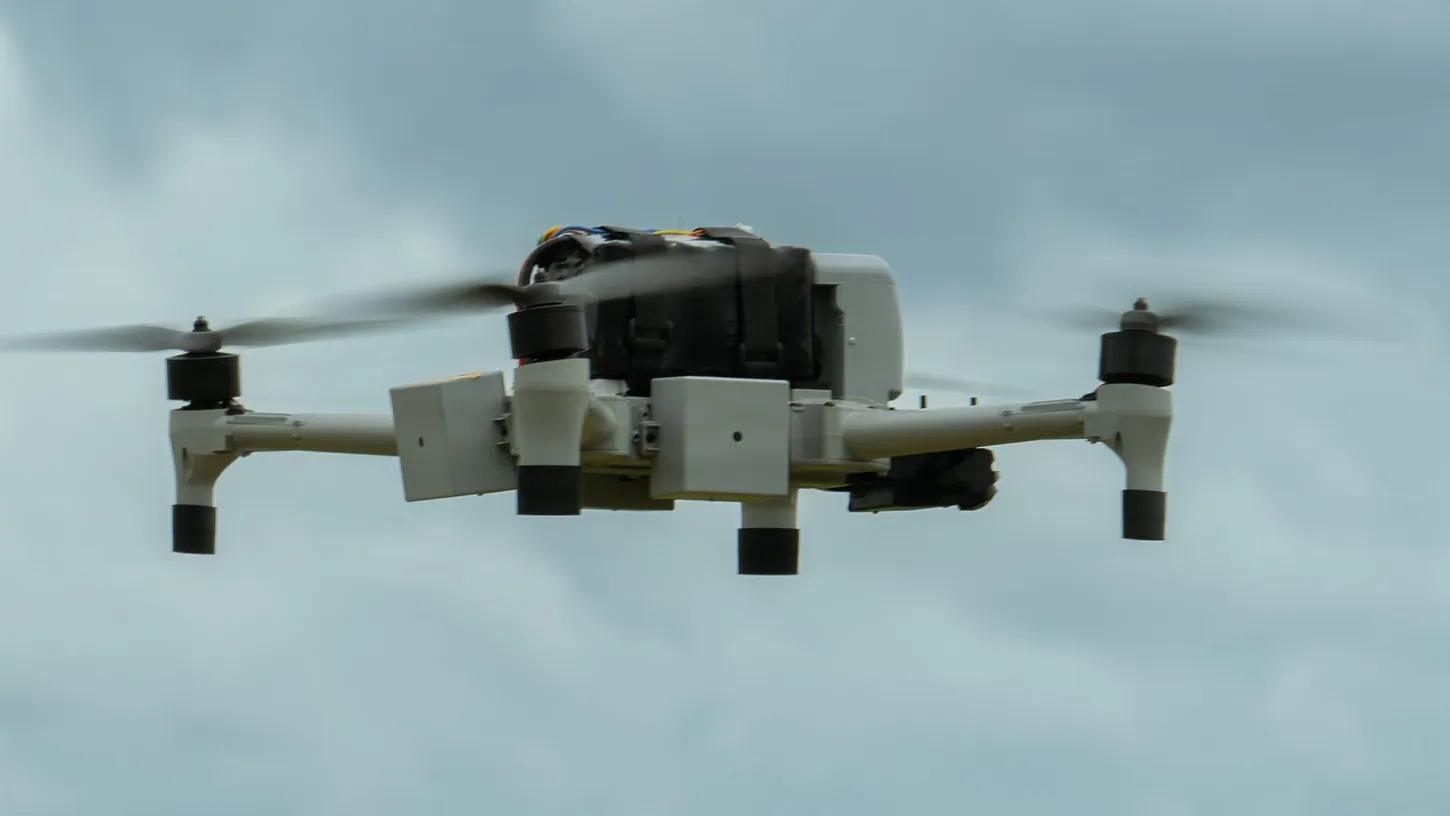
Brave1 and Ukraine’s Defense Ministry tested Mavic-class drones from nine manufacturers against a bar of 60 minutes of flight without GPS. Drones that pass move on to contracts.
Why it matters: Ukraine is one of the largest users of small drones, so its push to replace Chinese-made models could shape which non-DJI suppliers scale up.
7. UC San Diego builds the fastest all-soft robot, with no electronics
Engineers at UC San Diego report a six-legged robot made entirely of soft material that reaches 4.72 meters per second and runs on sand, mulch and concrete, and can also swim. It is 3D-printed in one piece from a single material and needs no electronics to operate.
Why it matters: Soft robots have generally been slow; one-step printing and electronics-free operation could make fast, rugged soft machines cheaper to produce.
Quick hits
- Kawasaki Robotics launches the F Series S-type controller with built-in safety and cybersecurity functions aimed at European regulatory requirements.
- Imagry and Endera team up on Buy America-compliant Level 4 autonomous buses and shuttles for US transit.
- Toyota’s Woven Capital is investing beyond cars, in robotics, physical AI, energy and aerospace startups.
- Zipline hires Uber’s Anthony le Roux to build 20+ African drone hubs, while Ghana still owes it about GH¢175 million.
- A TU Delft quadcopter finds a perch by touch and hangs with its motors off; it perched in all 26 lab trials.
Get the Daily and Weekly Brief by email — subscribe free. Every item links to our summary and the original reporting. Brief compiled by Physical AI News.
Newsletter
Get the Physical AI brief
The day’s most important robotics and embodied-AI stories, in your inbox.