
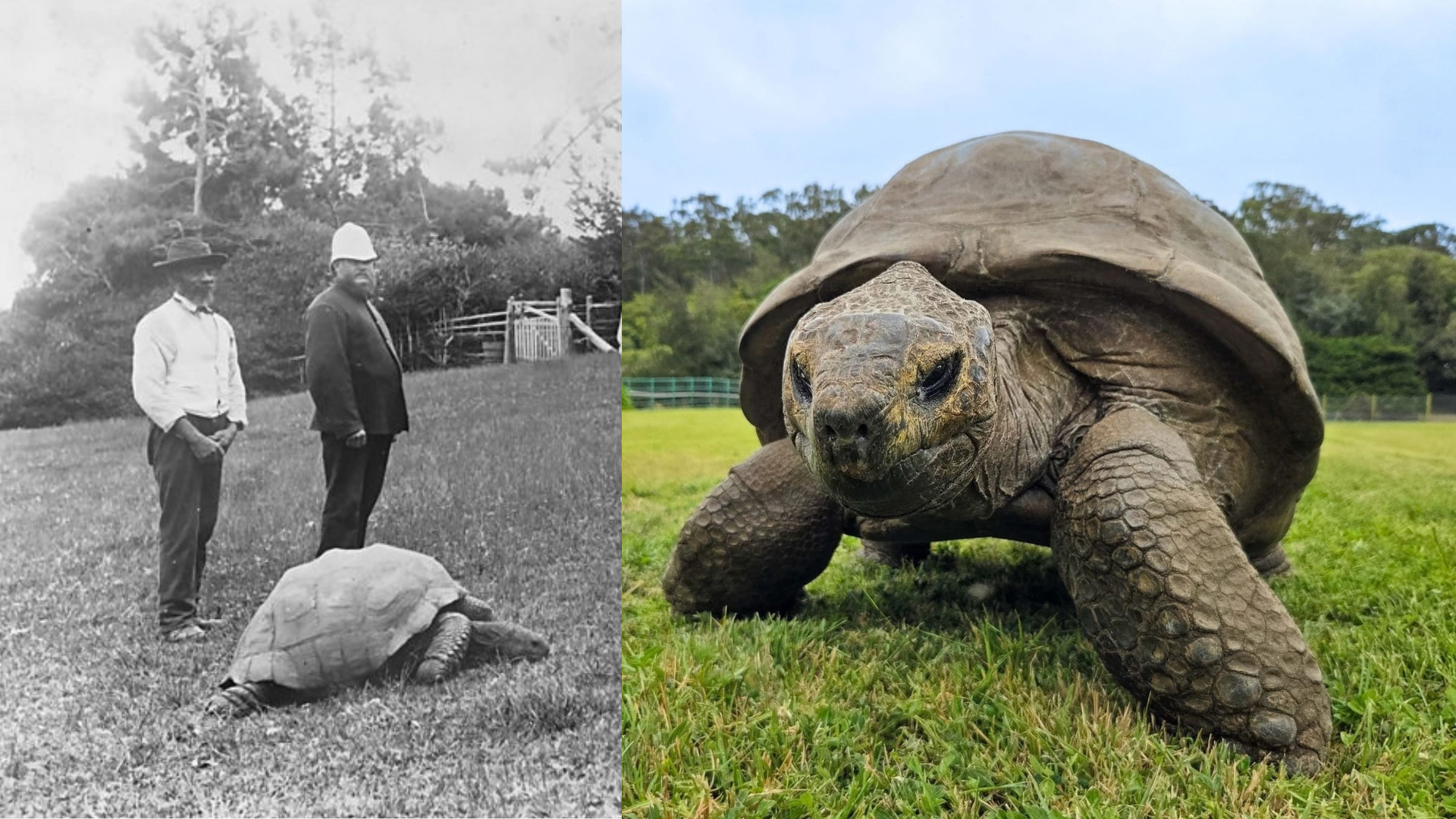
Jonathan the tortoise, the world’s oldest living land animal, is still chugging along at the ripe age of roughly 194. Now, scientists have discovered some of the secrets to Jonathan’s longevity by sequencing his genome for the first time, according to a study published Wednesday in Science Advances.
Jonathan, a Aldabra giant tortoise (Aldabrachelys gigantea), hatched around 1832 in the Seychelles archipelago, and he was already in his twenties when Charles Darwin published On the Origin of Species. In his fifties, Jonathan was brought to the remote island of Saint Helena, along with three other tortoises, as a gift to the British colonial governor in the 1880s. He has lived there ever since.
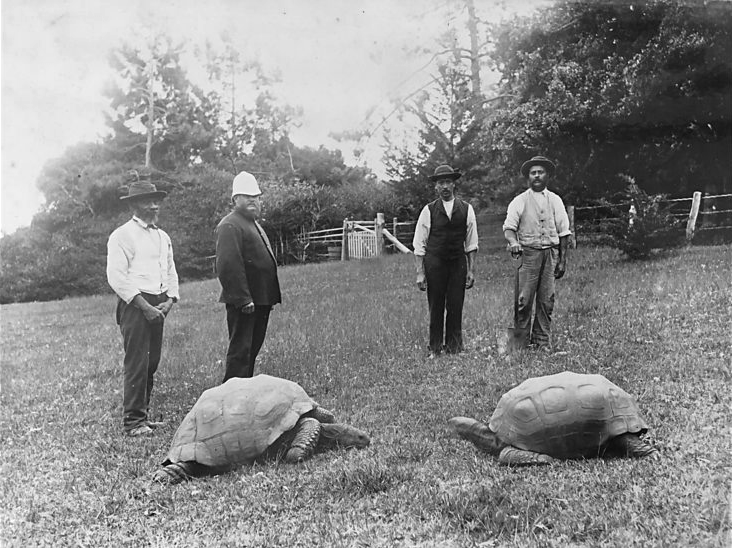
Aldabra giant tortoises often become centenarians, but Jonathan is a major outlier even for his species as he approaches nearly 200 years on this planet. To better understand his extreme lifespan, researchers evaluated Jonathan’s genome based on swabs of his cheeks and compared it with the genomes of several other tortoises, including a 36-year-old named Tank.
The results revealed that Jonathan has “unique gene variants in most aging pathways” including DNA repair, insulin regulation, mitochondrial function, and “low entropy” methylation, reports the study.
“Aging is very complicated, and there’s all these different hallmarks,” said Stephen Clark, an aging researcher at the non-profit Kallel Foundation and an author of the study, in a call with 404 Media. “That’s why this Jonathan study is so interesting. We’re still just at the very beginning of trying to understand aging.”
The study was not an easy lift. Clark first reached out to Jonathan’s caretakers in 2017, but it took some negotiating to figure out the best way to obtain the tortoise’s genetic information. A blood draw was deemed too risky, so Jonathan was coaxed into opening his mouth for a swab. The results were delayed by incomplete early samples, the Covid pandemic, and new regulations governing access to Jonathan.
After years of back and forth, the samples were delivered from Saint Helena to Florida by the U.S. Space Force. The results showed that Jonathan had many gene variants the team expected to see, based on studies of other long-lived individuals and populations. These included variants associated with DNA repair, maintenance of aging-related sequences called telomeres, and the process of cellular recycling known as autophagy.
But the researchers found a surprise in Jonathan’s “methylome,” which is a set of methyl-based modifications involved in gene expression. The subset of Jonathan’s methylome related to mitochondrial processes was unusually pristine, or “low entropy.”
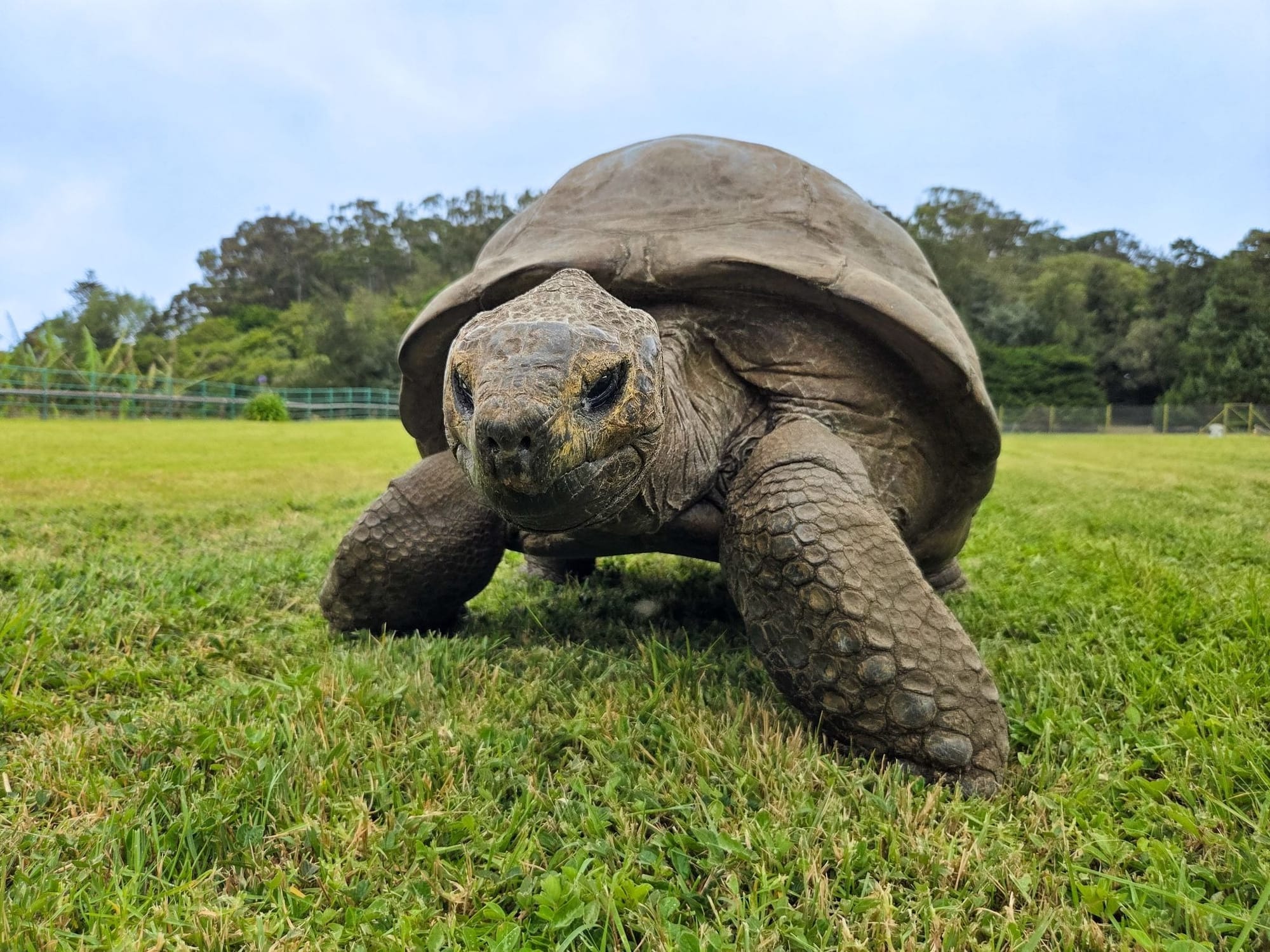
“Jonathan’s really the first of his kind to have this analysis, and we were also able to do the methylome for the younger tortoises,” Clark said. “We actually compared him to a five-year-old tortoise, so we had 189 years of difference between the methylomes. No one’s ever done that, even in humans, because no humans live that long. That was one of the main things we were excited about: how does this methylome change with age?”
Whereas most of Jonathan’s genome showed signs of entropy commensurate with his age, his mitochondrial methylome seemed on par with that of the five-year-old tortoise, signaling that these pathways may play a special role in his advanced age. However, Clark said it would take more research to follow up on that lead, and to untangle the complicated web of genetic components that influence aging and lifespan.
“We’re interested in long-lived species like Jonathan because we can hopefully find other targets,” Clark said of his team’s work at Kallel Labs. “The ultimate goal of the company is to affect human healthspan and lifespan.”
As for Jonathan, he continues to live out his voluminous days at the governor’s residence, Plantation House, where he and his fellow tortoises have become one of the island’s tourist attractions. Saint Helena is also known for the exile of Napoleon Bonaparte, who died there a mere decade before Jonathan is thought to have been hatched. It’s amazing to think about just how much the world has changed in Jonathan’s lifetime. Long may he graze.


?ref=404media.co#/media/File:Jonathan_and_another_tortoise,_St_Helena.png)