
Welcome back to another special edition of the Abstract! As I mentioned in last week’s newsletter, I have saved up some of the most mind-boggling studies from 2026 so far to share while I’m out on vacation.
With that said, here are the studies this year that hit the bottle, went hog wild, slithered into prominence, and double-detonated.
First, a tale of survival on the high seas from a trash-bound crab. Then: a hybrid emerges from radioactive fallout, a snake in the grass (and lots of other places), and a surprise from a space jellyfish.
As always, for more of my work, check out my book First Contact: The Story of Our Obsession with Aliens, or subscribe to my personal newsletter the BeX Files.
Next week, we’ll be back to our regularly-scheduled programming. Until then, enjoy the last special summer edition of the Abstract!
Tell me about a complicated crab
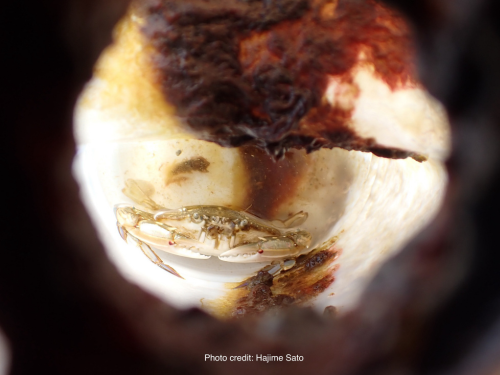
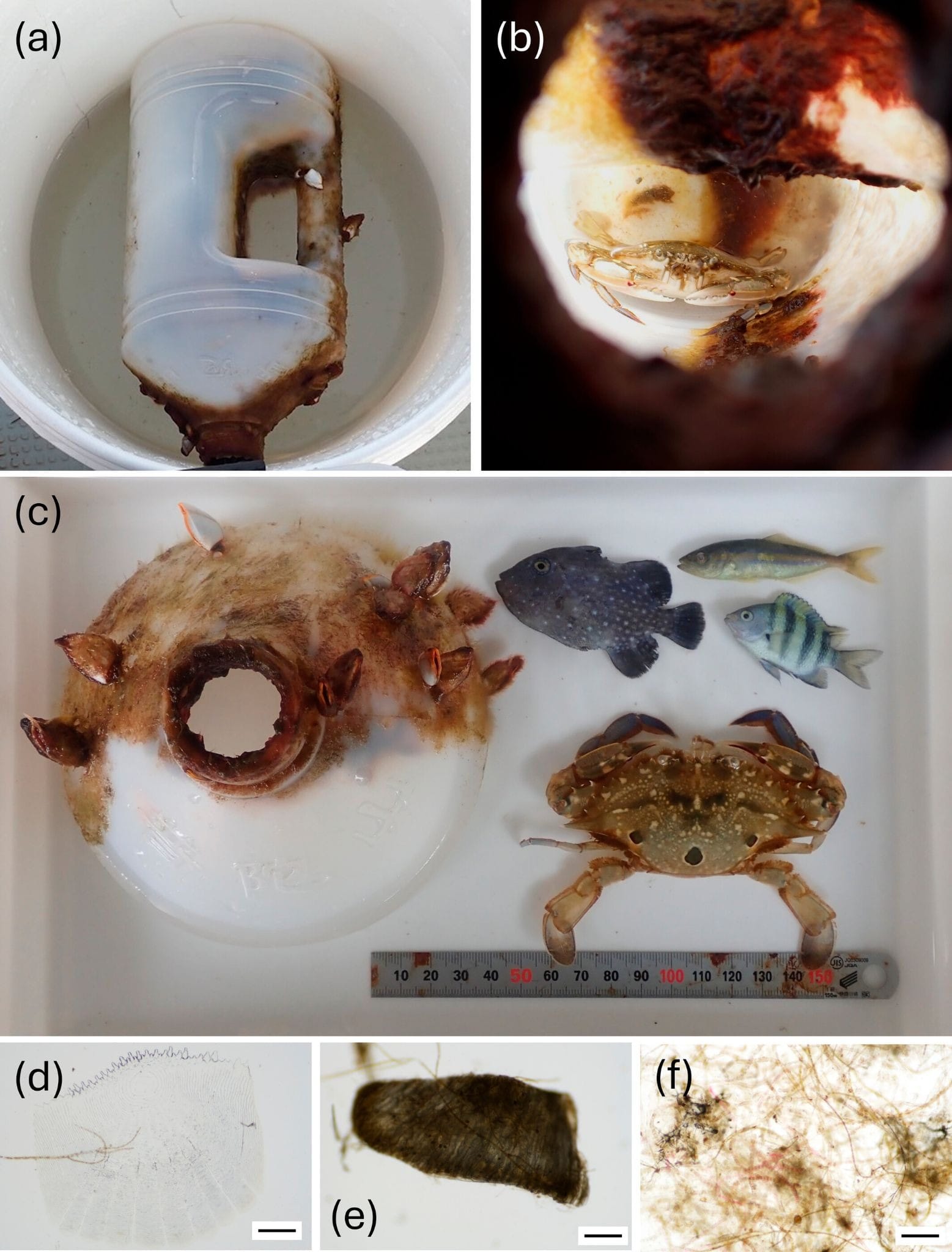
In the summer of 2022, scientists conducting a boat survey off the coast of Sesoko Island, Japan came across a floating bottle of Shaoxing cooking wine carrying a lonely female crab.
It appears that this three-spot swimming crab (Portunus sanguinolentus) entered the bottle as a youngster and then grew too large to get back out again. Judging by its size, the crab spent at least one or two months drifting across the seas, like a crustacean Odysseus consigned to Poseidon’s whims. Though the scientists released the crab, she did not get to enjoy her freedom for long as she was promptly dissected in order to reconstruct her journey, according to a study published in April.
“We hypothesized that the crab survived by hunting juvenile fish that entered the bottle,” said researchers led by Hajime Sato of Hiroshima University. “The stomach contents revealed that the crab consumed the same fish species…observed near the bottle. Green and brown algae…most likely growing inside the bottle, were also identified in the diet.”
The team likened the crab to the story “The Salamander” by the writer Masuji Ibuse, which tells the tale of a salamander that grew too large to escape its burrow. The story also reminds me of one of my favorite anecdotes from a study: Anacondas will sometimes slither into chicken coops, feed on all the poultry, and then become so engorged that they’re unable to escape.
In addition to offering a timeless warning about feasting in confined spaces, the study is a testament to the negative impacts of anthropological debris on wildlife. Who knows how many other animals are out there in the wild, trapped in our trash?
“The bottle was made of high-density polyethylene (HDPE), which is buoyant in seawater and can persist in the environment for several decades (>28 years) while retaining its shape,” the researchers noted. “Given its narrow-neck design, we hypothesize that such bottles may have similar impacts on other crustaceans and fishes associated with drifting objects.”
“Although little evidence has suggested that drifting debris has an immediate and direct impact on crab populations,” they concluded, “shouldn’t we listen faithfully and carefully to the tragic messages from small marine organisms?”
In other words, not every message in a bottle is an antiquated handwritten letter—some are living symbols of our changing world.
In other news…
Beware the crossbred radioactive boars
The tale of the bottled crab is not the only study this year that sounds like a dark children’s allegory—indeed, it’s not even the only one from Japan.
In January, researchers reported on the emergence of hybrid pig lineages made up of domestic swine that escaped in the wake of the 2011 Fukushima Daiichi Nuclear Power Plant disaster and began breeding with wild boars.
The feral swine have introduced genes into wild boar populations through a hybridization process known as genetic introgression. The hybrid population has skyrocketed both due to the relative absence of human interference in the fallout zone, and because swine breed much more often, and produce larger litters, than wild boars.
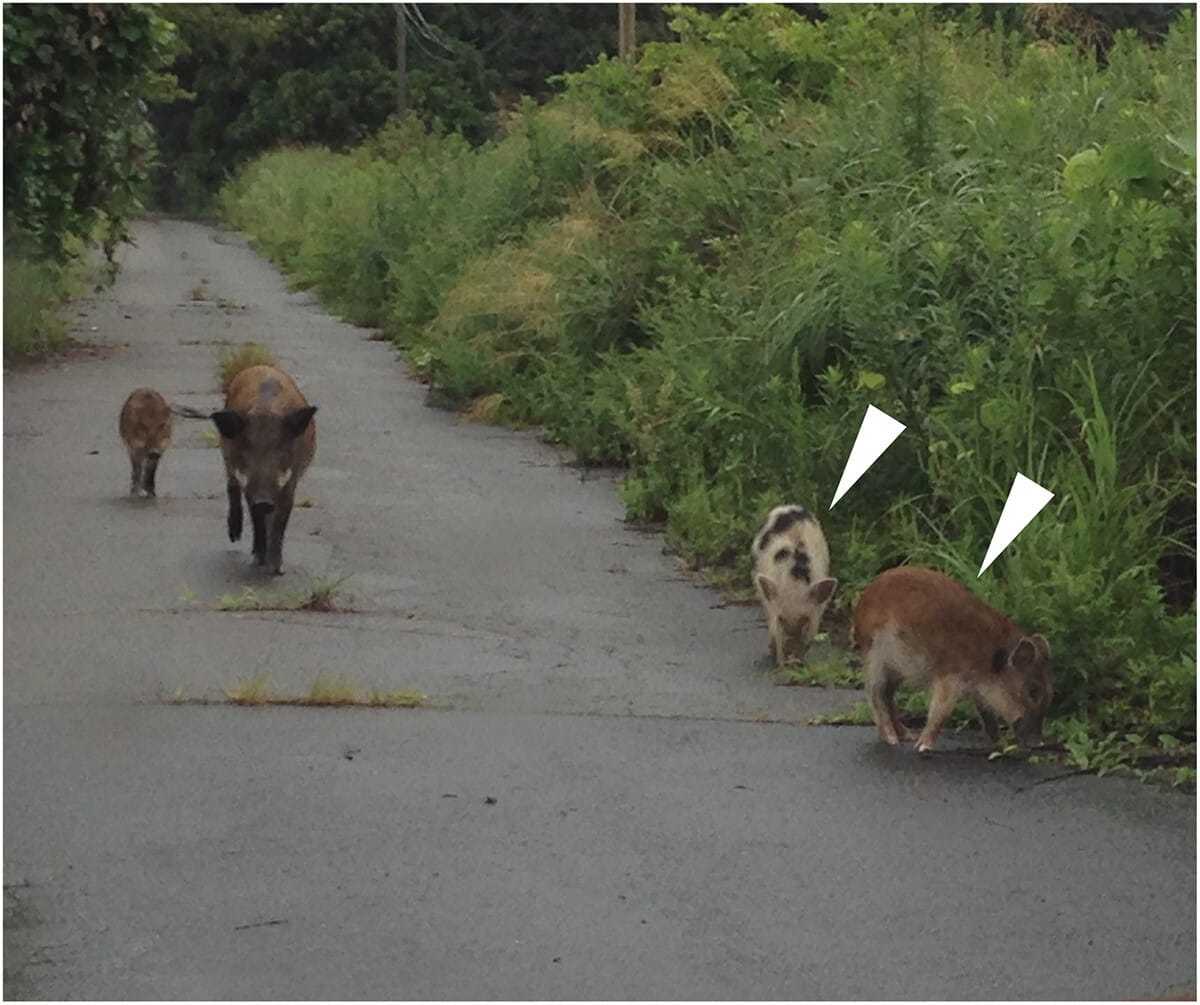
Genes “introduced by escaped swine following the FDNPP accident have persisted and spread within wild boar populations through repeated backcrossing and range expansion,” said researchers led by Donovan Anderson of Hirosaki University. “The results underscore the ecological significance of hybrid individuals as indicators of post-accident population recovery and gene flow dynamics in a contaminated landscape.”
Did I mention that the hybrid hogs are also radioactive? Their bodies contain high levels of cesium isotopes from their habitat, even after more than a decade. This phenomenon of radioactive wildlife has been observed at other contaminated sites, such as Chernobyl, offering yet another eerie glimpse of the persistent human impact on the natural world.
Snakes on multiple ecological planes
Simões, Tiago R. et al. “Exceptional brain and ecological diversity in the earliest snakes.” Nature.
It’s time to return to one of my all-time favorite beats—SNAKE NEWS. Snakes have evolved into a dazzling array of species that range in length from a few inches to 36 feet and occupy wildly different habitats. But the origins of these legless lifeforms have long been shrouded in mystery, as scientists have debated whether early snakes first emerged in water, in underground burrows, on land, or falling from the sky (just kidding).
Scientists have now discovered that the answer is basically: all of the above. By studying rare fossilized remains of snakes—including one exceptionally-preserved new species that lived 85 million years ago—a team found that the earliest snakes lived in burrows (fossorial), above ground (non-fossorial), and in marine habitats, challenging the idea that they slithered into existence from one type of environment, according to a study published in July.
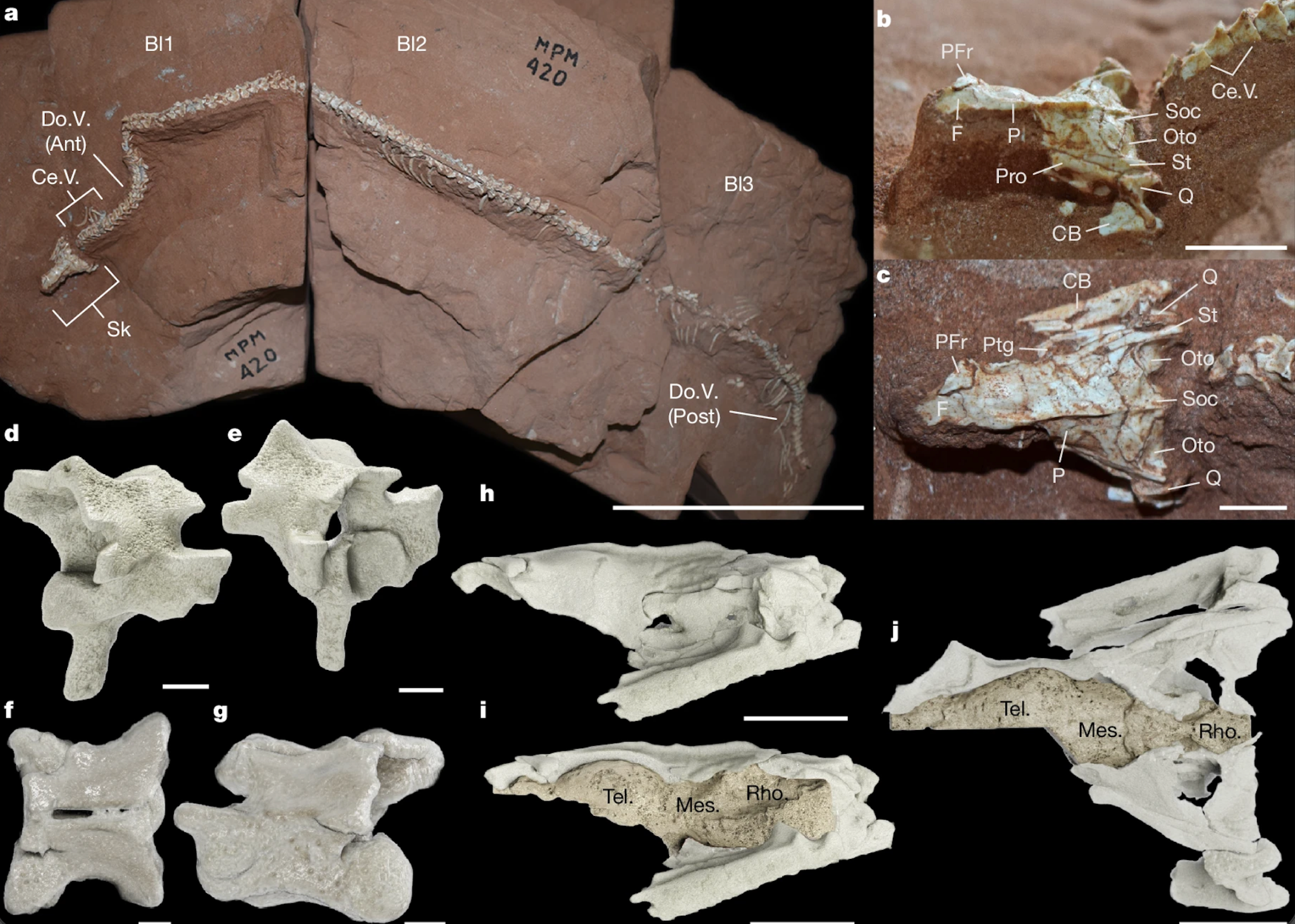
“Snake origins therefore were not shaped by a single, linear event as traditionally thought,” said researchers led by Tiago R. Simões of Princeton University. “Instead, early snake evolution involved repeated shifts in habitat use and sensory ecology, characterizing a dynamic ecological history in which multiple lineages independently explored fossorial and non-fossorial lifestyles.”
How appropriate that the evolutionary history of this amazing group should be non-linear and, dare I say, serpentine. This has been SNAKE NEWS.
A brilliant binary blowup
What’s better than one star blowing up? That’s right: two stars blowing up right next to each other, a situation that has been reported for the first time in a study published in July.
For more than a century, astronomers have marvelled at a vast dust cloud called IC 443, also known as the Jellyfish Nebula, which is all that is left of a massive star that went supernova thousands of years ago.
Located about 6,000 light years from Earth, this beautiful nebula has been visible to telescopes since the 19th century. But a team only recently discovered that another supernova remnant, called G189.6+3.3, appears to occupy the same space thanks to long term gamma-ray observations captured by NASA’s Fermi telescope. The results suggest that the objects were once a pair of stars that orbited each other in a binary system before they both exploded.
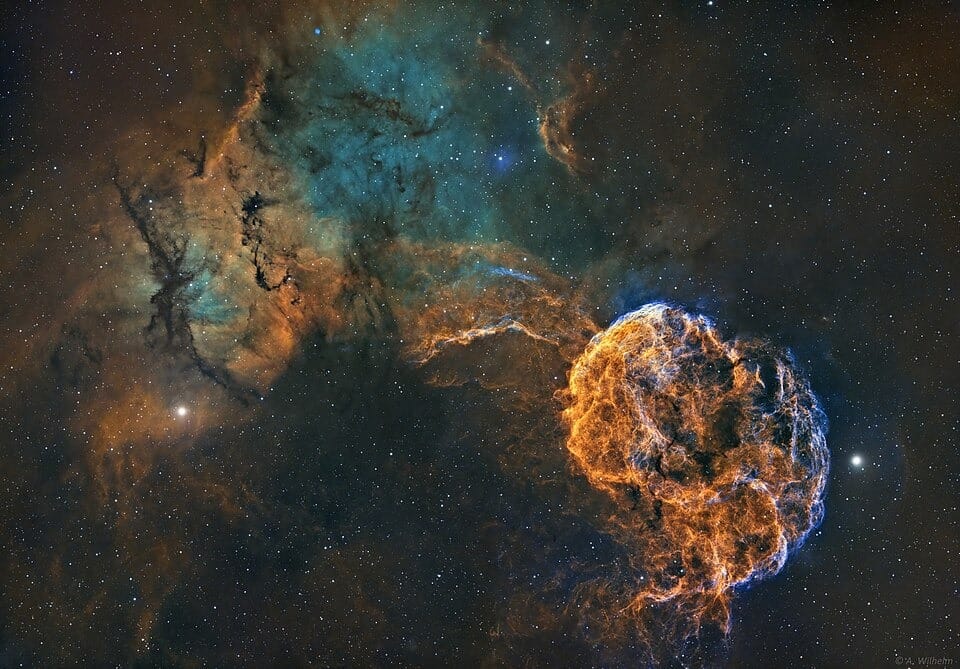
“IC 443 is one of the most extensively studied supernova remnants in the Galaxy, yet the surrounding region remains shrouded in mystery,” said researchers led by Miltiadis Michailidis of Stanford University. “Here we show that 16 years of Fermi-LAT observations uncover…gamma-ray emission from G189.6+3.3, a source long hidden in the shadow of the much brighter IC 443.”
The discovery “bolsters the hypothesis that these two remnants are part of a binary system, both resulting from separate supernova events,” an observation that has “no known analogue” in all of observational astronomy.
It’s a reminder that even the most famous and well-observed celestial objects can still contain amazing hidden surprises for those patient enough to look.
Thanks for reading! See you next week.!

