
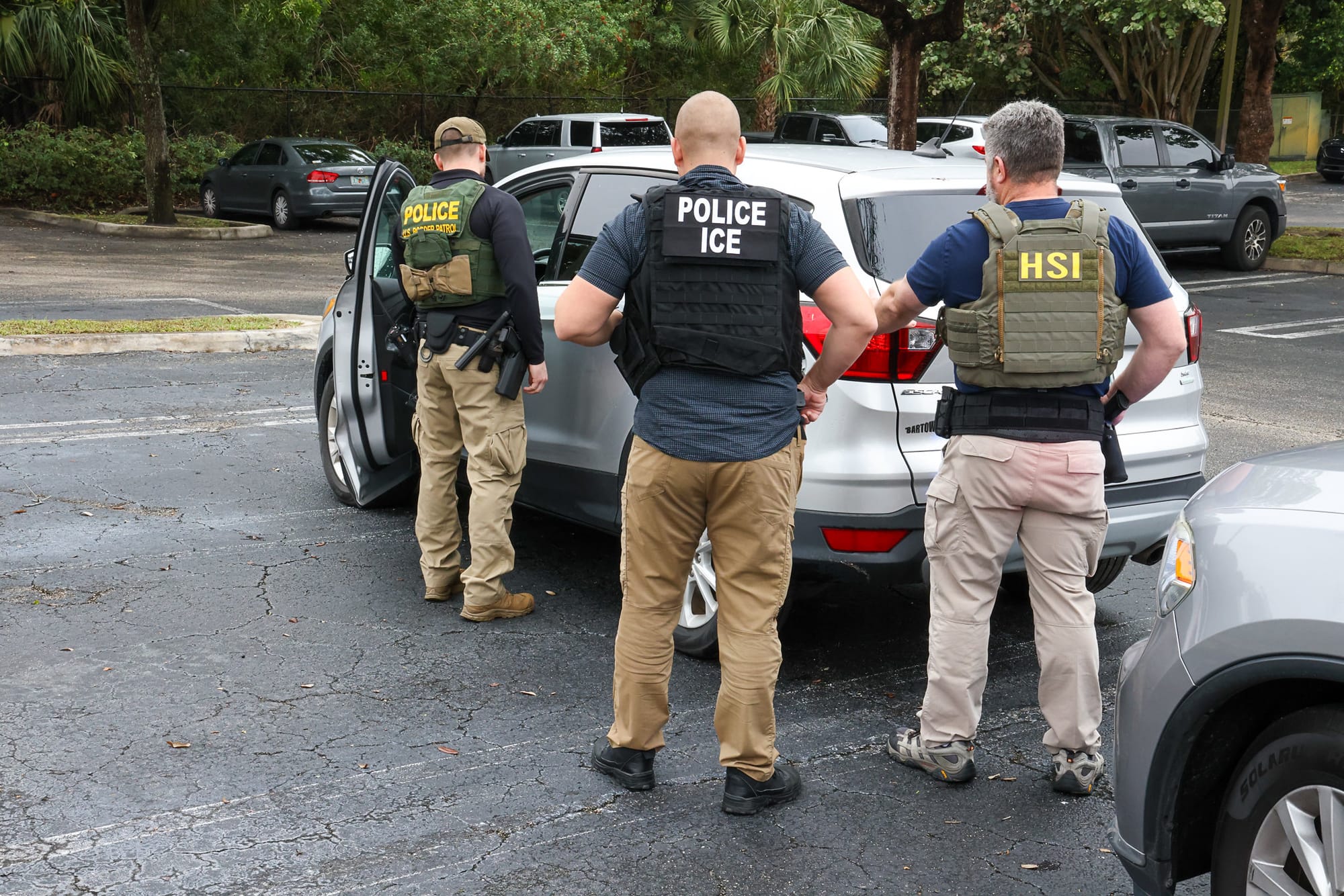
Immigration and Customs Enforcement (ICE) appears to be purchasing records related to immigrants’ tax identifiers from a data broker, potentially skirting a court order that banned ICE from sourcing such information, according to Senator Ron Wyden and government procurement records reviewed by 404 Media.
The contract, worth nearly $10 million, is related to ITINs, or Individual Taxpayer Identification Numbers, which is the identifier many undocumented people use to file their taxes rather than a Social Security number (SSN).
“It looks for all the world like Trump is trying to skirt the law and a court order to fuel his mass-deportation campaign,” Senator Wyden told 404 Media in an emailed statement after reviewing the procurement records. “A court has already struck down an agreement between the IRS and Homeland Security to illegally share ITINs and other personal information. A contract to buy that same information from private data brokers is a clear end-around both taxpayer privacy laws and a court order.”
The contract, signed on June 5 with Thundercut Technology LLC, is for “ITIN data subscription and analytics for HSI agents in fraud investigations.” It is not clear what exact data is part of this subscription—be that names and addresses of people who have ITINs, or just the ITINs themselves—but ITINs are an important identifier that the IRS gives to undocumented and other people who cannot get a SSN. Undocumented people pay tens of billions of dollars in taxes.
‘Fraud’ has been a common justification for ICE’s activity during the Trump administration’s mass deportation campaign. Part of ICE’s and other parts of the Department of Homeland Security’s (DHS) large scale operation through Minnesota last year was to investigate claims of fraud among Somalian immigrants. Nearly 90 percent of HSI, encompassing more than 6,000 officials, have been reassigned from the subagency’s normal responsibilities, like investigating money laundering or child abuse, to immigration enforcement, according to data obtained by the Cato Institute.
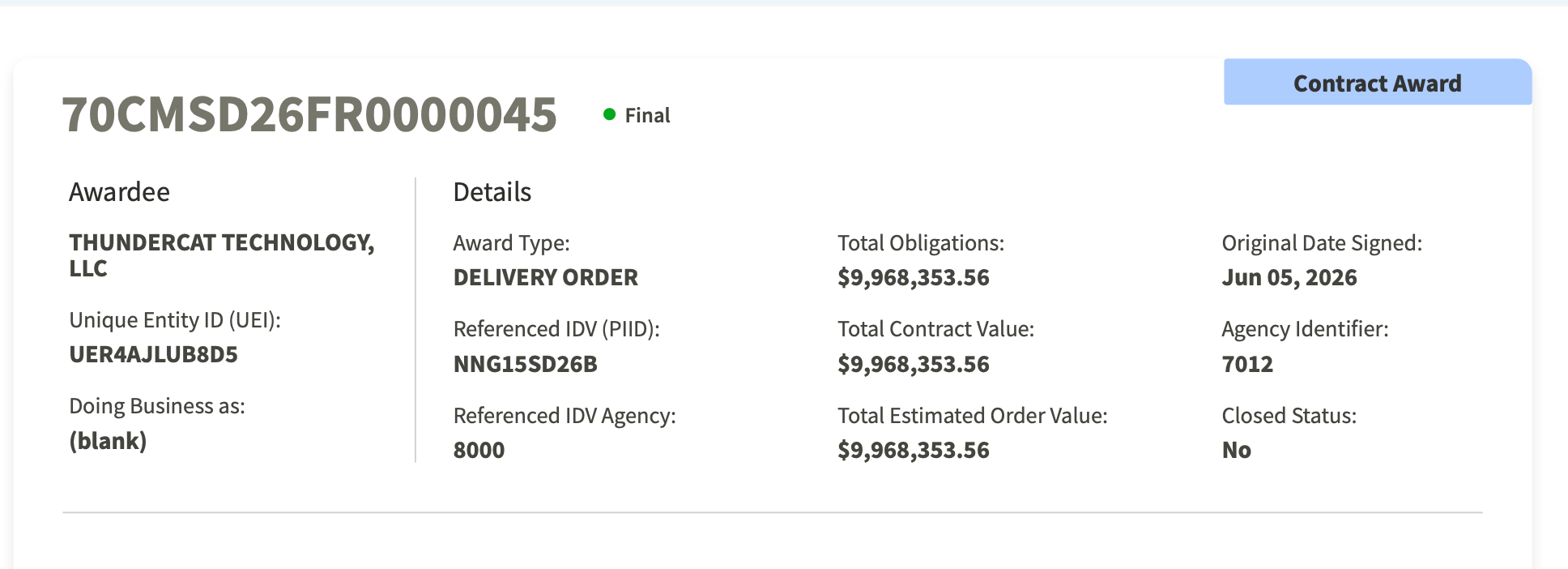
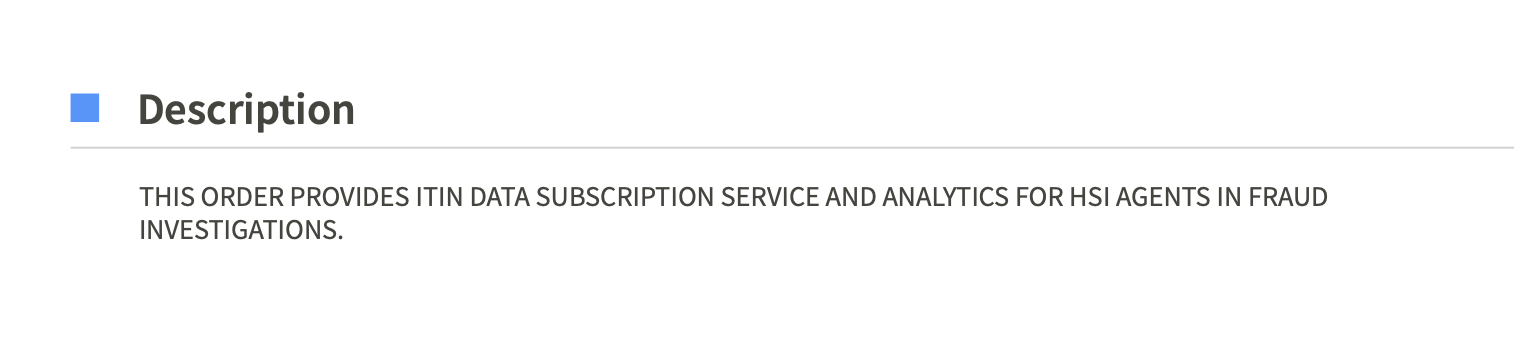
Screenshots of the procurement record.
The contract is for $9,968,353.56. Thundercat is an established vendor and often resells other companies’ technology or surveillance tech to the U.S. Thundercat did not respond to a request for comment, and it is not clear which company Thundercat may be reselling a product from in this instance.
Over the last year or so ICE has been trying to get access to data held by the IRS on undocumented people. The two agencies originally came to an agreement in April 2025, in which the IRS would give ICE taxpayer identification numbers and last known addresses on more than 1.2 million people, Politico reported. In November a judge temporarily blocked that data sharing, saying the practice was “unlawful,” NBC News reported. In February, a second judge blocked it again, saying the arrangement may “significantly raise the risk of misidentification of taxpayers,” FedScoop reported.
A report from the Taxpayer Inspector General for Tax Administration found that the IRS failed to consistently and accurately match taxpayer information with ICE’s own records, Politico reported this month. The IRS admitted it inappropriately shared information with ICE, the report added.
ICE and other parts of DHS have repeatedly purchased access to data rather than collecting it themselves or sourcing it via a search warrant or similar legal mechanism. Both ICE and Customs and Border Protection (CBP) have purchased smartphone location data. 404 Media previously reported ICE purchased access to a tool called Webloc that lets the agency monitor phones in entire neighborhoods. ICE previously bought access to phone, water, electricity, and other utility data before that data selling stopped. This practice of buying data rather than sourcing it with a court order is sometimes referred to as the data broker loophole.
“The Consumer Financial Protection Bureau was on the verge of closing this loophole before Trump killed the agency and blocked that new rule from going into effect. The next administration should close that loophole for good,” Senator Wyden’s statement added.
DHS acknowledged a request for comment more than a week ago but ultimately did not provide a statement.

