
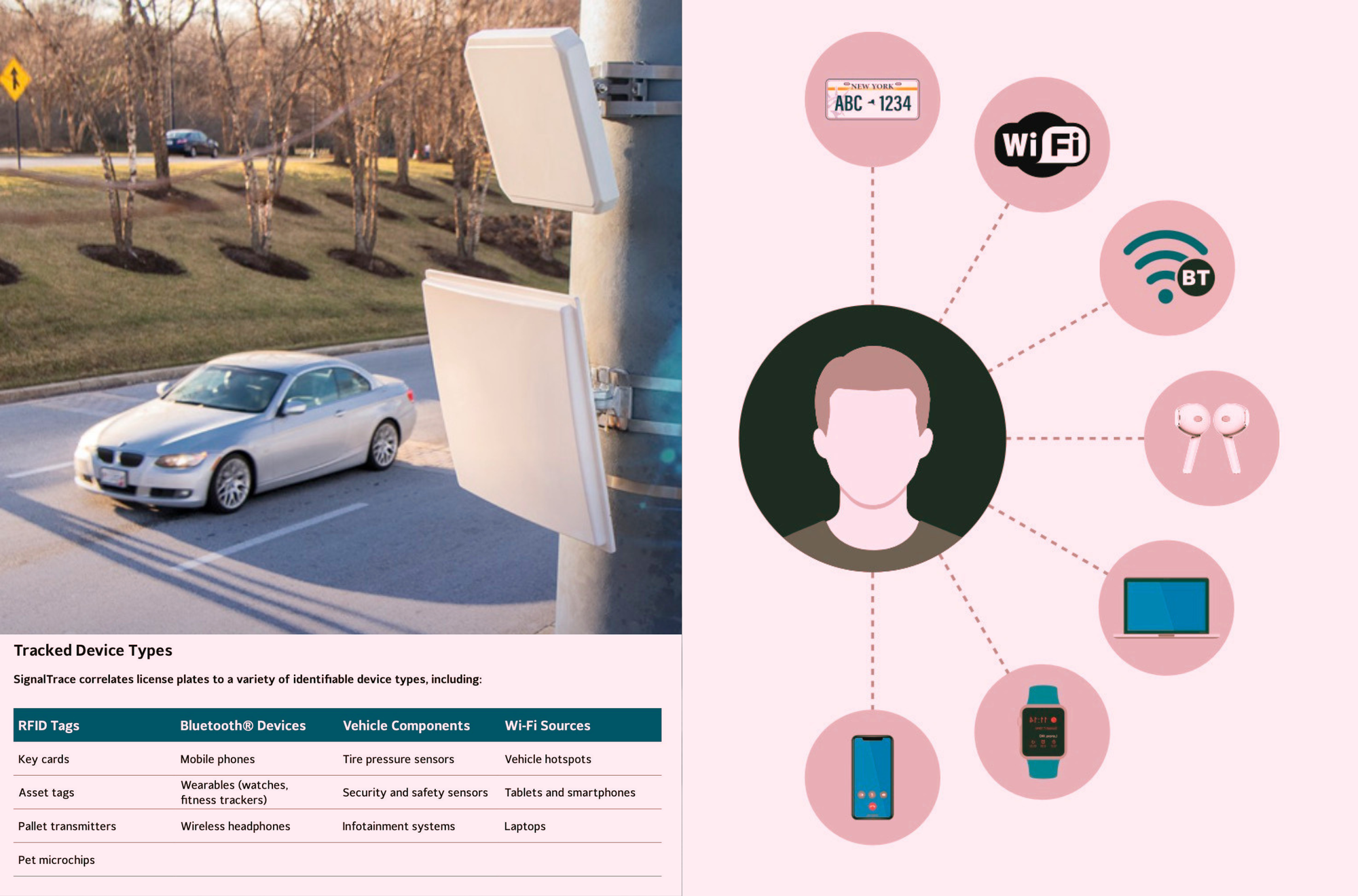
A surveillance company plans to add sensors to automatic license plate readers (ALPRs) that would mean the devices, as well as capture the license plate of passing vehicles, would also sweep up unique identifiers of mobile phones, wearables, and other Bluetooth-enabled devices in those cars, potentially letting law enforcement identify specific drivers or passengers.
The technology, called SignalTrace, would turn ALPR cameras from devices focused on tracking cars to ones that can more readily track the location of particular people. ALPR cameras have become a commonly deployed technology all across the U.S.; SignalTrace would make some of those cameras capable of collecting much more data.
SignalTrace “bridges license plate recognition data with sensor-captured device identifiers—such as those from mobile phones, Bluetooth wearables, and vehicle systems—to create a unique, trackable ‘electronic fingerprint’ for investigative use,” according to a product sheet describing the tool, written by surveillance company Leonardo, which advertises SignalTrace.
The sort of data Leonardo says SignalTrace can sweep up includes the RFID tags in key cards and pet microchips; devices with Bluetooth such as wireless headphones, fitness trackers, and mobile phones; components of a car like tire pressure sensors and infotainment systems; and Wi-Fi sources such as vehicle hotspots and laptops, according to the product sheet.
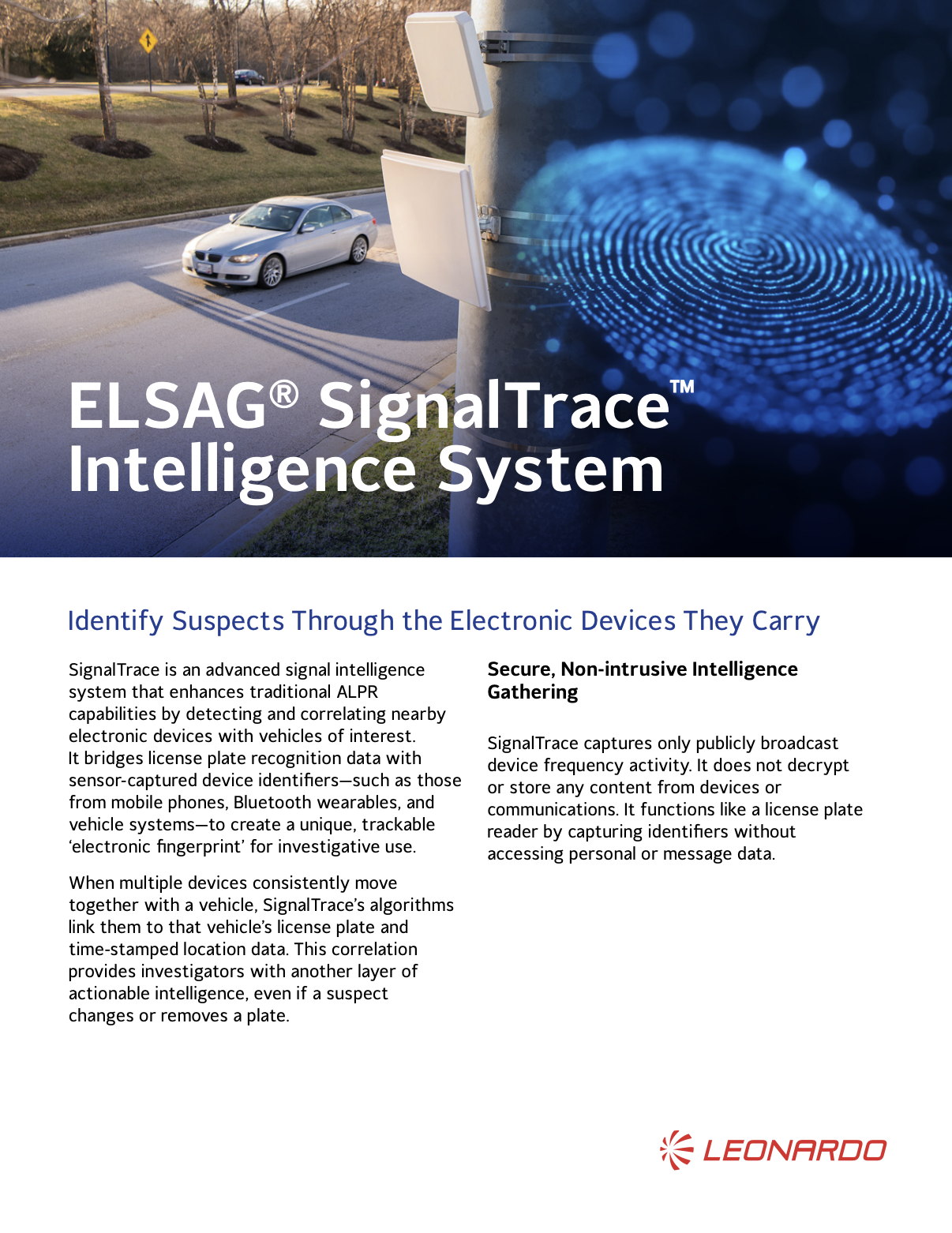
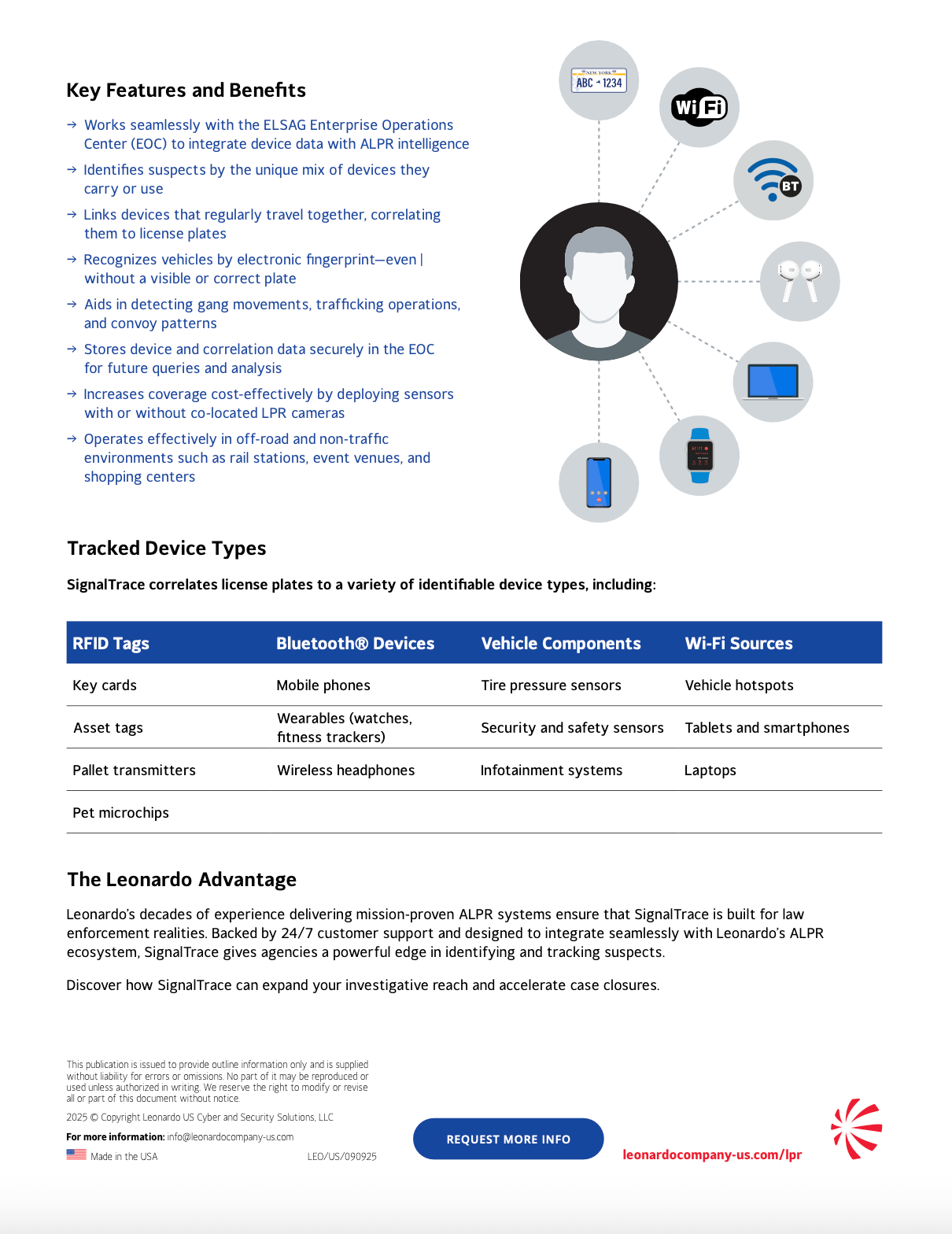
Screenshots of the product sheet, available here.
The idea is to correlate these unique device identifiers to a license plate. If a Leonardo camera detects a license plate and sees where a vehicle was at a specific time, it can then allegedly link those unique device identifiers to it.
The sheet suggests SignalTrace collects this data for it to be searched by law enforcement much later. One line says SignalTrace “stores device and correlation data securely in the EOC [Enterprise Operations Center] for future queries and analysis.”
“When multiple devices consistently move together with a vehicle, SignalTrace’s algorithms link them to that vehicle’s license plate and time-stamped location data. This correlation provides investigators with another layer of actionable intelligence, even if a suspect changes or removes a plate,” the sheet reads.
Leonardo sells ALPR cameras and communications equipment to law enforcement, border security, and other government agencies. Its U.S. arm has contracts with U.S. Special Operations Command and the General Services Administration, according to procurement records maintained by the transparency website Widely Reported.
404 Media has previously covered how other ALPR companies want to bridge the gap between vehicle and occupant. Flock, for example, has created a system called Nova, to supplement license plate data with other pieces of information. 404 Media revealed the company planned to use hacked data from previous data breaches to “jump from LPR to person.” Flock said it decided to not use hacked data in Nova after 404 Media’s coverage and internal pressure.
Leonardo did not immediately respond to a request for comment.

