
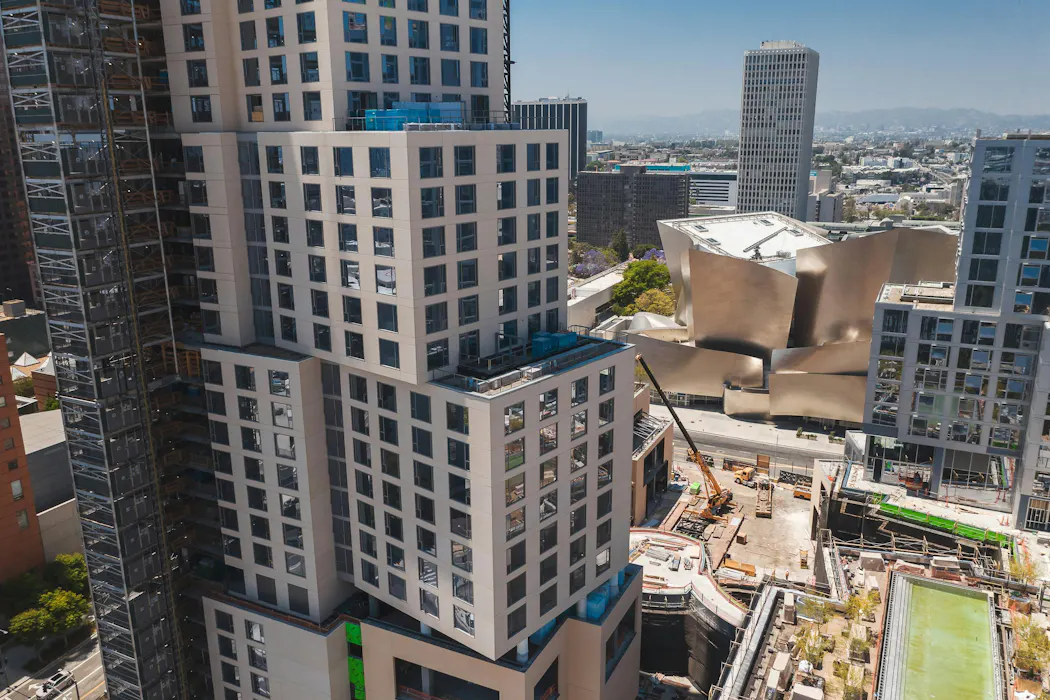
The “world first museum of AI arts” is scheduled to open next month in a 35,000 square feet purpose-built facility in downtown Los Angeles.
Dataland is the brainchild of Refik Anadol and Efsun Erkiliç, artists known for using artificial intelligence and vast datasets to create large-scale immersive art projects.
The “living museum” will present a continuously evolving immersive, audiovisual experience based on millions of images, sounds and scents from nature. As an indication of what it will be like, Dataland’s website presents phantasmagorical images of ecological wonder and awe.
Anadol says he wants Dataland to
develop a new paradigm of what a museum can be, by fusing human imagination with machine intelligence and the most advanced technologies available.
But behind its futuristic facade and the fleeting cultural landscapes hosted inside, the museum has much deeper historical roots.
The birth of the museum
A clear connection exists between the aspirations and dreams of Dataland’s founders and the 19th century fascination with emerging technologies. Large-scale exhibitions promised new forms of public spectacle and commercialised entertainment.
The Crystal Palace exhibition was held in London in 1851. Its purpose-built glass and iron building was considered a technological marvel.

Attributed to Ferrier & F. von Martens, C.M., 1851/Rijksmuseum
Visited by over six million people, it was designed to promote Britain as an industrial power.
It showcased more than 100,000 objects from around the globe. These included locomotives, hydraulic presses, agricultural products and musical instruments. Its most famous item was the world’s largest-known diamond, acquired from India two years earlier for Queen Victoria.
The “midway” at the 1893 Chicago World’s Fair was famous for its exhilarating amusements and living exhibits.
Premier attractions were the world’s first Ferris wheel and the world’s first commercial movie theatre. It also featured human display villages, or “human zoos”, that reinforced racist colonial hierarchies.

Field Museum
This era kicked off the modern public museum movement in Europe and the United States. Early museums were rooted in Enlightenment ideals of industrial and technological progress, civic education and national identity.
Museums including the South Kensington Museum (1857) and the Smithsonian’s Graphic Arts Department (1897) extended visitor fascination with new technologies such as cinema and railway travel, and sold mass-produced souvenirs of exotic and intriguing cultures.
Just as we today express conflicted views about AI-generated art, 19th-century audiences needed to learn how to respond to new cultural forms. Entertainment was key.
They quickly learnt viewing motion pictures was a social and public activity, improved if they suspended disbelief and expressed individual reactions.
The most well-known (albeit exaggerated) account describes an 1895 screening of a Lumière Brothers film. As the moving image of a train seemingly hurtled toward the audience, viewers are said to have screamed and ducked under seats.
Global exploitation
There is a darker side to the 19th-century precursors of Dataland.
The project’s dataset is a large nature model (LNM) – an open-source model trained on half a billion images sourced “ethically” from partner institutions including the Smithsonian in Washington, DC, and London’s Natural History Museum.
These images are complemented by data gathered by Anadol’s team from 16 rainforests “from Chile to Indonesia to Australia”.
Dataland’s website does not provide provenance information about partner institution’s source collections. But we know they would likely include 19th century specimens.
Natural history collecting was a lucrative industry in the 19th century. The increasing ease with which people and commodities were able to travel the world expanded supply chains and the global industry of specimen transfer.

Courtauld, CC BY-NC-SA
Museum collecting was deeply entangled with the violent, systemic processes of European imperialism, colonial expansion and scientific exploitation.
Dataland promotes its “permission-based” approach to using data from institutions. It cites contemporary collaboration with the Yawanawá people of the Amazon as “radically responsible”.
It also insists it manages the environmental impact of the museum’s consumption of natural resources.
But Dataland does not appear to apply its own ethical standards for producing collections from rainforests to the vast historical resources it sources from its partner museums.
It is silent on the obligations it may have to contemporary descendants of communities from which specimens and knowledge were extracted. It provides no guardrails about appropriate cultural protocols or safeguards for anyone wanting to access or learn more about any of its collections.
This approach is out of step with the United Nations Declaration on the Rights of Indigenous Peoples. The declaration enshrines the rights of Indigenous peoples to self-determination over their data. This includes traditional knowledge and ownership over natural resources.
Many of the kinds of institutions Dataland has partnered with are now seeking to repair the loss of Indigenous knowledge, cultural heritage and authority caused by colonial collecting.
The Natural Sciences Collections Association UK explains this reparative work is
proactive in telling hidden truths however difficult, about how we got our collections – [we must] acknowledge we have them, but at what cost?
The lack of transparency and self-awareness regarding the large nature model’s use of historical collection materials is a significant oversight. It echoes criticism that AI art does not adequately seek human consent or offer credit or compensation for contemporary art.
Dataland is a museum of the future. But it cannot outrun the historical and very human legacies of the form it has chosen to align itself with – the museum.

Kylie Message does not work for, consult, own shares in or receive funding from any company or organisation that would benefit from this article, and has disclosed no relevant affiliations beyond their academic appointment.

