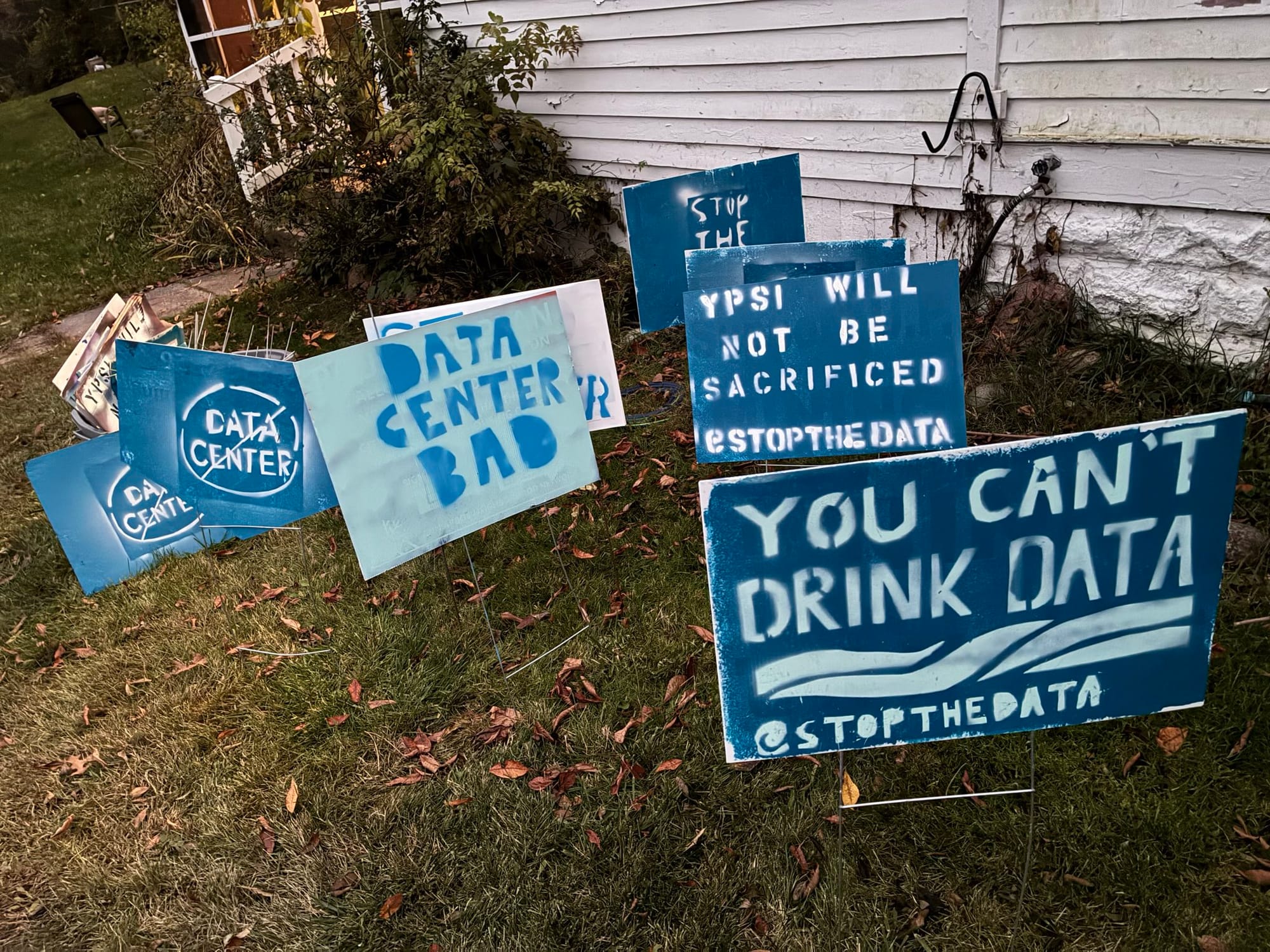
The University of Michigan has sent a legal threat over a yearlong pause that would prevent water hookup to a proposed nuclear weapons research and AI data center. Los Alamos National Laboratory and the University of Michigan are looking to build a $1.2 billion, 220,000 square foot data center in Ypsitlanti Township. On April 22, the Ypsilanti Community Utility Authority (YCUA) passed a 365-day moratorium on the delivery of water to hyperscale data centers in the area while it conducted environmental sustainability and long-term water use studies.
As first reported by MLive, the University hand delivered and emailed a legal threat to the YCUA on April 21, the day before it was to vote on the proposed water moratorium. According to a copy of the letter obtained by 404 Media, the university feels the moratorium is “unlawfully discriminatory” against data centers and it promised to pursue “all rights and claims for relief” if its demands weren’t met.
Luther Blackburn, YCUA’s executive director, told 404 Media that the organization had no comment on potential or pending litigation, but did confirm that he’d received a legal communication from the university. “YCUA staff are working on a Request for Proposal to complete the investigations and studies outlined in the moratorium,” he said. “I believe YCUA has acted lawfully and in accordance with industry best practices by issuing the moratorium.”
The university disagreed. “The University objects to any such sector-specific moratorium which would be legally invalid because, among other defects, it would be unrelated to any documented utility or public health needs,” the letter said, according to a copy obtained by 404 Media. “As a threshold matter, a moratorium on utility service is permissible only when linked to legitimate utility considerations such as documented capacity constraints, public health issues, or genuine financing challenges.”
The University argued, citing various legal precedents, that the courts will not be on Ypsilanti’s side and claimed that the area has plenty of water. “The record contains no evidence supporting any such YCUA capacity constraint,” the letter said. “To the contrary, YCUA’s leadership has publicly stated that serving the University’s proposed facility would not affect the authority’s ability to provide or treat water.”
The letter quoted Blackburn as saying he had confirmed in 2025 that the data center’s proposed use of 200,000 gallons a day were within YCUA’s 8-10 million gallon per day capacity. “In addition, YCUA leadership has stated that serving the University’s project would likely help mitigate overall utility costs by improving efficiency and cost distribution,” the letter said.
Sean Knapp, the YCUA’s director of service operations, told Planet Detroit last year that the YCUA is operating below capacity at the moment. “Adding the data center as a customer would help mitigate overall costs by improving efficiency and cost distribution,” he said at the time.
After saying it was illegal for the Ypsilanti community to not give it water, the University claimed the moratorium discriminated against data centers. “Beyond the above legal deficiencies, the proposed moratorium is pretextual and unlawfully discriminatory because it singles out ‘data centers’ by label rather than by utility impact,” the letter said. “It is discriminatory to permit other users to connect and consume currently available capacity while the utility conducts undefined studies to determine whether there is sufficient capacity for the University’s proposed facility.”
The University then asked the YCUA not to pass a moratorium and promised to “pursue” the matter. “The University respectfully requests that YCUA refuse to issue any sector-specific moratorium, instead basing any service decisions on documented utility factors, applied evenhandedly through existing permitting and technical review processes,” the letter said. “If these legal requirements are not followed by YCUA, the University reserves the right to pursue all rights and claims for necessary relief.”
The University of Michigan did not return 404 Media’s request for comment.
Ypsilanti Township has been fighting the proposed datacenter for more than a year now. Data centers are wildly unpopular in the United States. They often cause noise pollution, affect water quality, and drive up utility bills for their neighbors. Local opposition to the Ypsilanti Township data center has been compounded by its connection to America’s nuclear weapons industry.