

Welcome back to the Abstract! Here are the studies this week that were ritually sacrificed, kicked out of the galaxy, taxonomically revised, and wore many hats.
First, scientists shed light on human sacrifice and cousin sex using ancient DNA from the bones of people who lived in fifth-century Korea. Then: the yeeting of a star, an octopus imposter, and the indignities of a bare head.
As always, for more of my work, check out my book First Contact: The Story of Our Obsession with Aliens or subscribe to my personal newsletter the BeX Files.
All in the Family (this time with human sacrifice)
Ready or not, it’s time to visit an ancient burial ground packed with the bones of sacrificed families. Welcome to the Imdang-Joyeong site in Korea, which contains a cluster of 1,500-year-old tombs from the tumultuous Three Kingdoms period.
As the name suggests, this era was dominated by a trio of warring dynastic factions called the Goguryeo, Baekjae, and Silla. Historical and archaeological evidence suggests that the Silla kingdom followed unique customs, including the practice of “Sunjang,” a coburial of sacrificed people with an elite grave owner, as well as consanguineous marriages—marriages between close blood relatives.
Now, researchers have now sequenced ancient DNA from 78 deceased individuals to corroborate the findings with confirmed lineages. The results revealed that consanguineous marriages were indeed common, and that adult women were often buried together with their own kin, which is a rarity in ancient graveyards around the world.

“Silla is thought to have practiced different marital customs from that of its neighbors, such as Goguryeo,” said researchers co-led by Hyoungmin Moon of Seoul National University and Daewook Kim of Yeungnam University. “Most notably, Silla royal elites are documented to have practiced consanguineous marriage, which is rarely observed in Goguryeo and Baekjae records. Historical accounts of consanguineous marriage are thought to be related to the consolidation of the rank and social status within Silla royals and local elites.”
“However, because of limited ancient genome studies in Korea, no corroborating genomic evidence so far has been reported regarding the marriage customs of the Three-Kingdoms period Koreans,” the team added. “Our research is the first to analyze the genome-wide composition of closely related individuals from an ancient Three-Kingdoms period of Korea.”
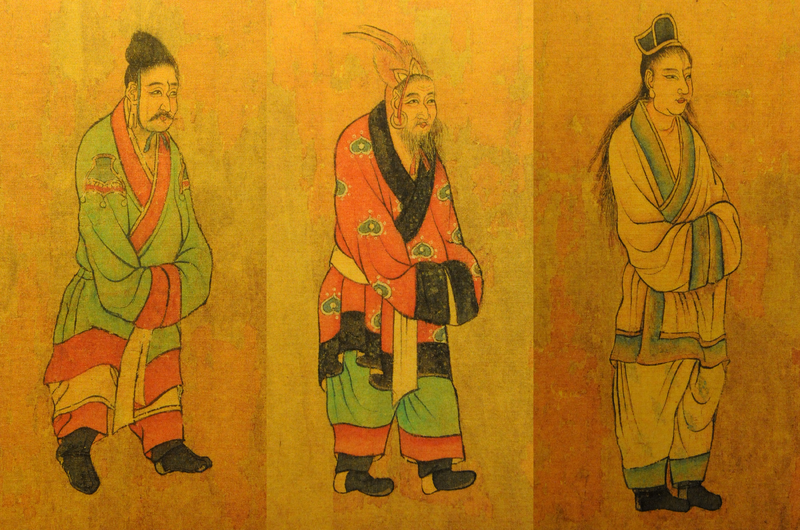
Many tombs at this site include separate chambers for elite grave owners, and for sacrificed people, which often included entire families that may have been ritually sacrificed and buried alongside their masters. Both elites and sacrificed individuals were often born from unions between first or second cousins, suggesting that consanguineous marriages were common across class lines.
“We found decisive evidence of three cases of families in which parents and their offspring were sacrificed together in the same grave,” the team said. “Our genetic findings are the first to confirm the acts of Sunjang of an entire household and suggest that these practices might be common for sacrificial burials of the Three-Kingdoms period.”
In addition, some adult women were buried alongside their parents and grandparents, a pattern that is rare in most other ancient burial grounds in which women tend to be buried alongside their husbands and in-laws. The study offers a rare glimpse of a society with idiosyncratic customs that is ready-made to be the setting of a new HBO prestige series.
In other news…
♩ It’s a shooting star leaping through the sky ♩
Some space explosions go so hard that they can kick a star right out of a galaxy. Scientists report the serendipitous discovery of one of these so-called “runaway stars” that was likely ejected from the galaxy approximately 2.8 million years ago “with an ejection velocity exceeding 600 kilometers per second”—or about 1.3 million miles per hour—according to a new study.
This cosmic sprinter is a white dwarf, the collapsed remains of a star, that was accelerated to ludicrous speed by a “Type Iax” supernovae, a type of stellar kablooey that occurs in some binary star systems.
This runaway star “is notably hotter than previously studied members of this class,” said researchers led by Aakash Bhat of the University of Potsdam. “Kinematic analysis indicates that the star has a high probability of being unbound from the Galaxy.”
So long, runaway star, and safe travels through intergalactic space.
A 300-million-year-old case of mistaken identity
Prepare to be ink-pilled, because it turns out that the oldest known octopus fossil ever found—a 300-million-year old species called Pohlsepia mazonensis—is not an octopus at all. It is a member of the nautilus family that just ended up looking sort of like an octopus in part because its shell fell off during the decomposition process.
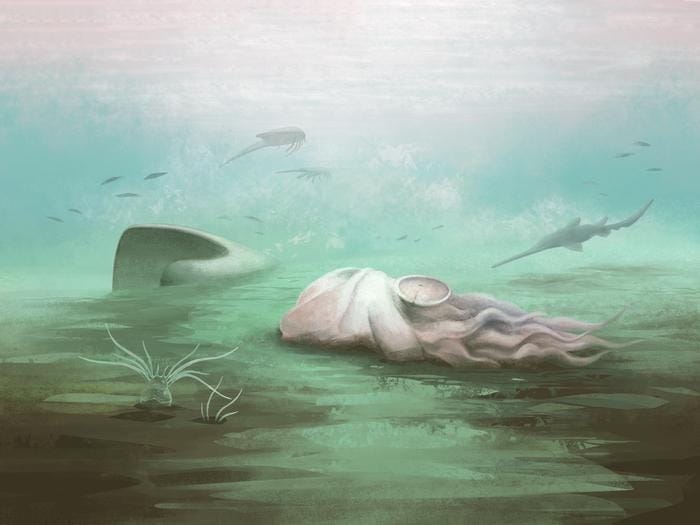
“We present the first comprehensive reassessment of this enigmatic fossil, alongside multiple new specimens, using a suite of advanced analytical techniques,” said researchers led by Thomas Clements of the University of Reading. During this process, the team discovered a special “radula”—a feeding organ lined with rows of teeth—that matched the nautilus family.
As a result, P. mazonensis “represents the oldest known fossil soft tissue nautiloid (albeit without its shell),” the team concluded. The finding is a boon to octopus scientists (a.k.a. Doc Ocks) who have been perplexed for years by this specimen, given that the fossil record otherwise suggests that octopuses emerged much later in time, during the age of dinosaurs.
It just proves the old adage: Don’t believe everything you hear about the evolutionary origins of octopuses.
We’re all mad hatters here
We’ll cap off with a hat tip to a study that chronicles hat etiquette across early modern England, roughly spanning the 1400s to 1700s.
Authored by the aptly-named Bernard Capp of the University of Warwick, the work is packed with madcap anecdotes about hats as signifiers of identity, instruments of shame, tools for salutations, and even makeshift toilets in the most ribald tales.
“The ‘Pleasant History’ of Hodge tells of a simpleton humiliated by a maidservant who claps on his head the hat in which she had just defecated,” Capp noted in the study. “Such behaviour, moreover, was not confined to fiction; in 1747 a Wiltshire man admitted snatching a rival’s hat, pissing in it, and clapping it back on the victim’s head.”
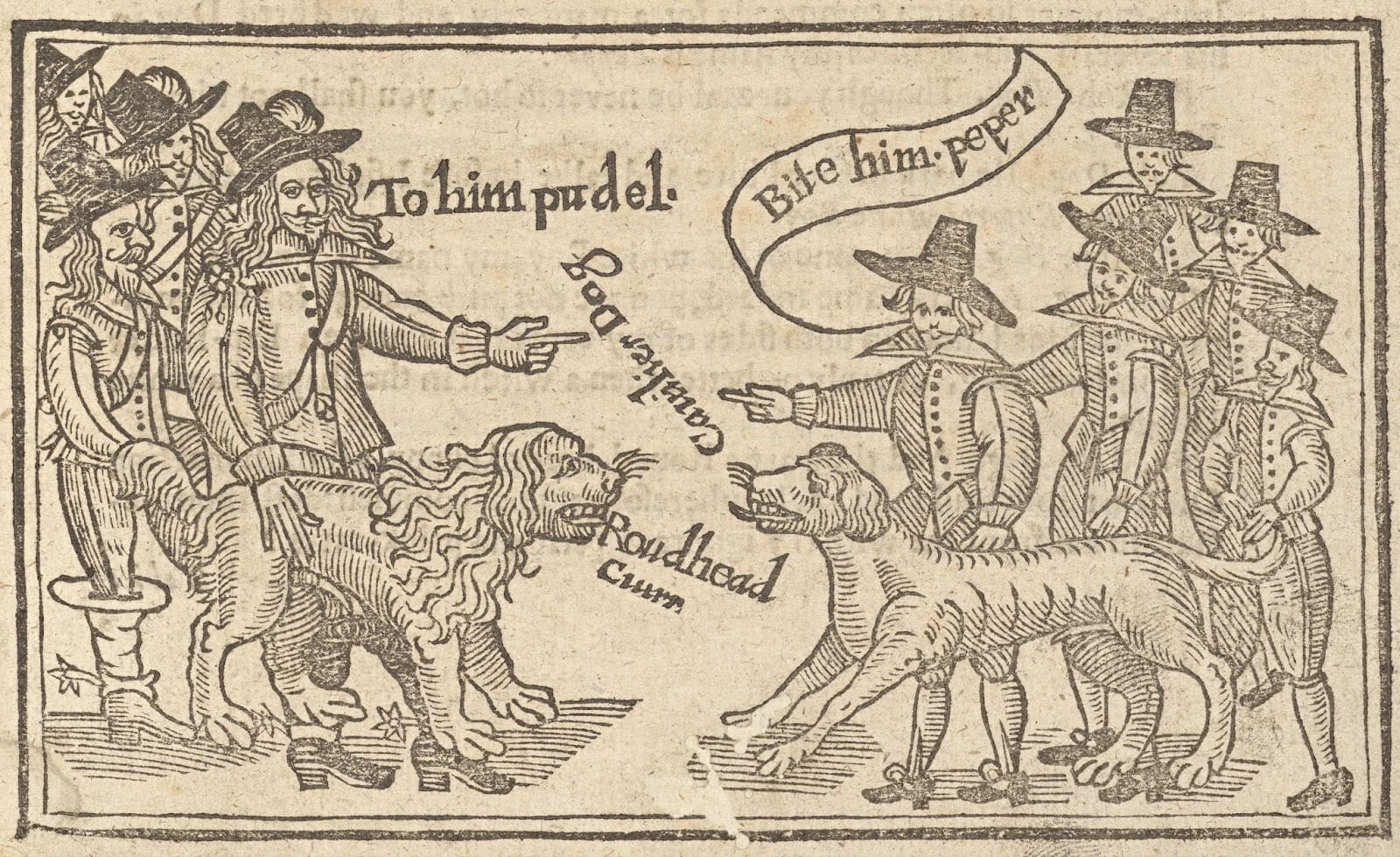
Other highlights include the Cap Act of 1571, which allowed offenders “to be prosecuted for wearing hats to church;” jokes about fine ladies wearing towering ribboned hats that spooked local livestock; and a man named Thomas Ellwood who was rendered unable to leave his house for months in 1659 because his father confiscated all his hats, because who would dare, in his words, to “run about the Country bare-headed, like a Mad-Man”?
Hats off to this heady historical work, and beware the bareheaded Mad-Men.
Thanks for reading! See you next week.

