
Muse Spark shipped Wednesday. It’s the first model out of Meta Superintelligence Labs, built over nine months under Alexandr Wang after Zuckerberg spent $14.3 billion on a 49% stake in Scale AI and brought Wang in as Meta’s first chief AI officer. It accepts voice, text, and image inputs. It produces text-only output. It has a fast mode and reasoning modes. There’s a shopping feature that pulls from user interest and behavioral data across Meta’s apps.
On the Artificial Analysis Intelligence Index, it sits fourth — behind Gemini 3.1 Pro, GPT-5.4, and Claude Opus 4.6.
That ranking is the most important number in the announcement, and Meta buried it. The press materials say “competitive performance.” When you’ve restructured your entire AI organization, hired away researchers with nine-figure pay packages, and committed up to $135 billion in AI capex for 2026 alone, fourth place is a rough debut.
The harder issue is that Muse Spark is a closed model. Meta says it may open-source future versions. But the team building the best model, the compute behind it, and Zuckerberg’s personal attention are all pointed at Muse – not Llama. If you built a product on Llama weights, you were implicitly betting that Meta’s open-source commitment was structural. It was a growth strategy that made sense when Meta needed goodwill from researchers and developers, and that moment has passed. The company is building a paid API business, and you cannot run one while giving the model away for free.
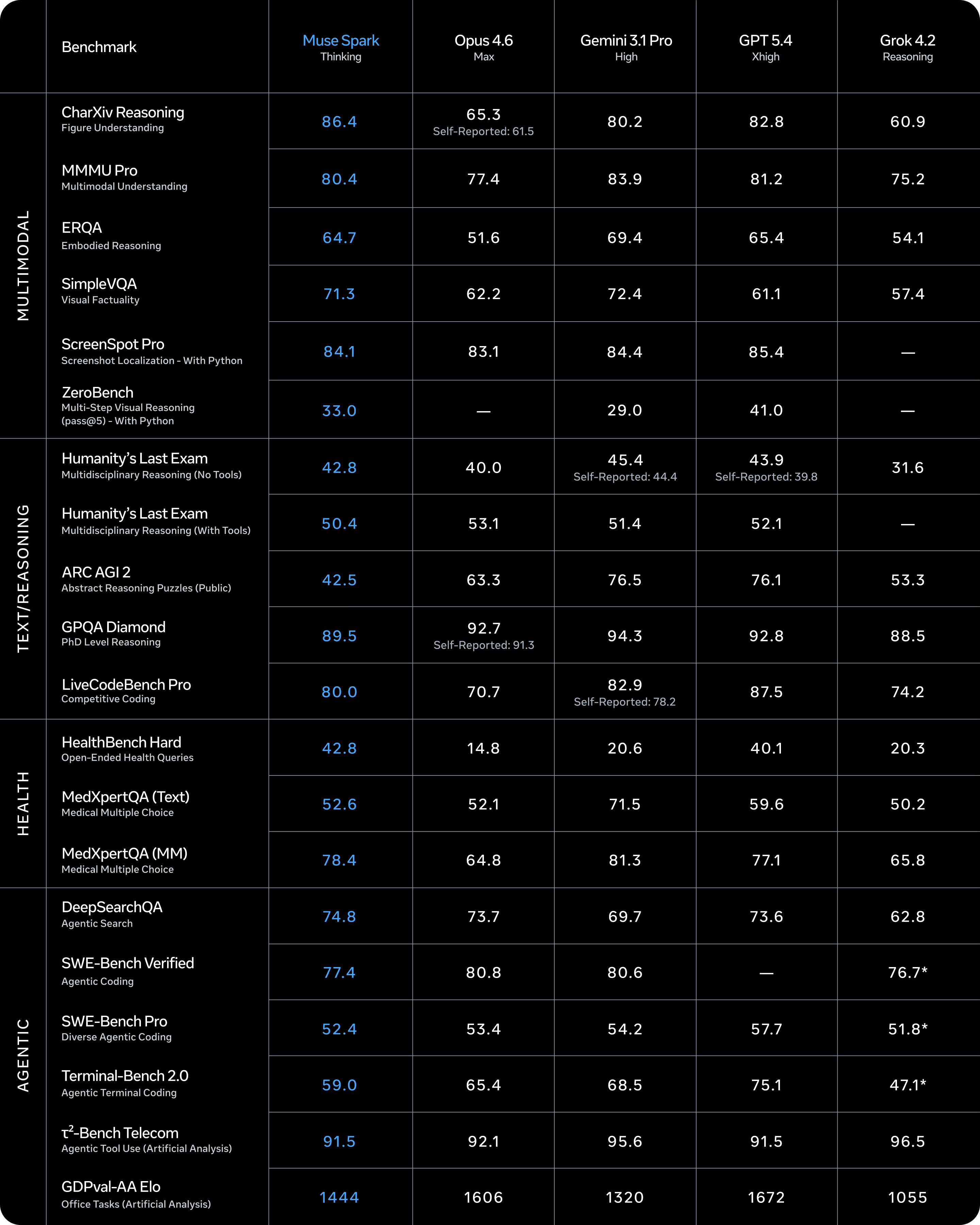
The commercial logic here is straightforward. Muse Spark’s shopping mode – which surfaces recommendations based on what people share and follow across Instagram, Facebook, and Threads – is a personalized ad engine wearing an AI assistant’s face. Billions of daily users across Meta’s apps will interact with this model without knowing or caring that it’s ranking fourth on any benchmark. For conversational queries, the capability is more than sufficient. The gap that matters is in long-horizon agentic tasks and coding workflows, which Meta itself admits are current weaknesses – and which happen to be exactly where enterprise developers would stress-test the model before paying for API access.
Wang’s nine-month timeline from ground-up rebuild to a live frontier model is legitimately fast. His background at Scale AI was about operational velocity: making AI teams move faster by solving data quality and labeling at scale. That skill set transferred into the shipping timeline. The capability benchmarks are where the research culture gap shows up, against labs that have been running frontier model programs for years.
There’s also the benchmark trust problem. Meta has previously manipulated published benchmark results to make a model appear more capable than what was available to most users. The independent evaluations of Muse Spark haven’t come in yet. Until they do, the company’s self-reported scores deserve a discount. One analyst writing on danilchenko.dev put it plainly: “Zuckerberg didn’t pay $14 billion for Alexandr Wang to ship open weights.” The cynicism there is earned.
What Meta does have, and what its competitors genuinely can’t replicate, is distribution. Three billion people use Meta’s apps daily. Muse Spark will be in Facebook, Instagram, WhatsApp, Messenger, and Ray-Ban glasses within weeks. No other AI lab – not OpenAI, not Anthropic, not Google’s standalone Gemini products – has that surface area for a single model rollout. Google comes closest, but Search and Workspace are different interaction modes than a social graph where people share personal content constantly and Meta can observe the resulting behavior.
The $325 billion generative AI market projection by 2033 that Grand View Research keeps citing is probably wrong in its specifics and right in its direction. Whatever the actual number is, the companies that will capture most of it are the ones with both a competitive model and a distribution channel that doesn’t require users to change their habits. Meta’s distribution is locked in. The model capability is the variable the second release has to answer.
That second model – which Wang’s announcement implied is already in development – either closes the coding and reasoning gaps or it doesn’t. If it does, the API business has a real shot. If it doesn’t, Muse Spark settles into an expensive engagement feature for Facebook, and the research community that spent three years building on Llama is owed a more direct answer than “we hope to open-source future versions.”

