
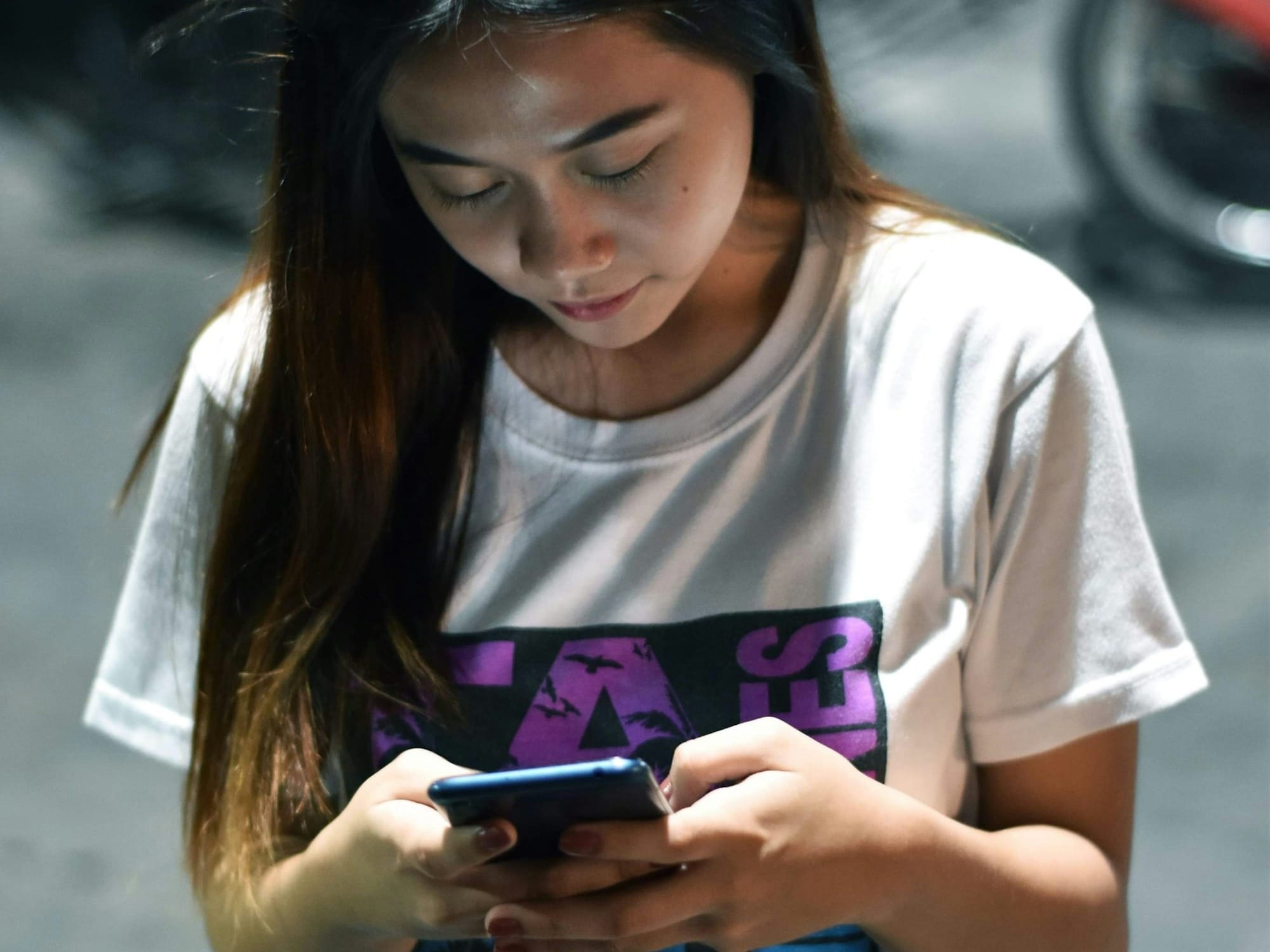
Lonely young people are likely better off texting a random stranger than talking to a chatbot, according to a new study.
Researchers from the University of British Columbia found that first-semester college students who texted a randomly selected fellow first-semester college student every day for two weeks experienced around a nine percent reduction in feelings of loneliness. The same two weeks of daily messaging with a Discord chatbot reduced loneliness by around two percent, which turned out to be the same amount as daily one-sentence journaling.
The research included 300 first-semester college students who were either randomly paired with another student, given a daily solo writing task, or put into a Discord server with a chatbot running on ChatGPT-4o mini.
The students were instructed to have at least one interaction per day in each of the groups. The human-human pairs were instructed to message each other however they wanted, while the researchers instructed the bot to “listen actively and show empathy,” and to be a “friendly, positive, and supportive AI friend to help the student navigate their new college experience.” The human participants ultimately acted pretty similarly in both types of chat, sending between eight and 10 messages a day in both their human text chains and their Discord conversations with the large language model (LLM).
However, participants who were paired with a human partner reported significantly lower loneliness after the study, and those paired with the chatbot did not. “This is just such a low tech, simple intervention, and can make people feel significantly less lonely,” Ruo-Ning Li, PhD candidate at UCB and one of the authors of the paper, told 404 Media.
The research looked at college students specifically, to try to understand whether LLMs could be a scalable tool to help with the isolation that people can feel when going through a big change. The transition to college can be overwhelming: new classmates, new places, new rules. Young people are often away from parents or familiar structure for the first time, building out their new social networks among others who are doing the same. This is a particularly vulnerable time: if chatbots could really cure loneliness for a group of people like this, “then it would be great,” said Li. But only human to human interaction, despite it being with a random person over text, had any significant effect.
The research is part of a movement to understand the effects of LLM interactions over periods of time. Another paper from the same lab, published this week in Psychological Science, looks at the experiences of more than 2,000 people over twelve months, checking in with them once a quarter. The study found that higher reported chatbot use was linked with higher loneliness later on — and vice versa. “Changes in chatbot use have a small effect on emotional isolation in the future. And emotional isolation has a similarly sized effect on your likelihood to use chatbots in the future,” Dr. Dunigan Folk, one of the study’s authors, told 404 Media. He cautioned against calling it a “spiral”, since other things could be changing in peoples’ lives to make them use chatbots and be lonelier. But, he said “it’s suggestive of a negative feedback loop because it’s a reciprocal relationship.” Chatbots, he said, could be something like “social junk food.” They might make people feel good in the moment, “but over time, they might not nourish us the same way that human relationships do.”
He said this finding would be consistent with people replacing human relationships with LLMs. “I think it’s a trade-off thing where you talk to AI instead of a person,” Folk said. “the person would have been a lot more rewarding.”
And there is evidence to show that AI does have some short-term effects on mood. “If you measure their feeling of loneliness or social connection right after the interaction, people do feel better,” said Li. However, she added, “making people feel momentarily happy is not that hard.” It is not clear that a single positive experience is scalable or persistent longer term. “We eat candy, we feel happy. But if we eat a lot of candy over a long time, it could be harmful for our health,” Li said.
That positive short term effect is often reflected in public reports of chatbot usage. For example, two weeks ago, the Guardian published a column where a reporter trialled using an LLM as a therapist, described their validating interaction with it, and concluded that the “experience of being therapised by a chatbot has been wonderful.” While this isn’t necessarily a robust study design, there is empirical research that “one-shot” interactions with bots do make people feel better in the short term.
However, human interactions also have positive effects that chatbot use could be distracting people from. Li considers it important to consider the side effects of chatbot interactions, including their potential for replacing the incentive to seek out the positive effects of human connection. “AI can help mitigate negative feelings, but obviously, it cannot replace humans to build connections,” she said. “That shouldn’t be the goal of the AI design.”
A four-week March 2025 study from the MIT Media Lab and OpenAI explored how different types of LLM interaction and conversation impacted users’ mental wellbeing. The paper found that while some instances of chatbot use “initially appeared beneficial in mitigating loneliness,” higher daily LLM usage was associated with “higher loneliness, dependence, and problematic use, and lower socialization.”

