Live wire Humanoids · Autonomous vehicles · Drones · Industrial robotics · Embodied AI research

Blog

  • deepset Joins HPE’s Unleash AI Program to Accelerate Sovereign Agentic AI

    deepset, the company behind Haystack, the production-ready open-source AI agent framework and platform, today announced it has joined the HPE Unleash AI partner program to help government, defense, and regulated enterprises deploy production-grade AI systems in sovereign, self-hosted, and air-gapped environments.

    As part of the collaboration, deepset will leverage the Haystack Enterprise Platform, deepset’s platform for building, orchestrating, and governing AI agents and applications, and HPE’s AI ecosystem and infrastructure portfolio to help organizations rapidly identify and operationalize high-value AI use cases while reducing deployment complexity and risk. This enables customers to access AI-ready infrastructure, strategic guidance, and accelerated pilot execution to address their most challenging AI adoption and operationalization needs.

    Together, the companies enable organizations to deploy AI agents, multi-agent systems, and Retrieval-Augmented Generation (RAG) applications on self-hosted, sovereign, and air-gapped infrastructure while maintaining full ownership over sensitive and classified data, models, and AI operations.

    Customers can leverage the joint architecture to operationalize governed AI applications faster while maintaining the security, compliance, and deployment flexibility required for sovereign and mission-critical environments.

    The HPE Unleash AI partner program is a curated ecosystem, combining ISV solutions that go through comprehensive validation testing with engineered HPE AI systems, including HPE Private Cloud AI and the broader HPE AI Factory with NVIDIA solutions, to deliver the performance, security, and scalability enterprises need for production AI. By joining the program, deepset expands access to governed AI platform capabilities designed for organizations operating in highly regulated environments, including public sector, defense, cybersecurity, and enterprise industries.

    The Haystack Enterprise Platform enables organizations to:

    • Build and govern AI agents, multi-agent systems, and RAG applications
    • Deploy AI on self-hosted, private cloud, and air-gapped infrastructure
    • Orchestrate modular AI pipelines across models, databases, and enterprise systems
    • Enforce governance, auditability, and lifecycle management for production AI
    • Support sovereign AI initiatives aligned with European and national security requirements

    The collaboration builds on deepset’s experience supporting sovereign AI initiatives with organizations including the European Commission, the German Ministry of Research, Technology and Space (BMFTR), and other government, defense, and enterprise organizations deploying sovereign AI systems under strict governance and security requirements.

    “With agentic AI moving into operational deployment, organizations need infrastructure and AI platforms they can control and trust,” said Milos Rusic, CEO and co-founder of deepset. “The challenge is getting agentic systems into production while maintaining control over infrastructure, governance, and sensitive data. Together with HPE, we’re helping customers deploy governed AI systems faster across highly regulated and mission-critical environments.”

    Use cases supported through the joint architecture include:

    • Sovereign AI platform for public sector & regulated industry institutions
    • Sovereign AI intelligence and decision-support systems for classified operations
    • Cybersecurity investigation and threat analysis
    • AI agents for technology, manufacturing, research, legal, and financial workflows

    “The Unleash AI program is designed to help organizations deploy AI solutions faster and with greater operational confidence,” said Robin Braun, Vice President of AI Business Development, Hybrid Cloud, HPE. “Together, HPE and deepset are delivering secure, governed AI solutions that combine enterprise-grade infrastructure with flexible and governed AI agent capabilities to help customers operationalize AI across hybrid, sovereign, and classified environments.”

    For more information, visit https://www.deepset.ai

    The post deepset Joins HPE’s Unleash AI Program to Accelerate Sovereign Agentic AI first appeared on AI-Tech Park.

  • Delinea Named a Growth and Innovation Leader in Frost Radar™: PAM 2026

    Company recognized as a leader for the third time among top Privileged Access Management vendors, reflecting strong market momentum and platform depth in AI era

    Delinea, the identity security control plane that secures access across human, machine, and AI identities, has been recognized as a Growth Index Leader and Innovation Index Leader in the Frost Radar™: Privileged Access Management (PAM) 2026 report. The recognition reflects Delinea’s combination of strong market momentum, operational simplicity, and continued investment in AI-driven privilege controls across complex, hybrid environments.
    The Frost Radar analyzed the top 11 PAM vendors globally based on market share and worldwide business presence and evaluated them across innovation, platform depth, AI adoption, ecosystem integration, R&D investment, revenue growth, geographic execution, and customer alignment.

    “Being recognized as both a Growth and Innovation leader by Frost & Sullivan reflects what we set out to build: a PAM platform that doesn’t make organizations choose between security depth and business agility,” said Art Gilliland, CEO of Delinea. “As privilege extends to machine identities and AI agents, the ability to govern access continuously and at scale is what separates effective security programs from ones that slow the business down.”

    Frost & Sullivan’s Innovation Index highlights several key strengths of the Delinea Platform:

    • Unified platform with fast time to value: The Delinea Platform consolidates credential vaulting, session monitoring, JIT/JEP controls, and MFA enforcement in a single control plane. Implementations are measured in weeks, not months, across SaaS, hybrid, multicloud, on-premises, and air-gapped environments.
    • AI-powered intelligence with Iris Auditing: In 2025, Delinea launched Iris Auditing, a native AI engine embedded in the platform that enables real-time session analysis and anomaly detection, along with AI agent discovery, human/machine/agentic access analytics, and ISPM for on-premises AD environments.
    • Alignment with PAM megatrends: Delinea’s roadmap reflects continuous discovery, zero standing privilege (ZSP), ephemeral/JIT access, agentic AI access governance, CIEM, IGA/ITDR/ISPM integration, and early adoption of quantum-safe encryption algorithms.
    • Extensive integration ecosystem: Delinea’s platform includes over 600 prebuilt integrations across more than 145 vendors, spanning ITSM/ITOM, SIEM, SOAR, IAM, MFA, IGA, cloud platforms, endpoint protection, databases, and infrastructure tools—enabling bidirectional identity risk signal sharing and automated remediation workflows.

    “Delinea stands out as a Growth and Innovation leader on the Frost Radar, combining strong revenue momentum and operational simplicity,” said Ying Ting Neoh, industry analyst at Frost & Sullivan. “Since consolidating core PAM functions into a unified platform, Delinea has demonstrated consistent follow-through, expanding platform depth, scalability, and runtime relevance rather than remaining at the level of architectural consolidation.”

    The Frost Radar’s Growth Index recognizes Delinea as one of the PAM market’s leading vendors, driven by strong market share gains, global momentum, and a go-to-market strategy built for scale. In 2025, Delinea’s estimated year-over-year growth outpaced the overall PAM market growth rate of 19.7%. The company maintains a strong anchor in North America, with accelerating expansion in EMEA and APAC, and a growing presence in Latin America – with double-digit growth expected globally, supported by SaaS-based deployments.

    In 2025, Delinea was named a recipient of Frost & Sullivan’s Technology Innovation Leadership Recognition Award in Non-Human Identity (NHI) Solutions. The company was also recognized as a Leader in the Frost Radar™: NHI Solutions 2025, earning the highest score for innovation.

    The post Delinea Named a Growth and Innovation Leader in Frost Radar™: PAM 2026 first appeared on AI-Tech Park.

  • Clario Launches with $6M Seed Funding to Rid Enterprises of Garbage Data

    New platform targets enterprise data ROT – redundant, obsolete, and trivial files silently inflating costs and undermining AI performance

    Clario, the first platform built to eliminate enterprise data ROT, launched from stealth today with $6 million in seed funding. The round is led by Preface Ventures, with participation from Foster Ventures, Golden Sparrow, High Sage Ventures, Moment Ventures, Mentors Fund, Page One Ventures, Rain Capital, Ridge Ventures, and Transform VC, as well as angel investors Michael Callahan and Baris Aksoy.

    78% of all stored enterprise data is unstructured, and conservative industry estimates suggest more than a third is effectively garbage: redundant, obsolete, and trivial. Enterprises are pouring billions into AI and sabotaging their own results with duplicate files, decades-old documents, and files in legacy formats no one can open anymore. Models are only as good as the data they’re fed, and most enterprise data hasn’t been touched, audited, or questioned for years. Gartner estimates that 60% of AI projects will be abandoned by the end of this year due to poor data quality.

    Clario addresses this issue by connecting directly into existing file and content systems or unstructured data environments, including Google Drive, SharePoint, OneDrive, Box, and Confluence, to scan metadata and surface all garbage. When a file or article is flagged, Clario activates intelligent workflows via Slack and Teams, prompting customers to keep, archive, or delete the data – and only gets paid when customers make one of these decisions. Over time, Clario learns from these decisions to build an autonomous system that routinely cleans, organizes, and maintains unstructured data.

    “Four years post-ChatGPT, enterprises have spent billions on projects that are failing to make a meaningful impact. I’ve spoken with hundreds of CIOs during that time, and all of their AI projects run into the same wall: data that has never been cleaned up,” said Yousuf Khan, Co-Founder & CEO, Clario. “‘Garbage in, garbage out’ isn’t a cliche, it’s an incredibly costly mistake. Companies are burning real money on tokens by throwing terabytes of garbage data into AI projects that promise revolutionary results. It isn’t working. This is one of the industry’s most ubiquitous and challenging problems, and Clario is the first product purpose-built to solve it.”

    Clario has engaged with hundreds of enterprises, and is already working with several marquee organizations to make their data AI-ready by identifying and eradicating data ROT. Early customer analysis has yielded terabytes of garbage data across multiple environments, including file formats and programs as old as MP3 and WinZip, knowledge base articles for discontinued product lines, and even full-length feature films downloaded by former employees.

    “This problem isn’t going away, it’s only compounding. The first wave of AI tools have caused the volume of unstructured data to increase at an exponential pace, with no slow-down on the horizon,” said Madhu Vohra, Co-Founder & CTO, Clario. “Enterprises cannot afford to further dilute precious resources like storage and compute, already taxed by the demanding requirements of AI and LLMs. The time to build a clean data foundation is now.”

    Clario’s co-founders are all too familiar with this problem: one is a technologist who once helped build these file systems, and the other a longtime operator who bought and implemented them at the enterprise level. Khan, a five-time CIO turned VC, spent decades watching data sprawl compound across organizations, including Pure Storage and Moveworks. Vohra, a former engineering leader at Oracle, NetApp, Nutanix, and VMware, helped architect the underlying infrastructure where much of this data ends up living.

    “This is exactly the kind of problem that looks unsolvable until someone builds the right business around it,” said Saad Siddiqui, Partner, Preface Ventures. “The enterprise data crisis isn’t new, but the cost of ignoring it today is becoming impossible to justify. We backed Clario because they are the only company working to get enterprises to AI-ready on a foundational level in a space that has often been forgotten or neglected for many years.”

    Learn more about Clario at clarioclean.com.

    The post Clario Launches with $6M Seed Funding to Rid Enterprises of Garbage Data first appeared on AI-Tech Park.

  • AIAI New York, June 2026

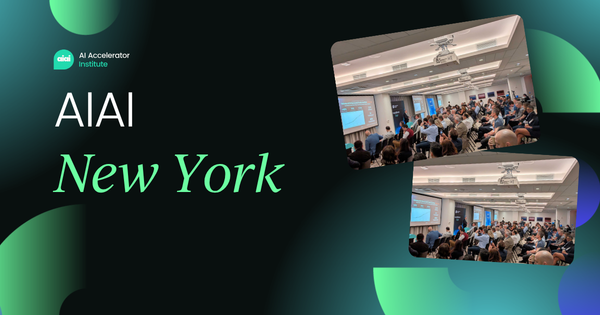
    AIAI New York, June 2026

    Catch up on every session from AIAI New York with sessions from Meta, Perplexity, Walmart, Pika AI, RingCentral & more.

  • LCS Partners with Anthropic to Accelerate Enterprise AI Adoption on AWS

    Expanding access to Claude through Amazon Bedrock while combining enterprise AI capabilities with AWS operational expertise.

    Lyra Cloud Services (“LCS”), Evergreen’s newest addition to the Lyra Technology Group Portfolio, today announced a strategic partnership with Anthropic, expanding customer access to Claude through Amazon Bedrock. The partnership reflects LCS’s broader vision of helping organizations adopt and operationalize AI while building secure, scalable, and well-managed AWS environments.

    “AI is creating tremendous opportunities for organizations across every industry, but realizing that potential requires more than access to technology. It requires the ability to deploy, manage, optimize, and scale those capabilities within secure, well-architected cloud environments,” said Jahan Kahusi, CEO, Lyra Cloud Services. “That’s where we believe Lyra Cloud Services can create meaningful value for customers, and why we’re excited to expand access to Anthropic’s Claude models through Amazon Bedrock.”

    As organizations continue investing in cloud-native applications, data platforms, and AI initiatives, technology teams are increasingly balancing innovation priorities against the operational complexity of managing AWS environments. LCS helps customers navigate that complexity by providing practical AWS expertise and operational support, enabling teams to spend less time managing infrastructure and more time focused on building products, serving customers, and driving innovation.

    The partnership enables organizations to access and scale Anthropic’s enterprise-grade generative AI capabilities through Amazon Bedrock, helping teams accelerate AI adoption within their AWS environments. Rewst, a multi-tenant MSP automation platform that leverages Anthropic, served as an early customer validation point as LCS formalized its strategic relationship with Anthropic.

    “AI is central to how we build at Rewst, so when LCS became our cloud partner, Anthropic had to be part of it. LCS delivered on that, and this partnership is the result. For the MSPs in Lyra’s ecosystem, that means real access to enterprise AI through a partner already supporting their production environments,” said Frank Price, Chief Product Officer, Rewst.

    The addition of Anthropic through Bedrock reflects LCS’s broader mission: helping customers accelerate adoption of new technologies without increasing operational complexity. By combining AWS infrastructure expertise with streamlined access to leading AI models, LCS helps organizations move more quickly from experimentation to production deployment.

    Analyst research points to accelerating business investments in generative AI, with many internal teams balancing innovation initiatives against the operational demands of managing increasingly complex AWS environments. That market demand is intensifying as Deloitte reports worker access to AI rose by 50% in 2025, and the number of companies with at least 40% of AI projects in production is set to double in six months.

    “Hatz is built to bring enterprise-grade AI to small and mid-sized businesses, and partnerships like this are exactly how we make that mission possible. Anthropic’s models and Lyra Cloud Services’ AWS expertise give us the foundation to deliver AI that is secure, scalable, and ready for companies at every stage of growth,” said Jimmy Hatzell, CEO, Hatz.ai.

    The opportunity presented by generative AI extends far beyond model access. While organizations continue accelerating investment in AI initiatives, many still face readiness challenges related to infrastructure, data management, governance, security, and operational scale. LCS was built to help customers navigate those challenges by combining AWS expertise, cloud optimization, modernization services, and operational support with streamlined access to Anthropic’s Claude models through Amazon Bedrock.

    For companies like Rewst, whose RoboRewsty AI automation capabilities help more than 1,500 MSPs build and run workflows using natural language, and Hatz.ai, which is focused on bringing enterprise-grade AI capabilities to small and mid-sized businesses, LCS provides access not only to leading AI technologies, but also to Lyra Technology Group’s broader ecosystem of cloud operators, MSPs, and technology specialists already supporting production environments across industries. Together, these capabilities help organizations accelerate adoption, reduce operational complexity, and bring new AI-powered solutions to market faster.

    To learn more about Lyra Cloud Services, click here.

    The post LCS Partners with Anthropic to Accelerate Enterprise AI Adoption on AWS first appeared on AI-Tech Park.

  • Robo.ai announces proposed acquisition of QC Capital

    Robo.ai Inc. (NASDAQ: AIIO), a Nasdaq-listed UAE-based company, announced today that it has entered into an agreement to acquire 100% of the equity interests of QC Capital Limited (“Quantum Core” or “QC Capital”). Under the agreement, the total consideration for the proposed transaction is US$60 million, payable in newly issued Class B ordinary shares of Robo.ai. The consideration shares will be subject to a vesting and release schedule of up to eight years. The transaction is expected to close within 30 business days following, subject to customary closing conditions and other applicable requirements.

    The proposed acquisition represents a strategic step in Robo.ai’s development of a global artificial intelligence robotics network platform. QC Capital is positioned as an AI-driven technology holding and venture-building platform with capabilities across technology development, venture building and industrial investment. Through the proposed integration of QC Capital, and drawing upon Robo.ai’s successful experience in acquiring AI visual data processing and compression technology company Neurovia, Robo.ai expects to strengthen its capabilities in technology company sourcing, capital allocation, venture incubation, cross-border mergers and acquisitions, post-investment operations and global commercialization.

    Under the acquisition agreement, the transaction consideration is structured to align with long-term performance targets. The consideration shares will be released in stages and linked to the achievement of multi-year revenue targets. This structure is intended to align the release of transaction consideration with QC Capital’s future business performance and the long-term interests of Robo.ai shareholders.

    QC Capital’s operating model is based on AI technology and operational enablement capabilities, with a focus on AI agents, vertical AI applications and industrial technology enablement for sectors including industry, transportation, embodied robotics and intelligent manufacturing. In the course of its operations, QC Capital expects to accumulate AI data, operating data from portfolio companies, post-investment operating data and market feedback data. These data resources are expected to be incorporated into its AI Investment Engine and QC Alpha™ system to support industry analysis, project screening, due diligence, risk management, post-investment management, M&A screening and portfolio optimization. This model is designed to create a long-term loop from technology capability to data assets, and from AI-assisted decision-making to revenue growth and ecosystem expansion.

    QC Capital’s business system includes four core areas: venture building, strategic investment, M&A platform development and AI investment technology. Its key areas of focus include AI infrastructure, smart cities, robotics and AI agents, autonomous driving and intelligent logistics, AI fintech, enterprise AI platforms and the next-generation digital economy. These areas are complementary to Robo.ai’s artificial intelligence robotics network, intelligent device ecosystem and digital infrastructure strategy.

    Performance Targets

    Pursuant to the performance-based release mechanism stipulated in the acquisition agreement, the shares issued to QC Capital will be released over the next eight years subject to the achievement of specified revenue targets. These include, but are not limited to, a cumulative revenue milestone of approx. US$2.4 billion across 2026 and 2027, which will serve as part of the key benchmark for the phased release of the consideration shares.

    Robo.ai expects that, subject to the successful closing of the transaction, successful business integration and the recognition of related revenue in accordance with applicable accounting standards, QC Capital may become an incremental platform for the Company’s medium- to long-term revenue growth, industrial synergies and global AI ecosystem commercialization. These revenue targets are forward-looking in nature and do not constitute a guarantee of future performance.

    Benjamin Zhai, Chief Executive Officer of Robo.ai, said, “Robo.ai is building a global artificial intelligence robotics network platform for the next generation of the intelligent economy. QC Capital is expected to bring capabilities in AI investment decision-making, data asset accumulation, venture building, M&A integration and global resource networks. Following the completion of the transaction, QC Capital is expected to serve as Robo.ai’s platform for strategic holdings, venture building, investment development and data asset growth, supporting the Company’s continued expansion across artificial intelligence, robotics, digital infrastructure, smart cities, intelligent mobility, low-altitude economy and the next-generation digital economy.”

    The post Robo.ai announces proposed acquisition of QC Capital first appeared on AI-Tech Park.

  • MSPAlliance Launches AI Risk Visibility in Cyber Verify

    MSPAlliance® today announced a groundbreaking AI risk monitoring capability integrated into the Cyber Verify™ program. This new feature, available through the External Service Provider Dashboard (ESP), gives MSP organizations (and their clients) instant visibility into a critical business and cyber question: where does artificial intelligence change from simply assisting operations to actually making autonomous decisions and acting within their vendor stack.

    By surfacing these points of AI authority, the dashboard empowers leadership to pinpoint not just the presence of AI, but where it wields real control, impacting access, data, and operational authority. This clarity helps MSPs and their customers quickly identify potential risks, enabling more informed decision-making, stronger oversight, and improved trust in their technology stack.

    This feature introduces a tiered approach with easy-to-understand indicators, applied directly to the tools organizations rely on to deliver services. These indicators highlight where AI intersects with access, data, and operational authority inside the vendor stack.

    “AI isn’t a feature anymore. It’s a privileged actor,” said Charles Weaver, CEO of MSPAlliance. “The question for leadership is not whether AI is in use. The question is where it can act, what it can access, and what happens when it is wrong.”

    A shift from AI awareness to AI authority

    Most organizations track AI through policy, inventory, or isolated governance efforts. The problem, however, is that AI risk does not live in documents. It lives inside the tools (and people) running day-to-day operations.

    Cyber Verify now makes AI risk visible at the point of exposure, the External Service Provider (ESP) Dashboard, so organizations can see where AI creates real operational risk inside their vendor ecosystem.

    With AI Risk enabled, those same observable conditions support a tiered and flexible approach to identifying and monitoring AI risk within the MSP tool stack. Instead of reducing exposure to a binary yes-or-no assessment, Cyber Verify helps organizations distinguish between tools where AI has little to no operational impact, tools where AI is present in more limited or supervised ways, and tools where AI carries greater autonomy, access, or influence over sensitive systems, data, or customer-facing workflows.

    What this means for MSP leadership

    Cyber Verify gives MSP leadership a straightforward view of where AI is active in the environment and where that activity overlaps with sensitive data, persistent access, or customer-facing operations. Instead of adding another framework to interpret, it brings the issue into focus in a way that is immediate and practical. This matters because AI risk is no longer theoretical. In many environments, it is already embedded in the tools people rely on every day.

    As more systems gain the ability to make decisions, take action, and operate with limited human oversight, the operational risk changes. The real question is not simply whether AI is present, but whether it has enough access or authority to affect outcomes.

    Built on what organizations can actually observe, AI Risk in Cyber Verify is based on conditions organizations already monitor, not vendor claims or abstract scoring models. It looks at practical factors such as access, data exposure, automation, and operational scope to show where AI changes the risk profile of a tool.

    Available now

    AI Risk indicators are now available within the Cyber Verify ESP Dashboard. Organizations can immediately identify and prioritize AI-related risk based on how their tools actually operate, not how they are described.

    The post MSPAlliance Launches AI Risk Visibility in Cyber Verify first appeared on AI-Tech Park.

  • From prediction to decision:  Smaller models will reshape how we build AI

    From prediction to decision: Smaller models will reshape how we build AI

    I’ve spent the better part of a decade working on personalization, search, and recommendations at scale, most recently at Netflix, and now in a new chapter at Zoctok. The through line has stayed the same for me: recommendations, search, personalization.

    From prediction to decision:  Smaller models will reshape how we build AI

    But the way I think about building these systems has shifted dramatically over the last couple of years, and that shift is what I want to walk you through.

    We’ve all heard plenty about large models. Hopefully you’ve also had a large coffee at some point today, because what I want to talk about is a little different. I want to talk about what happens when smaller models start making the bigger decisions.

    A state gutted its AI law. Then Congress stepped in.

    America’s AI regulatory landscape just had a month that made legal counsel everywhere reach for stronger coffee. Colorado’s landmark AI Act, once celebrated as the country’s first comprehensive state AI law, was gutted and replaced before it ever took effect.

    A decade of building prediction systems

    Let me set some context. Over the past ten years, I’ve worked on large-scale systems that make billions of decisions every day: prediction infrastructure, search systems, candidate generation, ranking.

    Early in my career, most of the work centered on improving the predictions themselves. Better ranking models. Better relevance signals. Better signal quality for search.

    And generally, when predictions improved, the systems improved. That was the loop we were optimizing for.

    Lately, though, something has changed in how we work. We’re still building increasingly sophisticated models, and we’re still investing heavily in the infrastructure that supports them.

    But the hardest problems are no longer purely about model quality. They’ve shifted to how we make decisions across technical and organizational layers, and how we connect those dots.

    With the rise of generative AI and more specialized, smaller models, that shift has only accelerated. We’re moving from building prediction models to building decision systems. And that’s worth talking about.

    For expert advice like this straight to your inbox every other Friday, sign up for Pro+ membership.

    You’ll also get access to 300+ hours of exclusive video content, a complimentary Summit ticket, and so much more.

    So, what are you waiting for?


    Get Pro+

    GPS vs autopilot

    I’m a visual thinker, so here’s how I frame it: GPS versus autopilot.

    GPS gives you predictions at a first-principles level. Take this route. Avoid this traffic. You’ll arrive at this time. After that, the system stops. You’re still driving. You’re still adapting to traffic, reacting to changes, and making the decisions.

    Autopilot works differently. It continuously adjusts. It’s taking actions and reasoning on your behalf. It observes conditions, reacts to turbulence, and makes decisions in real time.

  • SAP and Google Cloud deploy agentic commerce architecture

    SAP and Google Cloud deploy agentic commerce architecture

    SAP and Google Cloud are deploying agentic commerce architecture to automate multi-agent marketing and retail operations at enterprise scale.

    SAP research indicates 78 percent of businesses consider AI essential for retaining customers in 2026. However, the same data reveals fewer than two in five companies share customer data across customer experience (37%) or CRM (39%) platforms. 

    Addressing this structural data failure requires direct infrastructure intervention. SAP and Google Cloud expanded their partnership to build an agentic customer experience architecture, connecting data, AI, engagement, and commerce operations.

    The deployment relies on restructuring how AI interacts with backend commercial platforms. Most digital commerce infrastructures rely on fragmented APIs. SAP Commerce Cloud adopts the Universal Commerce Protocol to standardise data exchange among retailers, payment gateways, and autonomous agents. This framework allows software to independently execute the full retail sequence, spanning initial search, transaction processing, and post-sale resolution.

    Deploying the Universal Commerce Protocol

    Engineering teams integrating the Universal Commerce Protocol facilitate direct interactions between intelligent agents and commerce platforms. The standardisation lowers integration costs and accelerates onboarding into AI-driven channels.

    SAP plans to collaborate with Google to ensure merchant products surface organically across the Gemini application and Google Search, specifically incorporating AI Mode functionalities. Consumers interact with these interfaces while the backend architecture processes inventory checks, cart management, and payment processing without requiring retailers to rebuild existing infrastructure.

    SAP Commerce Cloud integrates Google Gemini capabilities to power a designated Shopping Assistant. Brands deploy the assistant directly to their consumers to facilitate chat, voice, and text engagements. State retention remains active throughout the complete shopping cycle. The deployment ingests live behavioural inputs, current warehouse capacities, and active marketing data to assemble distinct merchandise pairings, including full event configurations. By continuously refining recommendations, the application ensures high relevance and strict physical fulfilment capability.

    Enterprise systems often fail when promotional campaigns trigger demand that physical inventory cannot satisfy. Frontend interfaces failing to synchronise with backend warehouse systems frequently halt digital purchases. Users regularly click promotional emails, load the associated mobile application, and face sudden out-of-stock notices during checkout. Fulfilment updates experience severe delays, leaving support agents without a complete operational picture. SAP and Google Cloud engineered their joint solution to correct these specific systemic customer experience failures.

    Instead of managing disconnected points of contact, the architecture unifies the entire sequence. Traditional commercial setups require consumers to repeatedly input previously shared information. Support staff frequently lack access to unified records, preventing them from resolving issues efficiently. The integration targets these operational breakdowns, ensuring the system recognises the user and their precise context instantly across all digital properties.

    Bidirectional data flows

    Marketing execution demands highly accurate data pipelines. SAP Engagement Cloud partners with Google Cloud to formulate an autonomous multi-agent framework. The technical foundation relies on SAP Business Data Cloud Connect for Google BigQuery. The deployment relies on bidirectional, zero-copy data linking secured by strict administrative controls. Leaving vast data stores in place rather than duplicating them drops storage expenses and network latency.

    BigQuery ingests live variables like weather conditions, precise locations, and active advertising interaction rates. SAP Customer Experience solutions supply the internal behavioural context, tracking customer profiles, exact transaction histories, specific service interactions, and consented engagement records. SAP Engagement Cloud activates the combined intelligence, deploying autonomous agents to orchestrate personalised interactions throughout the customer lifecycle.

    Routing information through the Business Data Cloud while BigQuery handles the logic forces immediate inventory synchronisation. The Shopping Assistant actively queries live warehouse records before displaying any product. Software checks physical supply against consumer requests, verifying availability prior to making the suggestion.

    Generative execution in production environments

    Advanced generative models dictate the localised output of the marketing campaigns. Google Gemini models, specifically including the Nano Banana 2 iteration, provide specialised agentic skills. The models dynamically generate localised messaging, customised imagery, and campaign variations based on the exact specifications provided by the bidirectional data flow.

    The deployment upgrades standard text messages into immersive and interactive interfaces via Google Rich Communication Services. Advertising creatives evolve continuously based on incoming engagement data. The system processes the interaction, evaluates the response against the user profile, and instructs the Nano Banana 2 model to adjust the subsequent communication.

    Marketing departments achieve high efficiency by abandoning manual execution. Instead of configuring rigid campaign parameters, teams establish business goals and provide enterprise data access to the SAP Engagement Cloud. The autonomous agents coordinate the necessary steps, segmenting audiences based on Google BigQuery analytics and generating specific content variations through Google Gemini models.

    Evaluating the infrastructure impact

    Deploying the architecture restructures standard commerce operations. Consumers dictate their purchasing intent to search engines and conversational interfaces. The embedded AI agents process the intent, navigate the Universal Commerce Protocol connections, and complete the purchase directly against the enterprise backend.

    Retailers retain full ownership of the customer relationship despite the transaction occurring within a third-party environment. The architecture captures the consented engagement data, feeding the transaction history back into the SAP Customer Experience solutions. The system updates the localised customer profile, providing the Google Gemini models with fresh context prior to the next engagement cycle.

    The system continuously improves campaign performance without requiring direct human intervention. The multi-agent framework evaluates the success of a generated Rich Communication Services text message, adjusting the variables prior to the next automated dispatch.

    See also: Computer vision deployments drive retail productivity gains

    Banner for the AI & Big Data Expo event series.

    Want to learn more about AI and big data from industry leaders? Check out AI & Big Data Expo taking place in Amsterdam, California, and London. The comprehensive event is part of TechEx and is co-located with other leading technology events including the Cyber Security & Cloud Expo. Click here for more information.

    AI News is powered by TechForge Media. Explore other upcoming enterprise technology events and webinars here.

    The post SAP and Google Cloud deploy agentic commerce architecture appeared first on AI News.